EPSPS target site mechanisms confer glyphosate resistance in Arctotheca calendula
BACKGROUND
The first case of glyphosate resistance was reported in a capeweed population from Western Australia in our previous study. This current study investigates the resistance mechanisms in the population.
RESULTS
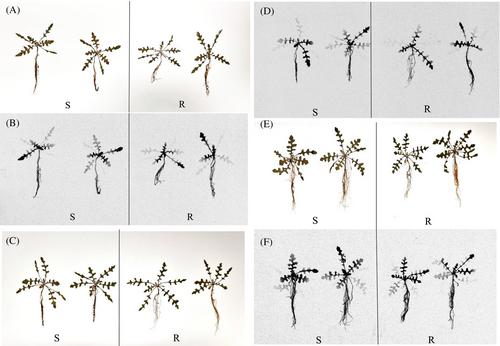
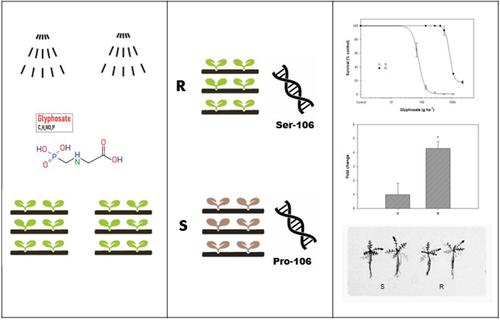
Target-site EPSPS gene sequencing revealed two partial sequences of the EPSPS transcripts (1001 bp and 998 bp), and the full-length sequence (1551 bp) containing the 1001-bp transcript was cloned as it was found in the resistant plants. A known resistance-endowing target-site mutation in the 1551-bp transcript was identified in the resistant plants, resulting in the Pro-106-Ser substitution. The subpopulation derived from these mutant plants exhibited >10-fold resistance to glyphosate compared to the susceptible population. Additionally, the EPSPS gene (1551 bp) was constitutively expressed at a higher level (4.3-fold) in the resistant than in the susceptible populations. However, 14C-glyphosate foliar uptake was similar with no visual difference in 14C-glyphosate translocation from leaves to other parts of a plant, between the resistant and susceptible population.
期刊介绍:
Pest Management Science is the international journal of research and development in crop protection and pest control. Since its launch in 1970, the journal has become the premier forum for papers on the discovery, application, and impact on the environment of products and strategies designed for pest management.
Published for SCI by John Wiley & Sons Ltd.







 京公网安备 11010802042870号
京ICP备2023020795号-1
京公网安备 11010802042870号
京ICP备2023020795号-1

 分享
分享
 求助内容:
求助内容: 应助结果提醒方式:
 扫码关注我们
