Qingyuan Liu, Simin Zhu, Meng Zhao, Lan Ma, Chenqian Wang, Xiaotong Sun, Yanyan Feng, Yifan Wu, Zhen Zeng, Lei Zhang
{"title":"预测不同妊娠阶段胎儿巨大儿的机器学习方法:中国的一项回顾性研究。","authors":"Qingyuan Liu, Simin Zhu, Meng Zhao, Lan Ma, Chenqian Wang, Xiaotong Sun, Yanyan Feng, Yifan Wu, Zhen Zeng, Lei Zhang","doi":"10.1186/s12884-025-07239-2","DOIUrl":null,"url":null,"abstract":"<p><strong>Background: </strong>Macrosomia presents significant risks to both maternal and neonatal health, however, accurate antenatal prediction remains a major challenge. This study aimed to develop machine learning approaches to enhance the prediction of fetal macrosomia at different stages of pregnancy.</p><p><strong>Methods: </strong>This retrospective study involved 500 pregnant women who delivered singleton infants at Beijing Tsinghua Changgung Hospital between December 2019 and July 2024. The training set comprised 208 cases of macrosomia and 208 non-macrosomia cases, with 84 additional cases used for external validation. A total of 23 candidate variables, including maternal characteristics, physical measurements, and laboratory tests were collected for feature selection. Seven algorithms were applied in combination with three sets of selected features, resulting in 21 fitted models. Model performance was evaluated via the area under the receiver operating characteristic curve (AUC), accuracy, precision, sensitivity, specificity, and F1-score.</p><p><strong>Results: </strong>Maternal height, pre-pregnancy weight, first-trimester weight, pre-labor weight, gestational age at birth, gestational weight gain, and the proportion of male neonates were significantly greater in the macrosomia group compared to non-macrosomia group in the training set (p < 0.05). The top five predictors for macrosomia were pre-labor weight, gestational weight gain, the Pre-labor Hb/First-trimester Hb ratio, first-trimester Hb, and maternal height. Logistic regression yielded the highest AUC values in the pre-pregnancy (0.790) and first-trimester (0.815) periods in the validation set, whereas the ensemble model achieved the highest AUC value of 0.930 before labor. SHapley Additive exPlanations (SHAP) analysis highlighted pre-labor weight, gestational age, gestational weight gain, first-trimester Hb, and neonatal sex as important factors for the prediction of macrosomia.</p><p><strong>Conclusion: </strong>This is the first study to utilize machine learning with data from the pre-pregnancy, first-trimester, and pre-labor periods to predict macrosomia. The logistic regression model and the final ensemble model demonstrated strong predictive performance, offering valuable insights to improve pre-pregnancy counseling, antenatal assessment, and intrapartum decision-making.</p>","PeriodicalId":9033,"journal":{"name":"BMC Pregnancy and Childbirth","volume":"25 1","pages":"140"},"PeriodicalIF":2.7000,"publicationDate":"2025-02-11","publicationTypes":"Journal Article","fieldsOfStudy":null,"isOpenAccess":false,"openAccessPdf":"https://www.ncbi.nlm.nih.gov/pmc/articles/PMC11817776/pdf/","citationCount":"0","resultStr":"{\"title\":\"Machine learning approaches for predicting fetal macrosomia at different stages of pregnancy: a retrospective study in China.\",\"authors\":\"Qingyuan Liu, Simin Zhu, Meng Zhao, Lan Ma, Chenqian Wang, Xiaotong Sun, Yanyan Feng, Yifan Wu, Zhen Zeng, Lei Zhang\",\"doi\":\"10.1186/s12884-025-07239-2\",\"DOIUrl\":null,\"url\":null,\"abstract\":\"<p><strong>Background: </strong>Macrosomia presents significant risks to both maternal and neonatal health, however, accurate antenatal prediction remains a major challenge. This study aimed to develop machine learning approaches to enhance the prediction of fetal macrosomia at different stages of pregnancy.</p><p><strong>Methods: </strong>This retrospective study involved 500 pregnant women who delivered singleton infants at Beijing Tsinghua Changgung Hospital between December 2019 and July 2024. The training set comprised 208 cases of macrosomia and 208 non-macrosomia cases, with 84 additional cases used for external validation. A total of 23 candidate variables, including maternal characteristics, physical measurements, and laboratory tests were collected for feature selection. Seven algorithms were applied in combination with three sets of selected features, resulting in 21 fitted models. Model performance was evaluated via the area under the receiver operating characteristic curve (AUC), accuracy, precision, sensitivity, specificity, and F1-score.</p><p><strong>Results: </strong>Maternal height, pre-pregnancy weight, first-trimester weight, pre-labor weight, gestational age at birth, gestational weight gain, and the proportion of male neonates were significantly greater in the macrosomia group compared to non-macrosomia group in the training set (p < 0.05). The top five predictors for macrosomia were pre-labor weight, gestational weight gain, the Pre-labor Hb/First-trimester Hb ratio, first-trimester Hb, and maternal height. Logistic regression yielded the highest AUC values in the pre-pregnancy (0.790) and first-trimester (0.815) periods in the validation set, whereas the ensemble model achieved the highest AUC value of 0.930 before labor. SHapley Additive exPlanations (SHAP) analysis highlighted pre-labor weight, gestational age, gestational weight gain, first-trimester Hb, and neonatal sex as important factors for the prediction of macrosomia.</p><p><strong>Conclusion: </strong>This is the first study to utilize machine learning with data from the pre-pregnancy, first-trimester, and pre-labor periods to predict macrosomia. The logistic regression model and the final ensemble model demonstrated strong predictive performance, offering valuable insights to improve pre-pregnancy counseling, antenatal assessment, and intrapartum decision-making.</p>\",\"PeriodicalId\":9033,\"journal\":{\"name\":\"BMC Pregnancy and Childbirth\",\"volume\":\"25 1\",\"pages\":\"140\"},\"PeriodicalIF\":2.7000,\"publicationDate\":\"2025-02-11\",\"publicationTypes\":\"Journal Article\",\"fieldsOfStudy\":null,\"isOpenAccess\":false,\"openAccessPdf\":\"https://www.ncbi.nlm.nih.gov/pmc/articles/PMC11817776/pdf/\",\"citationCount\":\"0\",\"resultStr\":null,\"platform\":\"Semanticscholar\",\"paperid\":null,\"PeriodicalName\":\"BMC Pregnancy and Childbirth\",\"FirstCategoryId\":\"3\",\"ListUrlMain\":\"https://doi.org/10.1186/s12884-025-07239-2\",\"RegionNum\":2,\"RegionCategory\":\"医学\",\"ArticlePicture\":[],\"TitleCN\":null,\"AbstractTextCN\":null,\"PMCID\":null,\"EPubDate\":\"\",\"PubModel\":\"\",\"JCR\":\"Q1\",\"JCRName\":\"OBSTETRICS & GYNECOLOGY\",\"Score\":null,\"Total\":0}","platform":"Semanticscholar","paperid":null,"PeriodicalName":"BMC Pregnancy and Childbirth","FirstCategoryId":"3","ListUrlMain":"https://doi.org/10.1186/s12884-025-07239-2","RegionNum":2,"RegionCategory":"医学","ArticlePicture":[],"TitleCN":null,"AbstractTextCN":null,"PMCID":null,"EPubDate":"","PubModel":"","JCR":"Q1","JCRName":"OBSTETRICS & GYNECOLOGY","Score":null,"Total":0}
Machine learning approaches for predicting fetal macrosomia at different stages of pregnancy: a retrospective study in China.
Background: Macrosomia presents significant risks to both maternal and neonatal health, however, accurate antenatal prediction remains a major challenge. This study aimed to develop machine learning approaches to enhance the prediction of fetal macrosomia at different stages of pregnancy.
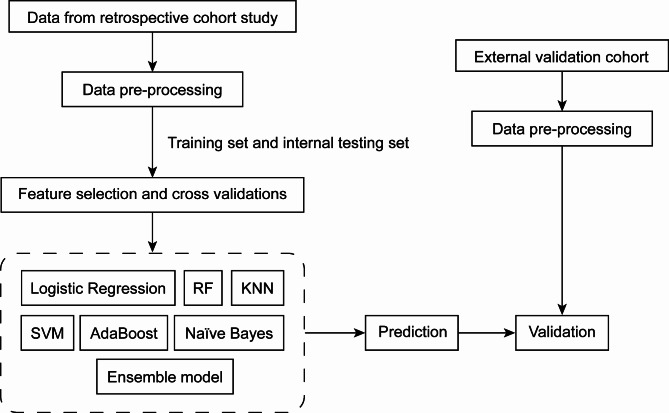
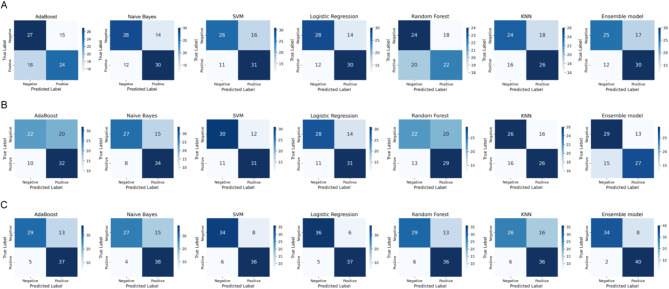
Methods: This retrospective study involved 500 pregnant women who delivered singleton infants at Beijing Tsinghua Changgung Hospital between December 2019 and July 2024. The training set comprised 208 cases of macrosomia and 208 non-macrosomia cases, with 84 additional cases used for external validation. A total of 23 candidate variables, including maternal characteristics, physical measurements, and laboratory tests were collected for feature selection. Seven algorithms were applied in combination with three sets of selected features, resulting in 21 fitted models. Model performance was evaluated via the area under the receiver operating characteristic curve (AUC), accuracy, precision, sensitivity, specificity, and F1-score.
Results: Maternal height, pre-pregnancy weight, first-trimester weight, pre-labor weight, gestational age at birth, gestational weight gain, and the proportion of male neonates were significantly greater in the macrosomia group compared to non-macrosomia group in the training set (p < 0.05). The top five predictors for macrosomia were pre-labor weight, gestational weight gain, the Pre-labor Hb/First-trimester Hb ratio, first-trimester Hb, and maternal height. Logistic regression yielded the highest AUC values in the pre-pregnancy (0.790) and first-trimester (0.815) periods in the validation set, whereas the ensemble model achieved the highest AUC value of 0.930 before labor. SHapley Additive exPlanations (SHAP) analysis highlighted pre-labor weight, gestational age, gestational weight gain, first-trimester Hb, and neonatal sex as important factors for the prediction of macrosomia.
Conclusion: This is the first study to utilize machine learning with data from the pre-pregnancy, first-trimester, and pre-labor periods to predict macrosomia. The logistic regression model and the final ensemble model demonstrated strong predictive performance, offering valuable insights to improve pre-pregnancy counseling, antenatal assessment, and intrapartum decision-making.
期刊介绍:
BMC Pregnancy & Childbirth is an open access, peer-reviewed journal that considers articles on all aspects of pregnancy and childbirth. The journal welcomes submissions on the biomedical aspects of pregnancy, breastfeeding, labor, maternal health, maternity care, trends and sociological aspects of pregnancy and childbirth.





 京公网安备 11010802042870号
京ICP备2023020795号-1
京公网安备 11010802042870号
京ICP备2023020795号-1

 分享
分享
 求助内容:
求助内容: 应助结果提醒方式:
 扫码关注我们
