Thijs J. de Jong, Astra D. Demertzi, William E. Robinson, Wilhelm T. S. Huck
{"title":"环境历史是通过改变台海反应途径的矿物来传递的","authors":"Thijs J. de Jong, Astra D. Demertzi, William E. Robinson, Wilhelm T. S. Huck","doi":"10.1002/anie.202504659","DOIUrl":null,"url":null,"abstract":"<p>It is generally accepted that minerals were an important source of prebiotic catalysis. In this work we demonstrate how the prebiotic sugar forming formose reaction is guided to unique reaction compositions in the presence of a variety of minerals. When the same mineral is transferred between multiple sequential batch reactions, a new reaction composition is obtained after each reaction cycle. We attribute this effect to the adsorption of catalytic Ca(OH)<sub>2</sub> to mineral surfaces. Further exploration shows that first exposing the mineral surface to the aqueous catalyst allows the mineral to subsequently produce formose outputs without the need for any additional catalyst to be present. As such, the mineral surface functions as storage of the preceding environmental conditions. Our work supports the development of chemical complexity through the transfer of information between sequences of chemical environments.</p>","PeriodicalId":125,"journal":{"name":"Angewandte Chemie International Edition","volume":"64 23","pages":""},"PeriodicalIF":16.9000,"publicationDate":"2025-03-21","publicationTypes":"Journal Article","fieldsOfStudy":null,"isOpenAccess":false,"openAccessPdf":"https://onlinelibrary.wiley.com/doi/epdf/10.1002/anie.202504659","citationCount":"0","resultStr":"{\"title\":\"Environmental History is Transferred via Minerals Altering Formose Reaction Pathways\",\"authors\":\"Thijs J. de Jong, Astra D. Demertzi, William E. Robinson, Wilhelm T. S. Huck\",\"doi\":\"10.1002/anie.202504659\",\"DOIUrl\":null,\"url\":null,\"abstract\":\"<p>It is generally accepted that minerals were an important source of prebiotic catalysis. In this work we demonstrate how the prebiotic sugar forming formose reaction is guided to unique reaction compositions in the presence of a variety of minerals. When the same mineral is transferred between multiple sequential batch reactions, a new reaction composition is obtained after each reaction cycle. We attribute this effect to the adsorption of catalytic Ca(OH)<sub>2</sub> to mineral surfaces. Further exploration shows that first exposing the mineral surface to the aqueous catalyst allows the mineral to subsequently produce formose outputs without the need for any additional catalyst to be present. As such, the mineral surface functions as storage of the preceding environmental conditions. Our work supports the development of chemical complexity through the transfer of information between sequences of chemical environments.</p>\",\"PeriodicalId\":125,\"journal\":{\"name\":\"Angewandte Chemie International Edition\",\"volume\":\"64 23\",\"pages\":\"\"},\"PeriodicalIF\":16.9000,\"publicationDate\":\"2025-03-21\",\"publicationTypes\":\"Journal Article\",\"fieldsOfStudy\":null,\"isOpenAccess\":false,\"openAccessPdf\":\"https://onlinelibrary.wiley.com/doi/epdf/10.1002/anie.202504659\",\"citationCount\":\"0\",\"resultStr\":null,\"platform\":\"Semanticscholar\",\"paperid\":null,\"PeriodicalName\":\"Angewandte Chemie International Edition\",\"FirstCategoryId\":\"92\",\"ListUrlMain\":\"https://onlinelibrary.wiley.com/doi/10.1002/anie.202504659\",\"RegionNum\":1,\"RegionCategory\":\"化学\",\"ArticlePicture\":[],\"TitleCN\":null,\"AbstractTextCN\":null,\"PMCID\":null,\"EPubDate\":\"\",\"PubModel\":\"\",\"JCR\":\"Q1\",\"JCRName\":\"CHEMISTRY, MULTIDISCIPLINARY\",\"Score\":null,\"Total\":0}","platform":"Semanticscholar","paperid":null,"PeriodicalName":"Angewandte Chemie International Edition","FirstCategoryId":"92","ListUrlMain":"https://onlinelibrary.wiley.com/doi/10.1002/anie.202504659","RegionNum":1,"RegionCategory":"化学","ArticlePicture":[],"TitleCN":null,"AbstractTextCN":null,"PMCID":null,"EPubDate":"","PubModel":"","JCR":"Q1","JCRName":"CHEMISTRY, MULTIDISCIPLINARY","Score":null,"Total":0}
Environmental History is Transferred via Minerals Altering Formose Reaction Pathways
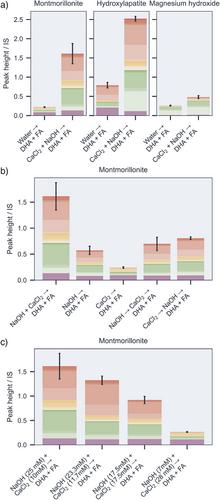
It is generally accepted that minerals were an important source of prebiotic catalysis. In this work we demonstrate how the prebiotic sugar forming formose reaction is guided to unique reaction compositions in the presence of a variety of minerals. When the same mineral is transferred between multiple sequential batch reactions, a new reaction composition is obtained after each reaction cycle. We attribute this effect to the adsorption of catalytic Ca(OH)2 to mineral surfaces. Further exploration shows that first exposing the mineral surface to the aqueous catalyst allows the mineral to subsequently produce formose outputs without the need for any additional catalyst to be present. As such, the mineral surface functions as storage of the preceding environmental conditions. Our work supports the development of chemical complexity through the transfer of information between sequences of chemical environments.
期刊介绍:
Angewandte Chemie, a journal of the German Chemical Society (GDCh), maintains a leading position among scholarly journals in general chemistry with an impressive Impact Factor of 16.6 (2022 Journal Citation Reports, Clarivate, 2023). Published weekly in a reader-friendly format, it features new articles almost every day. Established in 1887, Angewandte Chemie is a prominent chemistry journal, offering a dynamic blend of Review-type articles, Highlights, Communications, and Research Articles on a weekly basis, making it unique in the field.




 京公网安备 11010802042870号
京ICP备2023020795号-1
京公网安备 11010802042870号
京ICP备2023020795号-1

 分享
分享
 求助内容:
求助内容: 应助结果提醒方式:
 扫码关注我们
