Systemic Delivery of a Dual PI3K/mTOR Inhibitor More Effective than Topical Delivery in Preventing Anal Carcinogenesis in an HPV Transgenic Mouse Model.
Laura C Gunder, Tyra H Moyer, Marissa R Ziolkowski, Margaret K Keating, Glen E Leverson, Wei Zhang, Evie H Carchman
{"title":"Systemic Delivery of a Dual PI3K/mTOR Inhibitor More Effective than Topical Delivery in Preventing Anal Carcinogenesis in an HPV Transgenic Mouse Model.","authors":"Laura C Gunder, Tyra H Moyer, Marissa R Ziolkowski, Margaret K Keating, Glen E Leverson, Wei Zhang, Evie H Carchman","doi":"10.26502/jcsct.5079153","DOIUrl":null,"url":null,"abstract":"<p><strong>Introduction: </strong>Anal dysplasia is a growing health concern that over time can result in squamous cell carcinoma (SqCC) of the anus. In this study, we compare a topical versus systemic (oral) administration of LY3023414, a dual PI3K/mTOR inhibitor, to prevent anal carcinogenesis in a Human Papillomavirus (HPV) mouse model of anal cancer.</p><p><strong>Materials and methods: </strong><i>K14E6/E7</i> transgenic mice were used to model HPV-induced anal carcinogenesis. Mice with varying starting anal histologies (normal histology, low-grade, and high-grade anal dysplasia) were treated topically at the anus or systemically via oral gavage with LY3023414 with or without topical carcinogen for 20 weeks. Mice were monitored for overt anal tumor development and anal tissue was assessed for histology and markers of PI3K and mTOR activity (pAKT and pS6, respectively).</p><p><strong>Results: </strong>LY3023414 treatment, regardless of the mode of delivery, significantly decreased overt tumor development in mice starting with normal histology and low-grade anal dysplasia. Systemic LY3023414 treatment was more effective in delaying tumor onset than topical treatment. Mice treated with systemic LY3023414 had significantly reduced rates of anal SqCC when starting with normal and low-grade anal dysplasia compared to topical treatment. Topical treatment was only effective in reducing SqCC in the setting of low-grade dysplasia. LY3023414 inhibition of pAKT and pS6 expression varied with starting histology. Neither treatment mode was effective in the setting of high-grade anal dysplasia.</p><p><strong>Conclusion: </strong>Systemic LY3023414 treatment was more effective than topical application in delaying the progression of normal anal histology and low-grade dysplasia to anal cancer in HPV-associated mice.</p>","PeriodicalId":73634,"journal":{"name":"Journal of cancer science and clinical therapeutics","volume":"6 2","pages":"157-173"},"PeriodicalIF":0.0000,"publicationDate":"2022-01-01","publicationTypes":"Journal Article","fieldsOfStudy":null,"isOpenAccess":false,"openAccessPdf":"https://www.ncbi.nlm.nih.gov/pmc/articles/PMC9851170/pdf/","citationCount":"1","resultStr":null,"platform":"Semanticscholar","paperid":null,"PeriodicalName":"Journal of cancer science and clinical therapeutics","FirstCategoryId":"1085","ListUrlMain":"https://doi.org/10.26502/jcsct.5079153","RegionNum":0,"RegionCategory":null,"ArticlePicture":[],"TitleCN":null,"AbstractTextCN":null,"PMCID":null,"EPubDate":"","PubModel":"","JCR":"","JCRName":"","Score":null,"Total":0}
引用次数: 1
Abstract
Introduction: Anal dysplasia is a growing health concern that over time can result in squamous cell carcinoma (SqCC) of the anus. In this study, we compare a topical versus systemic (oral) administration of LY3023414, a dual PI3K/mTOR inhibitor, to prevent anal carcinogenesis in a Human Papillomavirus (HPV) mouse model of anal cancer.
Materials and methods: K14E6/E7 transgenic mice were used to model HPV-induced anal carcinogenesis. Mice with varying starting anal histologies (normal histology, low-grade, and high-grade anal dysplasia) were treated topically at the anus or systemically via oral gavage with LY3023414 with or without topical carcinogen for 20 weeks. Mice were monitored for overt anal tumor development and anal tissue was assessed for histology and markers of PI3K and mTOR activity (pAKT and pS6, respectively).
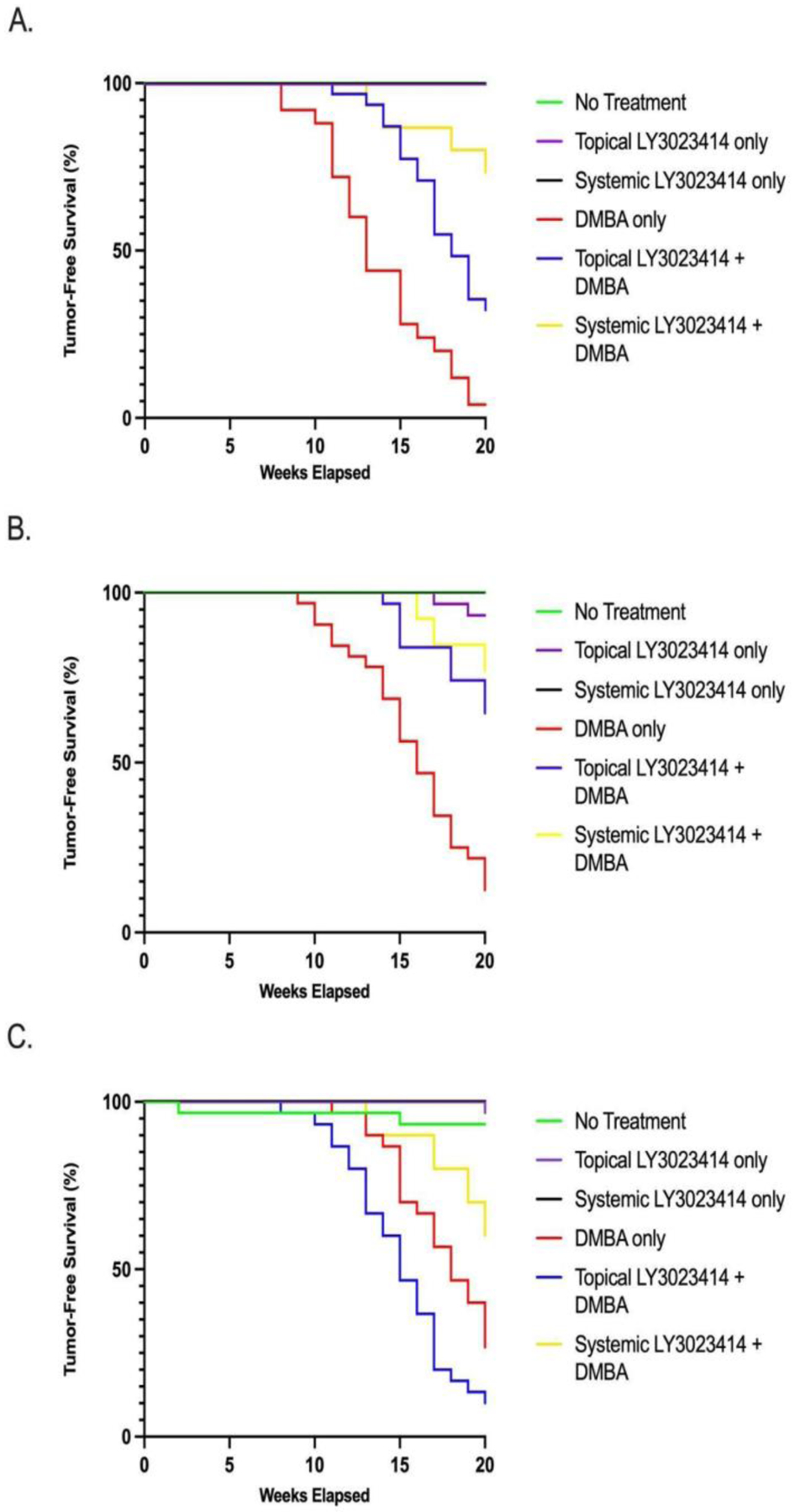
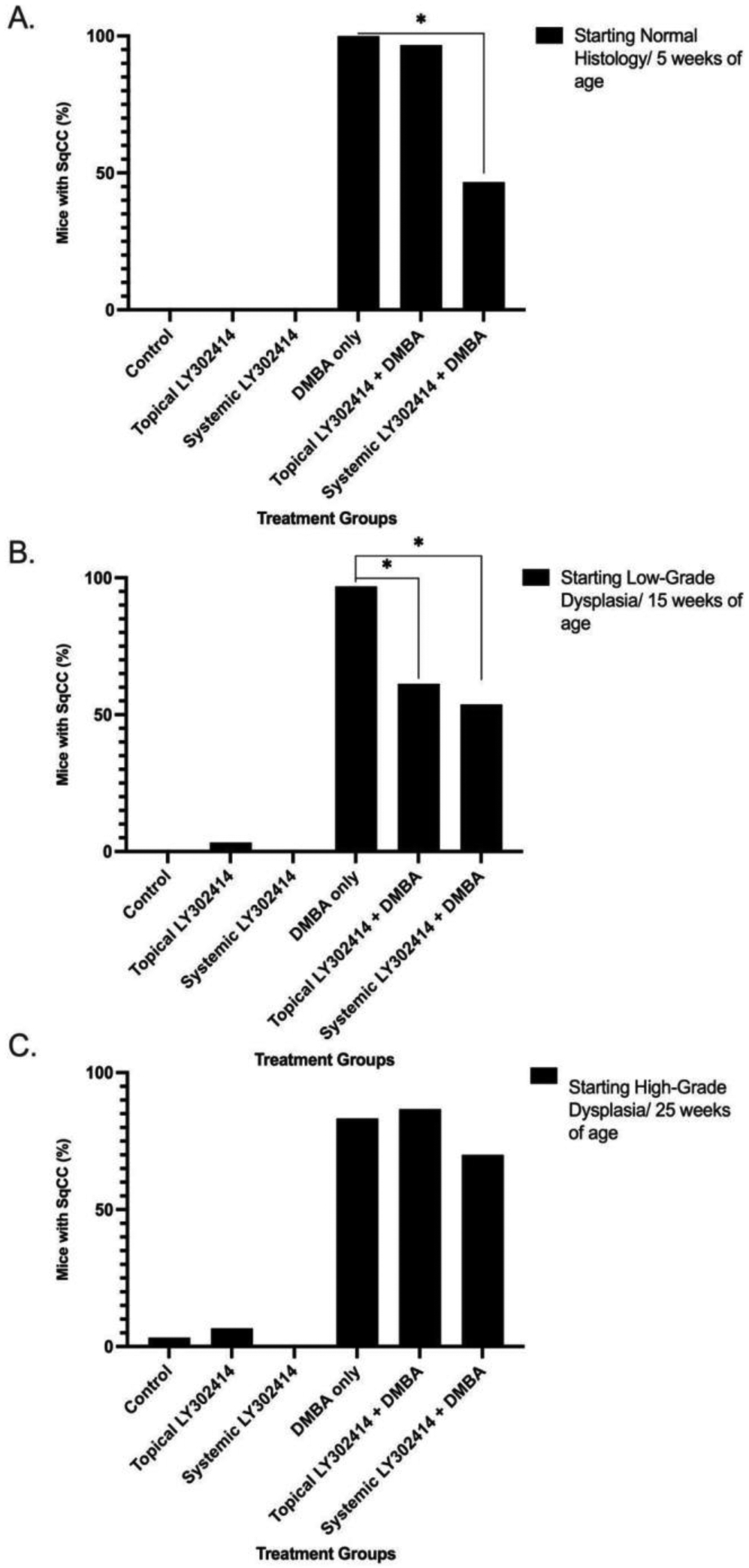
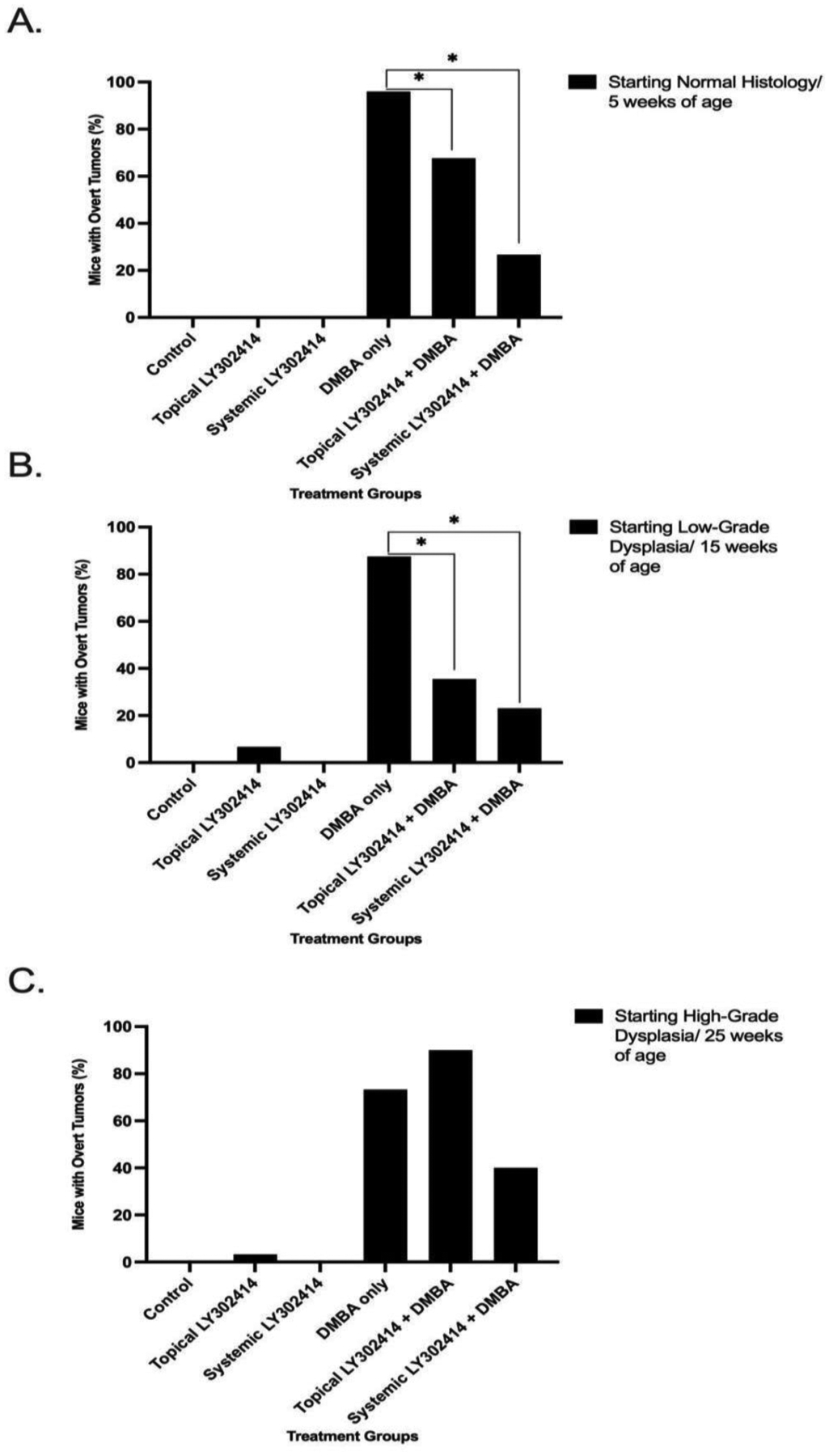
Results: LY3023414 treatment, regardless of the mode of delivery, significantly decreased overt tumor development in mice starting with normal histology and low-grade anal dysplasia. Systemic LY3023414 treatment was more effective in delaying tumor onset than topical treatment. Mice treated with systemic LY3023414 had significantly reduced rates of anal SqCC when starting with normal and low-grade anal dysplasia compared to topical treatment. Topical treatment was only effective in reducing SqCC in the setting of low-grade dysplasia. LY3023414 inhibition of pAKT and pS6 expression varied with starting histology. Neither treatment mode was effective in the setting of high-grade anal dysplasia.
Conclusion: Systemic LY3023414 treatment was more effective than topical application in delaying the progression of normal anal histology and low-grade dysplasia to anal cancer in HPV-associated mice.



 京公网安备 11010802042870号
京ICP备2023020795号-1
京公网安备 11010802042870号
京ICP备2023020795号-1

 分享
分享

 求助内容:
求助内容: 应助结果提醒方式:
 扫码关注我们
