Joseph Guydish, Caravella McCuistian, Sindhushree Hosakote, Thao Le, Carmen L Masson, Barbara K Campbell, Kevin Delucchi
{"title":"A cluster-randomized trial of a brief multi-component intervention to improve tobacco outcomes in substance use treatment.","authors":"Joseph Guydish, Caravella McCuistian, Sindhushree Hosakote, Thao Le, Carmen L Masson, Barbara K Campbell, Kevin Delucchi","doi":"10.1186/s13011-023-00539-w","DOIUrl":null,"url":null,"abstract":"<p><strong>Background: </strong>Smoking prevalence is high among people in substance use disorder (SUD) treatment, and program interventions to address smoking are often complex and lengthy. This cluster-randomized trial tested whether a brief multi-component intervention impacted tobacco outcomes among staff and clients.</p><p><strong>Methods: </strong>Seven SUD treatment programs were randomly assigned to the multi-component intervention or to waitlist control. The 6-month intervention included a leadership motivation assessment, program incentives, 4 staff training sessions and a leadership learning community session. Survey data were collected from staff and clients at pre- and post-intervention. Outcomes were first compared across condition (intervention vs waitlist control), and then examined pre- to post-intervention with condition collapsed.</p><p><strong>Results: </strong>Staff in the intervention (n = 48) and control conditions (n = 26) did not differ at post-intervention on smoking prevalence, self-efficacy to help clients quit, or practices used to help clients quit smoking. Intervention clients (n = 113) did not differ from controls (n = 61) in smoking prevalence or receipt of tobacco services. Pre-post comparisons collapsed across condition showed a decrease in client and staff smoking prevalence, which could not be attributed to the intervention, and a decrease in client receipt of cessation medication.</p><p><strong>Conclusion: </strong>The brief multi-component intervention did not support changes in smoking prevalence or in tobacco-related services received by clients. Other intervention features are needed to reduce smoking among SUD clients.</p><p><strong>Trial registration: </strong>Randomization occurred at the program level and outcomes measured are program-level measures. Accordingly, the trial is not registered.</p>","PeriodicalId":22041,"journal":{"name":"Substance Abuse Treatment, Prevention, and Policy","volume":"18 1","pages":"34"},"PeriodicalIF":3.0000,"publicationDate":"2023-06-16","publicationTypes":"Journal Article","fieldsOfStudy":null,"isOpenAccess":false,"openAccessPdf":"https://www.ncbi.nlm.nih.gov/pmc/articles/PMC10276468/pdf/","citationCount":"0","resultStr":null,"platform":"Semanticscholar","paperid":null,"PeriodicalName":"Substance Abuse Treatment, Prevention, and Policy","FirstCategoryId":"3","ListUrlMain":"https://doi.org/10.1186/s13011-023-00539-w","RegionNum":3,"RegionCategory":"医学","ArticlePicture":[],"TitleCN":null,"AbstractTextCN":null,"PMCID":null,"EPubDate":"","PubModel":"","JCR":"Q2","JCRName":"SUBSTANCE ABUSE","Score":null,"Total":0}
引用次数: 0
Abstract
Background: Smoking prevalence is high among people in substance use disorder (SUD) treatment, and program interventions to address smoking are often complex and lengthy. This cluster-randomized trial tested whether a brief multi-component intervention impacted tobacco outcomes among staff and clients.
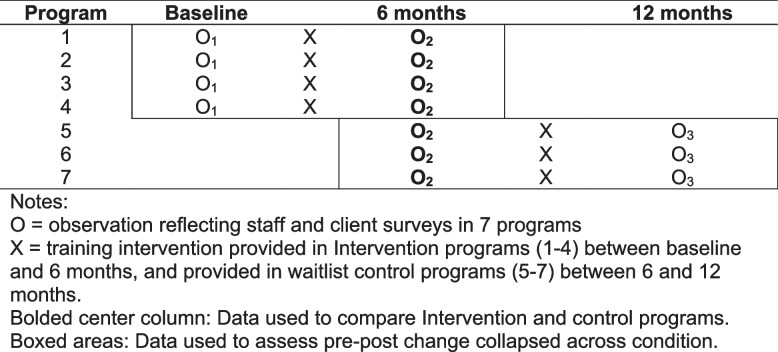
Methods: Seven SUD treatment programs were randomly assigned to the multi-component intervention or to waitlist control. The 6-month intervention included a leadership motivation assessment, program incentives, 4 staff training sessions and a leadership learning community session. Survey data were collected from staff and clients at pre- and post-intervention. Outcomes were first compared across condition (intervention vs waitlist control), and then examined pre- to post-intervention with condition collapsed.
Results: Staff in the intervention (n = 48) and control conditions (n = 26) did not differ at post-intervention on smoking prevalence, self-efficacy to help clients quit, or practices used to help clients quit smoking. Intervention clients (n = 113) did not differ from controls (n = 61) in smoking prevalence or receipt of tobacco services. Pre-post comparisons collapsed across condition showed a decrease in client and staff smoking prevalence, which could not be attributed to the intervention, and a decrease in client receipt of cessation medication.
Conclusion: The brief multi-component intervention did not support changes in smoking prevalence or in tobacco-related services received by clients. Other intervention features are needed to reduce smoking among SUD clients.
Trial registration: Randomization occurred at the program level and outcomes measured are program-level measures. Accordingly, the trial is not registered.
期刊介绍:
Substance Abuse Treatment, Prevention, and Policy is an open access, peer-reviewed journal that encompasses research concerning substance abuse, with a focus on policy issues. The journal aims to provide an environment for the exchange of ideas, new research, consensus papers, and critical reviews, to bridge the established fields that share a mutual goal of reducing the harms from substance use. These fields include: legislation pertaining to substance use; correctional supervision of people with substance use disorder; medical treatment and screening; mental health services; research; and evaluation of substance use disorder programs.



 京公网安备 11010802042870号
京ICP备2023020795号-1
京公网安备 11010802042870号
京ICP备2023020795号-1

 分享
分享
 求助内容:
求助内容: 应助结果提醒方式:
 扫码关注我们
