{"title":"Microbial colonization of sacral nerve stimulators pseudo-capsule: A single institution experience.","authors":"Mostafa M Mostafa, Mohamed Kamel, Ayman Mahdy","doi":"10.4111/icu.20230111","DOIUrl":null,"url":null,"abstract":"<p><strong>Purpose: </strong>To evaluate the incidence and type of microbial colonization of the pseudo-capsule (PC) that forms around sacral nerve stimulators (SNS) and consequently the significance of surgical excision of this PC at time of SNS revision or removal.</p><p><strong>Materials and methods: </strong>A cohort of 31 patients who underwent SNS revision or removal from January 2018 to June 2021 were retrospectively reviewed. The baseline demographics, rate and type of PC microbial colonization and development of SNS insertion site infection were reported.</p><p><strong>Results: </strong>A cohort of 31 patients who underwent \"InterStim device (Medtronic)\" revision or removal were included. The majority were females (93.5%). The most common indication for SNS insertion was refractory overactive bladder (67.7%). Nine patients (29.0%) underwent SNS revision due to malfunctional device, and 9 patients had SNS removal for the need of MRI procedures. Four patients (12.9%) had positive tissue culture growing Coryneform bacillus (50.0%), Cutibacterium acnes (25.0%) and Pseudomonas aeruginosa (25.0%).</p><p><strong>Conclusions: </strong>PC colonization was uncommon at the time of SNS explant. However, more research is needed to better understand the role of PC-positive culture in increasing the risk of SNS device infections if strict adherence to sterile techniques is adopted.</p>","PeriodicalId":14522,"journal":{"name":"Investigative and Clinical Urology","volume":"64 5","pages":"495-500"},"PeriodicalIF":2.1000,"publicationDate":"2023-09-01","publicationTypes":"Journal Article","fieldsOfStudy":null,"isOpenAccess":false,"openAccessPdf":"https://ftp.ncbi.nlm.nih.gov/pub/pmc/oa_pdf/cf/26/icu-64-495.PMC10482663.pdf","citationCount":"0","resultStr":null,"platform":"Semanticscholar","paperid":null,"PeriodicalName":"Investigative and Clinical Urology","FirstCategoryId":"3","ListUrlMain":"https://doi.org/10.4111/icu.20230111","RegionNum":3,"RegionCategory":"医学","ArticlePicture":[],"TitleCN":null,"AbstractTextCN":null,"PMCID":null,"EPubDate":"","PubModel":"","JCR":"Q2","JCRName":"UROLOGY & NEPHROLOGY","Score":null,"Total":0}
引用次数: 0
Abstract
Purpose: To evaluate the incidence and type of microbial colonization of the pseudo-capsule (PC) that forms around sacral nerve stimulators (SNS) and consequently the significance of surgical excision of this PC at time of SNS revision or removal.
Materials and methods: A cohort of 31 patients who underwent SNS revision or removal from January 2018 to June 2021 were retrospectively reviewed. The baseline demographics, rate and type of PC microbial colonization and development of SNS insertion site infection were reported.
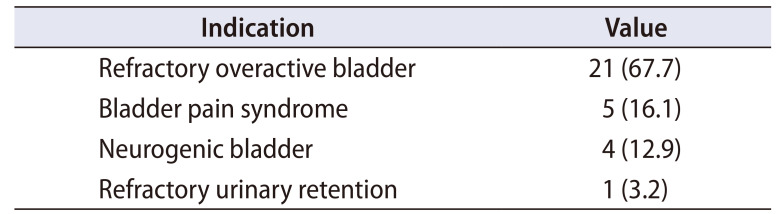
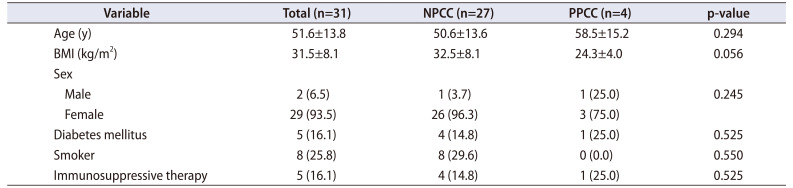
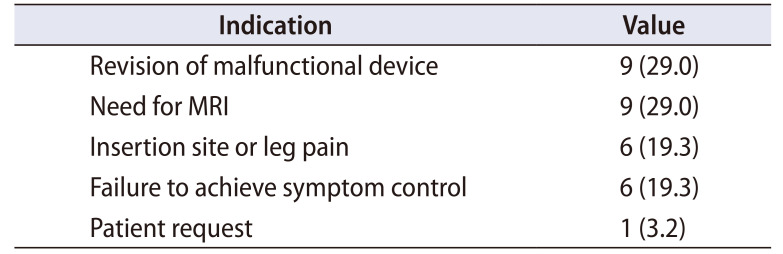
Results: A cohort of 31 patients who underwent "InterStim device (Medtronic)" revision or removal were included. The majority were females (93.5%). The most common indication for SNS insertion was refractory overactive bladder (67.7%). Nine patients (29.0%) underwent SNS revision due to malfunctional device, and 9 patients had SNS removal for the need of MRI procedures. Four patients (12.9%) had positive tissue culture growing Coryneform bacillus (50.0%), Cutibacterium acnes (25.0%) and Pseudomonas aeruginosa (25.0%).
Conclusions: PC colonization was uncommon at the time of SNS explant. However, more research is needed to better understand the role of PC-positive culture in increasing the risk of SNS device infections if strict adherence to sterile techniques is adopted.
期刊介绍:
Investigative and Clinical Urology (Investig Clin Urol, ICUrology) is an international, peer-reviewed, platinum open access journal published bimonthly. ICUrology aims to provide outstanding scientific and clinical research articles, that will advance knowledge and understanding of urological diseases and current therapeutic treatments. ICUrology publishes Original Articles, Rapid Communications, Review Articles, Special Articles, Innovations in Urology, Editorials, and Letters to the Editor, with a focus on the following areas of expertise:
• Precision Medicine in Urology
• Urological Oncology
• Robotics/Laparoscopy
• Endourology/Urolithiasis
• Lower Urinary Tract Dysfunction
• Female Urology
• Sexual Dysfunction/Infertility
• Infection/Inflammation
• Reconstruction/Transplantation
• Geriatric Urology
• Pediatric Urology
• Basic/Translational Research
One of the notable features of ICUrology is the application of multimedia platforms facilitating easy-to-access online video clips of newly developed surgical techniques from the journal''s website, by a QR (quick response) code located in the article, or via YouTube. ICUrology provides current and highly relevant knowledge to a broad audience at the cutting edge of urological research and clinical practice.



 京公网安备 11010802042870号
京ICP备2023020795号-1
京公网安备 11010802042870号
京ICP备2023020795号-1

 分享
分享
 求助内容:
求助内容: 应助结果提醒方式:
 扫码关注我们
