{"title":"Classification of dental implant systems using cloud-based deep learning algorithm: an experimental study.","authors":"Hyun Jun Kong","doi":"10.12701/jyms.2023.00465","DOIUrl":null,"url":null,"abstract":"<p><strong>Background: </strong>This study aimed to evaluate the accuracy and clinical usability of implant system classification using automated machine learning on a Google Cloud platform.</p><p><strong>Methods: </strong>Four dental implant systems were selected: Osstem TSIII, Osstem USII, Biomet 3i Os-seotite External, and Dentsply Sirona Xive. A total of 4,800 periapical radiographs (1,200 for each implant system) were collected and labeled based on electronic medical records. Regions of interest were manually cropped to 400×800 pixels, and all images were uploaded to Google Cloud storage. Approximately 80% of the images were used for training, 10% for validation, and 10% for testing. Google automated machine learning (AutoML) Vision automatically executed a neural architecture search technology to apply an appropriate algorithm to the uploaded data. A single-label image classification model was trained using AutoML. The performance of the mod-el was evaluated in terms of accuracy, precision, recall, specificity, and F1 score.</p><p><strong>Results: </strong>The accuracy, precision, recall, specificity, and F1 score of the AutoML Vision model were 0.981, 0.963, 0.961, 0.985, and 0.962, respectively. Osstem TSIII had an accuracy of 100%. Osstem USII and 3i Osseotite External were most often confused in the confusion matrix.</p><p><strong>Conclusion: </strong>Deep learning-based AutoML on a cloud platform showed high accuracy in the classification of dental implant systems as a fine-tuned convolutional neural network. Higher-quality images from various implant systems will be required to improve the performance and clinical usability of the model.</p>","PeriodicalId":74020,"journal":{"name":"Journal of Yeungnam medical science","volume":" ","pages":"S29-S36"},"PeriodicalIF":1.4000,"publicationDate":"2023-11-01","publicationTypes":"Journal Article","fieldsOfStudy":null,"isOpenAccess":false,"openAccessPdf":"https://www.ncbi.nlm.nih.gov/pmc/articles/PMC10718610/pdf/","citationCount":"0","resultStr":null,"platform":"Semanticscholar","paperid":null,"PeriodicalName":"Journal of Yeungnam medical science","FirstCategoryId":"1085","ListUrlMain":"https://doi.org/10.12701/jyms.2023.00465","RegionNum":0,"RegionCategory":null,"ArticlePicture":[],"TitleCN":null,"AbstractTextCN":null,"PMCID":null,"EPubDate":"2023/7/26 0:00:00","PubModel":"Epub","JCR":"Q3","JCRName":"MEDICINE, GENERAL & INTERNAL","Score":null,"Total":0}
引用次数: 0
Abstract
Background: This study aimed to evaluate the accuracy and clinical usability of implant system classification using automated machine learning on a Google Cloud platform.
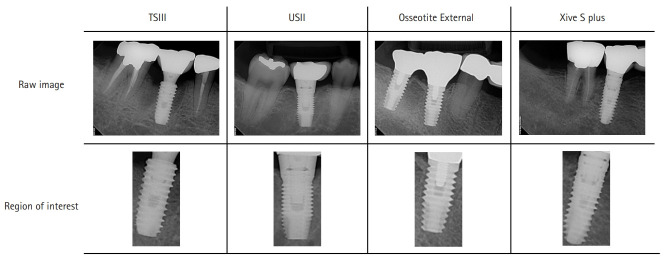
Methods: Four dental implant systems were selected: Osstem TSIII, Osstem USII, Biomet 3i Os-seotite External, and Dentsply Sirona Xive. A total of 4,800 periapical radiographs (1,200 for each implant system) were collected and labeled based on electronic medical records. Regions of interest were manually cropped to 400×800 pixels, and all images were uploaded to Google Cloud storage. Approximately 80% of the images were used for training, 10% for validation, and 10% for testing. Google automated machine learning (AutoML) Vision automatically executed a neural architecture search technology to apply an appropriate algorithm to the uploaded data. A single-label image classification model was trained using AutoML. The performance of the mod-el was evaluated in terms of accuracy, precision, recall, specificity, and F1 score.
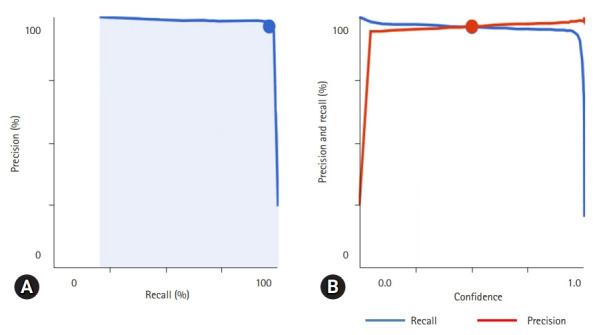
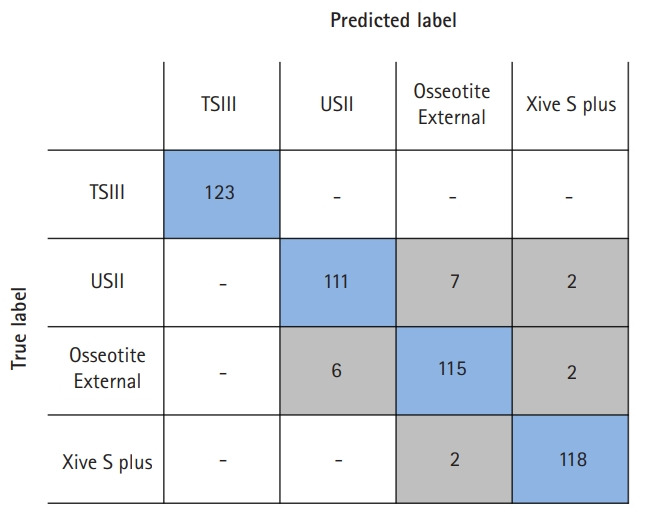
Results: The accuracy, precision, recall, specificity, and F1 score of the AutoML Vision model were 0.981, 0.963, 0.961, 0.985, and 0.962, respectively. Osstem TSIII had an accuracy of 100%. Osstem USII and 3i Osseotite External were most often confused in the confusion matrix.
Conclusion: Deep learning-based AutoML on a cloud platform showed high accuracy in the classification of dental implant systems as a fine-tuned convolutional neural network. Higher-quality images from various implant systems will be required to improve the performance and clinical usability of the model.



 京公网安备 11010802042870号
京ICP备2023020795号-1
京公网安备 11010802042870号
京ICP备2023020795号-1

 分享
分享

 求助内容:
求助内容: 应助结果提醒方式:
 扫码关注我们
