{"title":"Classification of T lymphocyte motility behaviors using a machine learning approach.","authors":"Yves Carpentier Solorio, Florent Lemaître, Bassam Jabbour, Olivier Tastet, Nathalie Arbour, Elie Bou Assi","doi":"10.1371/journal.pcbi.1011449","DOIUrl":null,"url":null,"abstract":"<p><p>T lymphocytes migrate into organs and interact with local cells to perform their functions. How human T lymphocytes communicate with organ-specific cells and participate in pathobiological processes remains unresolved. Brain infiltration of T lymphocytes is associated with multiple neurological disorders. Thus, to characterize the behavior of human T lymphocytes reaching the human brain, we performed time-lapse microscopy on human CD8+ T lymphocytes co-cultured with either primary human astrocytes or neurons. Using traditional manual and visual assessment of microscopy data, we identified distinct CD8+ T lymphocyte motility behaviors. However, such characterization is time and labor-intensive. In this work, we trained and validated a machine-learning model for the automated classification of behaviors of CD8+ T lymphocytes interacting with astrocytes and neurons. A balanced random forest was trained for the binary classification of established classes of cell behaviors (synapse vs. kinapse) as well as visually identified behaviors (scanning, dancing, and poking). Feature selection was performed during 3-fold cross-validation using the minimum redundancy maximum relevance algorithm. Results show promising performances when tested on a held-out dataset of CD8+ T lymphocytes interacting with astrocytes with a new experimenter and a held-out independent dataset of CD8+ T lymphocytes interacting with neurons. When tested on the independent CD8+ T cell-neuron dataset, the final model achieved a binary classification accuracy of 0.82 and a 3-class accuracy of 0.79. This novel automated classification approach could significantly reduce the time required to label cell motility behaviors while facilitating the identification of interactions of T lymphocytes with multiple cell types.</p>","PeriodicalId":49688,"journal":{"name":"PLoS Computational Biology","volume":"19 9","pages":"e1011449"},"PeriodicalIF":3.6000,"publicationDate":"2023-09-11","publicationTypes":"Journal Article","fieldsOfStudy":null,"isOpenAccess":false,"openAccessPdf":"https://www.ncbi.nlm.nih.gov/pmc/articles/PMC10513376/pdf/","citationCount":"0","resultStr":null,"platform":"Semanticscholar","paperid":null,"PeriodicalName":"PLoS Computational Biology","FirstCategoryId":"99","ListUrlMain":"https://doi.org/10.1371/journal.pcbi.1011449","RegionNum":2,"RegionCategory":"生物学","ArticlePicture":[],"TitleCN":null,"AbstractTextCN":null,"PMCID":null,"EPubDate":"2023/9/1 0:00:00","PubModel":"eCollection","JCR":"","JCRName":"","Score":null,"Total":0}
引用次数: 0
Abstract
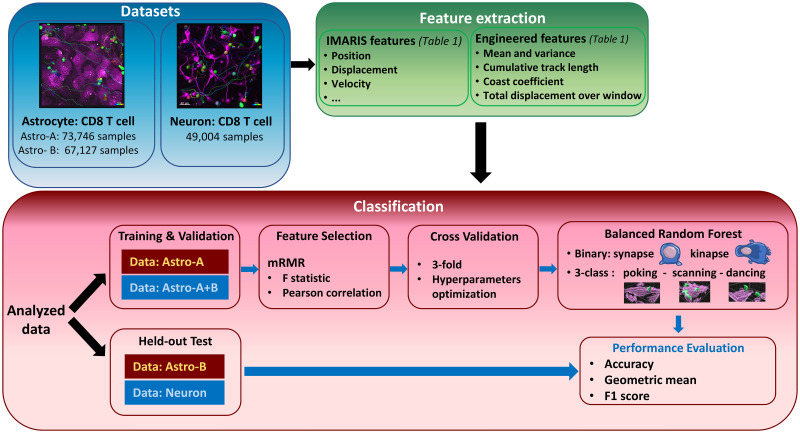
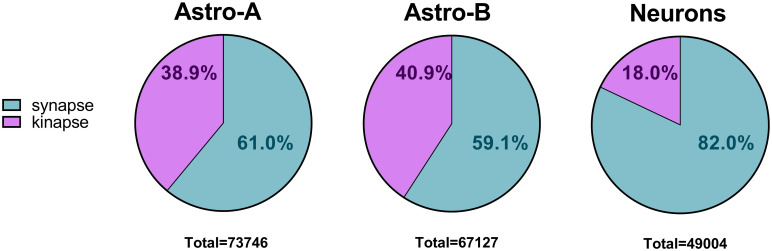
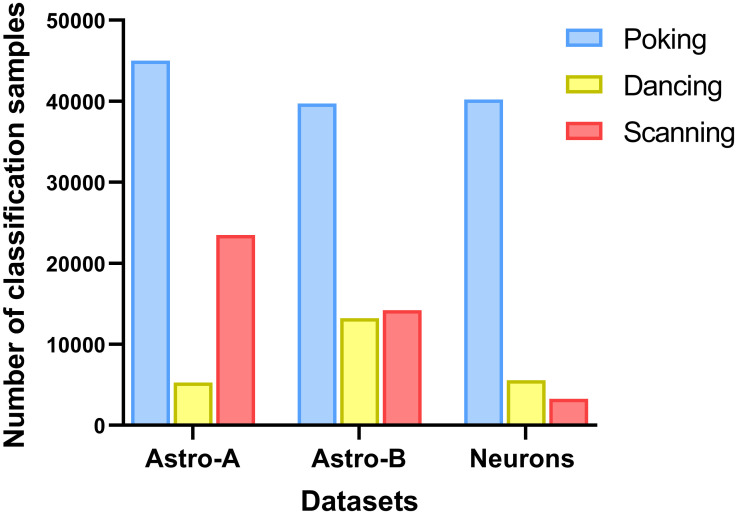
T lymphocytes migrate into organs and interact with local cells to perform their functions. How human T lymphocytes communicate with organ-specific cells and participate in pathobiological processes remains unresolved. Brain infiltration of T lymphocytes is associated with multiple neurological disorders. Thus, to characterize the behavior of human T lymphocytes reaching the human brain, we performed time-lapse microscopy on human CD8+ T lymphocytes co-cultured with either primary human astrocytes or neurons. Using traditional manual and visual assessment of microscopy data, we identified distinct CD8+ T lymphocyte motility behaviors. However, such characterization is time and labor-intensive. In this work, we trained and validated a machine-learning model for the automated classification of behaviors of CD8+ T lymphocytes interacting with astrocytes and neurons. A balanced random forest was trained for the binary classification of established classes of cell behaviors (synapse vs. kinapse) as well as visually identified behaviors (scanning, dancing, and poking). Feature selection was performed during 3-fold cross-validation using the minimum redundancy maximum relevance algorithm. Results show promising performances when tested on a held-out dataset of CD8+ T lymphocytes interacting with astrocytes with a new experimenter and a held-out independent dataset of CD8+ T lymphocytes interacting with neurons. When tested on the independent CD8+ T cell-neuron dataset, the final model achieved a binary classification accuracy of 0.82 and a 3-class accuracy of 0.79. This novel automated classification approach could significantly reduce the time required to label cell motility behaviors while facilitating the identification of interactions of T lymphocytes with multiple cell types.
期刊介绍:
PLOS Computational Biology features works of exceptional significance that further our understanding of living systems at all scales—from molecules and cells, to patient populations and ecosystems—through the application of computational methods. Readers include life and computational scientists, who can take the important findings presented here to the next level of discovery.
Research articles must be declared as belonging to a relevant section. More information about the sections can be found in the submission guidelines.
Research articles should model aspects of biological systems, demonstrate both methodological and scientific novelty, and provide profound new biological insights.
Generally, reliability and significance of biological discovery through computation should be validated and enriched by experimental studies. Inclusion of experimental validation is not required for publication, but should be referenced where possible. Inclusion of experimental validation of a modest biological discovery through computation does not render a manuscript suitable for PLOS Computational Biology.
Research articles specifically designated as Methods papers should describe outstanding methods of exceptional importance that have been shown, or have the promise to provide new biological insights. The method must already be widely adopted, or have the promise of wide adoption by a broad community of users. Enhancements to existing published methods will only be considered if those enhancements bring exceptional new capabilities.



 京公网安备 11010802042870号
京ICP备2023020795号-1
京公网安备 11010802042870号
京ICP备2023020795号-1

 分享
分享
 求助内容:
求助内容: 应助结果提醒方式:
 扫码关注我们
