{"title":"Evolutionary dynamics of the severe acute respiratory syndrome coronavirus 2 genomes.","authors":"Zhaohui Qian, Pei Li, Xiaolu Tang, Jian Lu","doi":"10.1515/mr-2021-0035","DOIUrl":null,"url":null,"abstract":"<p><p>The coronavirus disease 2019 (COVID-19) pandemic has caused immense losses in human lives and the global economy and posed significant challenges for global public health. As severe acute respiratory syndrome coronavirus 2 (SARS-CoV-2), the causative agent of COVID-19, has evolved, thousands of single nucleotide variants (SNVs) have been identified across the viral genome. The roles of individual SNVs in the zoonotic origin, evolution, and transmission of SARS-CoV-2 have become the focus of many studies. This review summarizes recent comparative genomic analyses of SARS-CoV-2 and related coronaviruses (SC2r-CoVs) found in non-human animals, including delineation of SARS-CoV-2 lineages based on characteristic SNVs. We also discuss the current understanding of receptor-binding domain (RBD) evolution and characteristic mutations in variants of concern (VOCs) of SARS-CoV-2, as well as possible co-evolution between RBD and its receptor, angiotensin-converting enzyme 2 (ACE2). We propose that the interplay between SARS-CoV-2 and host RNA editing mechanisms might have partially resulted in the bias in nucleotide changes during SARS-CoV-2 evolution. Finally, we outline some current challenges, including difficulty in deciphering the complicated relationship between viral pathogenicity and infectivity of different variants, and monitoring transmission of SARS-CoV-2 between humans and animals as the pandemic progresses.</p>","PeriodicalId":74151,"journal":{"name":"Medical review (Berlin, Germany)","volume":"2 1","pages":"3-22"},"PeriodicalIF":0.0000,"publicationDate":"2022-02-01","publicationTypes":"Journal Article","fieldsOfStudy":null,"isOpenAccess":false,"openAccessPdf":"https://ftp.ncbi.nlm.nih.gov/pub/pmc/oa_pdf/81/84/mr-2-1-mr-2021-0035.PMC9047652.pdf","citationCount":"6","resultStr":null,"platform":"Semanticscholar","paperid":null,"PeriodicalName":"Medical review (Berlin, Germany)","FirstCategoryId":"1085","ListUrlMain":"https://doi.org/10.1515/mr-2021-0035","RegionNum":0,"RegionCategory":null,"ArticlePicture":[],"TitleCN":null,"AbstractTextCN":null,"PMCID":null,"EPubDate":"","PubModel":"","JCR":"","JCRName":"","Score":null,"Total":0}
引用次数: 6
Abstract
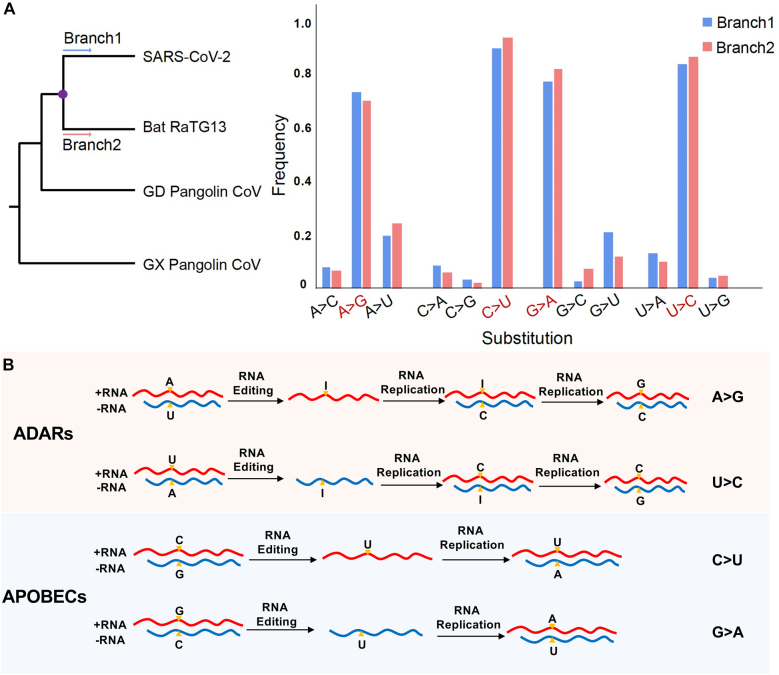
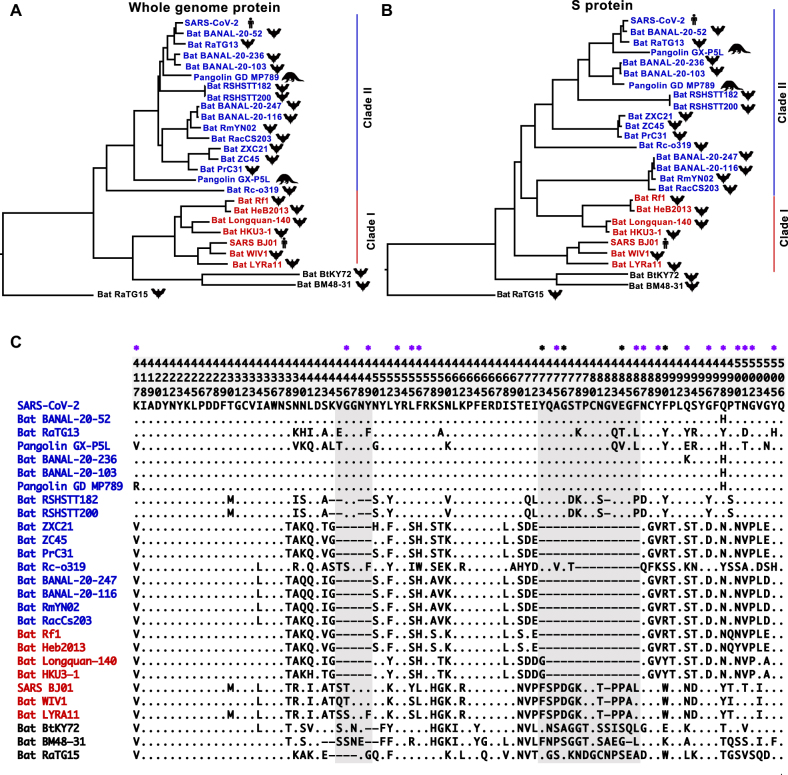
The coronavirus disease 2019 (COVID-19) pandemic has caused immense losses in human lives and the global economy and posed significant challenges for global public health. As severe acute respiratory syndrome coronavirus 2 (SARS-CoV-2), the causative agent of COVID-19, has evolved, thousands of single nucleotide variants (SNVs) have been identified across the viral genome. The roles of individual SNVs in the zoonotic origin, evolution, and transmission of SARS-CoV-2 have become the focus of many studies. This review summarizes recent comparative genomic analyses of SARS-CoV-2 and related coronaviruses (SC2r-CoVs) found in non-human animals, including delineation of SARS-CoV-2 lineages based on characteristic SNVs. We also discuss the current understanding of receptor-binding domain (RBD) evolution and characteristic mutations in variants of concern (VOCs) of SARS-CoV-2, as well as possible co-evolution between RBD and its receptor, angiotensin-converting enzyme 2 (ACE2). We propose that the interplay between SARS-CoV-2 and host RNA editing mechanisms might have partially resulted in the bias in nucleotide changes during SARS-CoV-2 evolution. Finally, we outline some current challenges, including difficulty in deciphering the complicated relationship between viral pathogenicity and infectivity of different variants, and monitoring transmission of SARS-CoV-2 between humans and animals as the pandemic progresses.



 京公网安备 11010802042870号
京ICP备2023020795号-1
京公网安备 11010802042870号
京ICP备2023020795号-1

 分享
分享

 求助内容:
求助内容: 应助结果提醒方式:
 扫码关注我们
