{"title":"Connections between metabolism and epigenetic modifications in cancer.","authors":"Guangchao Wang, Jingdong J Han","doi":"10.1515/mr-2021-0015","DOIUrl":null,"url":null,"abstract":"<p><p>How cells sense and respond to environmental changes is still a key question. It has been identified that cellular metabolism is an important modifier of various epigenetic modifications, such as DNA methylation, histone methylation and acetylation and RNA N<sup>6</sup>-methyladenosine (m6A) methylation. This closely links the environmental nutrient availability to the maintenance of chromatin structure and gene expression, and is crucial to regulate cellular homeostasis, cell growth and differentiation. Cancer metabolic reprogramming and epigenetic alterations are widely observed, and facilitate cancer development and progression. In cancer cells, oncogenic signaling-driven metabolic reprogramming modifies the epigenetic landscape via changes in the key metabolite levels. In this review, we briefly summarized the current evidence that the abundance of key metabolites, such as <i>S</i>-adenosyl methionine (SAM), acetyl-CoA, <i>α</i>-ketoglutarate (<i>α</i>-KG), 2-hydroxyglutarate (2-HG), uridine diphospho-<i>N</i>-acetylglucosamine (UDP-GlcNAc) and lactate, affected by metabolic reprogramming plays an important role in dynamically regulating epigenetic modifications in cancer. An improved understanding of the roles of metabolic reprogramming in epigenetic regulation can contribute to uncover the underlying mechanisms of metabolic reprogramming in cancer development and identify the potential targets for cancer therapies.</p>","PeriodicalId":74151,"journal":{"name":"Medical review (Berlin, Germany)","volume":"1 2","pages":"199-221"},"PeriodicalIF":0.0000,"publicationDate":"2022-02-14","publicationTypes":"Journal Article","fieldsOfStudy":null,"isOpenAccess":false,"openAccessPdf":"https://ftp.ncbi.nlm.nih.gov/pub/pmc/oa_pdf/c5/ff/mr-1-2-mr-2021-0015.PMC10388788.pdf","citationCount":"4","resultStr":null,"platform":"Semanticscholar","paperid":null,"PeriodicalName":"Medical review (Berlin, Germany)","FirstCategoryId":"1085","ListUrlMain":"https://doi.org/10.1515/mr-2021-0015","RegionNum":0,"RegionCategory":null,"ArticlePicture":[],"TitleCN":null,"AbstractTextCN":null,"PMCID":null,"EPubDate":"2021/12/1 0:00:00","PubModel":"eCollection","JCR":"","JCRName":"","Score":null,"Total":0}
引用次数: 4
Abstract
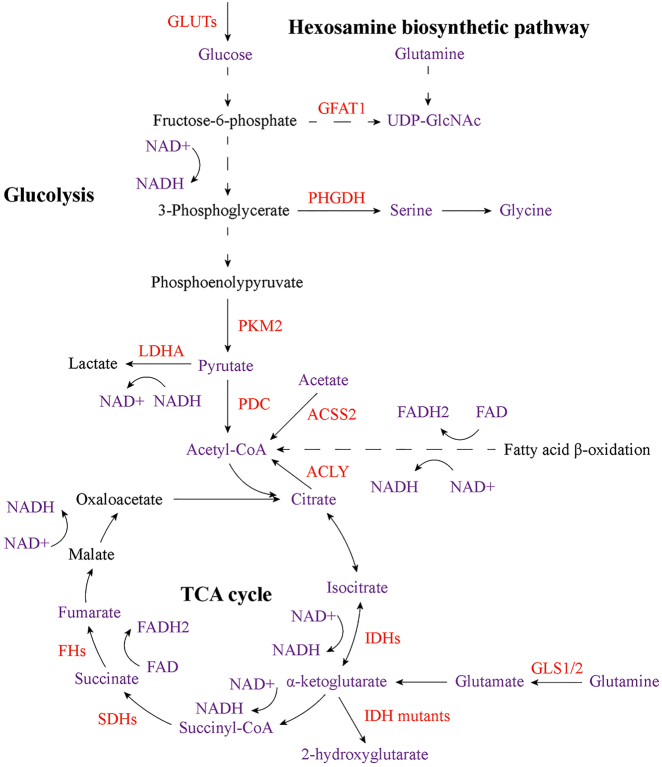
How cells sense and respond to environmental changes is still a key question. It has been identified that cellular metabolism is an important modifier of various epigenetic modifications, such as DNA methylation, histone methylation and acetylation and RNA N6-methyladenosine (m6A) methylation. This closely links the environmental nutrient availability to the maintenance of chromatin structure and gene expression, and is crucial to regulate cellular homeostasis, cell growth and differentiation. Cancer metabolic reprogramming and epigenetic alterations are widely observed, and facilitate cancer development and progression. In cancer cells, oncogenic signaling-driven metabolic reprogramming modifies the epigenetic landscape via changes in the key metabolite levels. In this review, we briefly summarized the current evidence that the abundance of key metabolites, such as S-adenosyl methionine (SAM), acetyl-CoA, α-ketoglutarate (α-KG), 2-hydroxyglutarate (2-HG), uridine diphospho-N-acetylglucosamine (UDP-GlcNAc) and lactate, affected by metabolic reprogramming plays an important role in dynamically regulating epigenetic modifications in cancer. An improved understanding of the roles of metabolic reprogramming in epigenetic regulation can contribute to uncover the underlying mechanisms of metabolic reprogramming in cancer development and identify the potential targets for cancer therapies.





 京公网安备 11010802042870号
京ICP备2023020795号-1
京公网安备 11010802042870号
京ICP备2023020795号-1

 分享
分享

 求助内容:
求助内容: 应助结果提醒方式:
 扫码关注我们
