{"title":"Calcium carbide-ripened plantain induced alterations in plasma electrolytes concentration and kidney function in rats.","authors":"Osezele C Ugbeni, Chidube A Alagbaoso","doi":"10.1590/2175-8239-JBN-2022-0101en","DOIUrl":null,"url":null,"abstract":"<p><strong>Introduction: </strong>Artificial fruit ripening agents such as ethanol, ethylene, ethephon, and calcium carbide (CaC2) is usually employed in stimulating the fruit ripening process. Currently, there is a paucity of information regarding the effects of various artificial fruits ripening methods on the health status of consumers. In this study, the physiological effects and possible health hazards associated with the consumption of plantain ripened by CaC2 and other non-chemical methods on the kidneys were investigated.</p><p><strong>Methods: </strong>Artificially ripened plantain was mixed with rat feed and fed to Wistar albino rats for four weeks, and the levels of plasma electrolytes (Na+, HCO3-, K+, and Cl-), urea, creatinine, as well as histological changes in the kidneys were determined.</p><p><strong>Results: </strong>Results indicated that rats fed with carbide-ripened plantain had a significantly high level of plasma bicarbonate (HCO3-) compared to control rats., but there was no difference in the level of plasma sodium (Na+). However, the levels of plasma potassium (K+) and chloride (Cl-) were significantly low in rats fed with CaC2-ripened plantain as compared to the control rats. Furthermore, the levels of urea and creatinine were significantly high in rats fed with CaC2-ripened plantain compared to the control animals. Histological analyses showed glomeruli atrophy and tubular necrosis in kidneys of rats fed with CaC2-ripened plantain, thereby further indicating toxicity to the kidneys.</p><p><strong>Conclusions: </strong>Histological evidence and alterations in the level of the plasma electrolytes, urea, and creatinine suggest that consumption of fruits ripened with calcium carbide may be harmful to the kidneys.</p>","PeriodicalId":1,"journal":{"name":"Accounts of Chemical Research","volume":" ","pages":"393-400"},"PeriodicalIF":17.7000,"publicationDate":"2023-10-01","publicationTypes":"Journal Article","fieldsOfStudy":null,"isOpenAccess":false,"openAccessPdf":"https://www.ncbi.nlm.nih.gov/pmc/articles/PMC10726670/pdf/","citationCount":"0","resultStr":null,"platform":"Semanticscholar","paperid":null,"PeriodicalName":"Accounts of Chemical Research","FirstCategoryId":"1085","ListUrlMain":"https://doi.org/10.1590/2175-8239-JBN-2022-0101en","RegionNum":1,"RegionCategory":"化学","ArticlePicture":[],"TitleCN":null,"AbstractTextCN":null,"PMCID":null,"EPubDate":"","PubModel":"","JCR":"Q1","JCRName":"CHEMISTRY, MULTIDISCIPLINARY","Score":null,"Total":0}
引用次数: 0
Abstract
Introduction: Artificial fruit ripening agents such as ethanol, ethylene, ethephon, and calcium carbide (CaC2) is usually employed in stimulating the fruit ripening process. Currently, there is a paucity of information regarding the effects of various artificial fruits ripening methods on the health status of consumers. In this study, the physiological effects and possible health hazards associated with the consumption of plantain ripened by CaC2 and other non-chemical methods on the kidneys were investigated.
Methods: Artificially ripened plantain was mixed with rat feed and fed to Wistar albino rats for four weeks, and the levels of plasma electrolytes (Na+, HCO3-, K+, and Cl-), urea, creatinine, as well as histological changes in the kidneys were determined.
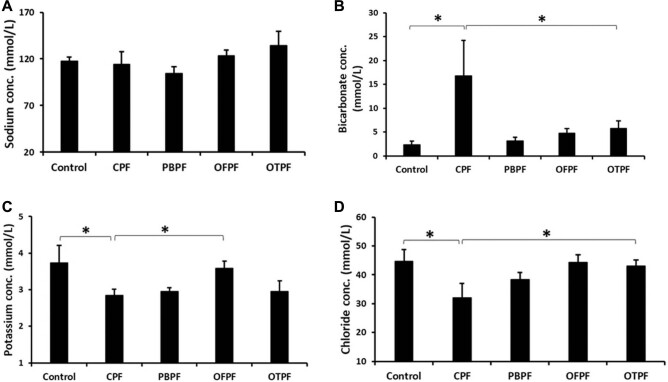
Results: Results indicated that rats fed with carbide-ripened plantain had a significantly high level of plasma bicarbonate (HCO3-) compared to control rats., but there was no difference in the level of plasma sodium (Na+). However, the levels of plasma potassium (K+) and chloride (Cl-) were significantly low in rats fed with CaC2-ripened plantain as compared to the control rats. Furthermore, the levels of urea and creatinine were significantly high in rats fed with CaC2-ripened plantain compared to the control animals. Histological analyses showed glomeruli atrophy and tubular necrosis in kidneys of rats fed with CaC2-ripened plantain, thereby further indicating toxicity to the kidneys.
Conclusions: Histological evidence and alterations in the level of the plasma electrolytes, urea, and creatinine suggest that consumption of fruits ripened with calcium carbide may be harmful to the kidneys.
期刊介绍:
Accounts of Chemical Research presents short, concise and critical articles offering easy-to-read overviews of basic research and applications in all areas of chemistry and biochemistry. These short reviews focus on research from the author’s own laboratory and are designed to teach the reader about a research project. In addition, Accounts of Chemical Research publishes commentaries that give an informed opinion on a current research problem. Special Issues online are devoted to a single topic of unusual activity and significance.
Accounts of Chemical Research replaces the traditional article abstract with an article "Conspectus." These entries synopsize the research affording the reader a closer look at the content and significance of an article. Through this provision of a more detailed description of the article contents, the Conspectus enhances the article's discoverability by search engines and the exposure for the research.






 京公网安备 11010802042870号
京ICP备2023020795号-1
京公网安备 11010802042870号
京ICP备2023020795号-1

 分享
分享
 求助内容:
求助内容: 应助结果提醒方式:
 扫码关注我们
