{"title":"Sustainable Development and SDG-7 in Sub-Saharan Africa: Balancing Energy Access, Economic Growth, and Carbon Emissions.","authors":"Dmitriy Li, Jeong Hwan Bae, Meenakshi Rishi","doi":"10.1057/s41287-021-00502-0","DOIUrl":null,"url":null,"abstract":"<p><p>The Covid-19 pandemic has shocked the global energy system. It has resulted in tremendous uncertainty and diminished the recent advances to increase access to affordable, reliable, sustainable and modern energy-an objective preserved in the UN Sustainable Development Goal 7 (SDG-7). According to the IEA, attaining universal electricity access in Africa in line with SDG-7 entails annual investments of approximately $20 billion over the next decade. Given the sizeable magnitudes involved, it is inevitable that energy projects will need to rely on richer nations for energy aid. This paper explores the linkages between energy-related external aid, carbon emissions, per capita GDP, and electricity access for a sample of 30 low-income SSA countries over 1995 to 2016. Our econometric analysis reveals that while all types of energy aid facilitate economic growth in the long run, there is no direct impact of energy-related aid on electricity access. However, an increase in per capita GDP is positively associated with electricity access in both rural and urban areas. We also find that energy-related aid helps mitigate carbon emissions as well as contribute to GDP. Taken together, our results suggest that enhanced energy-related aid to low-income SSA countries can directly facilitate climate compatible growth and indirectly impel improvements in electricity access thereby helping with poverty reduction. We also advocate regional cooperation among SSA countries as a collective effort to confront shared energy challenges.</p>","PeriodicalId":75001,"journal":{"name":"","volume":"35 1","pages":"112-137"},"PeriodicalIF":0.0,"publicationDate":"2023-01-01","publicationTypes":"Journal Article","fieldsOfStudy":null,"isOpenAccess":false,"openAccessPdf":"https://www.ncbi.nlm.nih.gov/pmc/articles/PMC8795938/pdf/","citationCount":"15","resultStr":null,"platform":"Semanticscholar","paperid":null,"PeriodicalName":"","FirstCategoryId":"90","ListUrlMain":"https://doi.org/10.1057/s41287-021-00502-0","RegionNum":0,"RegionCategory":null,"ArticlePicture":[],"TitleCN":null,"AbstractTextCN":null,"PMCID":null,"EPubDate":"","PubModel":"","JCR":"","JCRName":"","Score":null,"Total":0}
引用次数: 15
Abstract
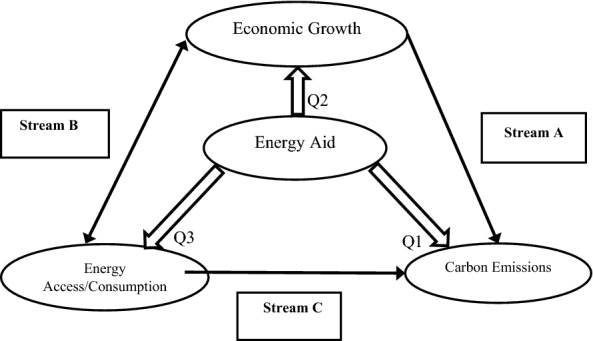
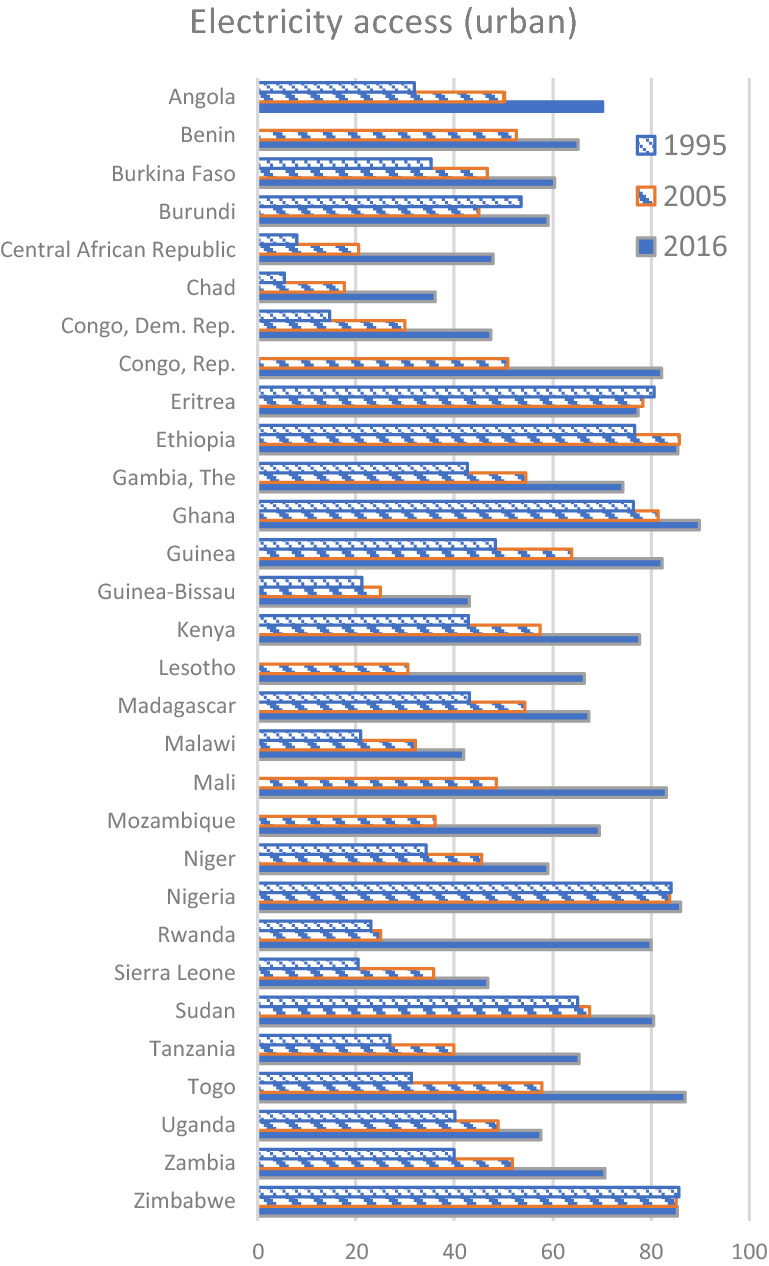
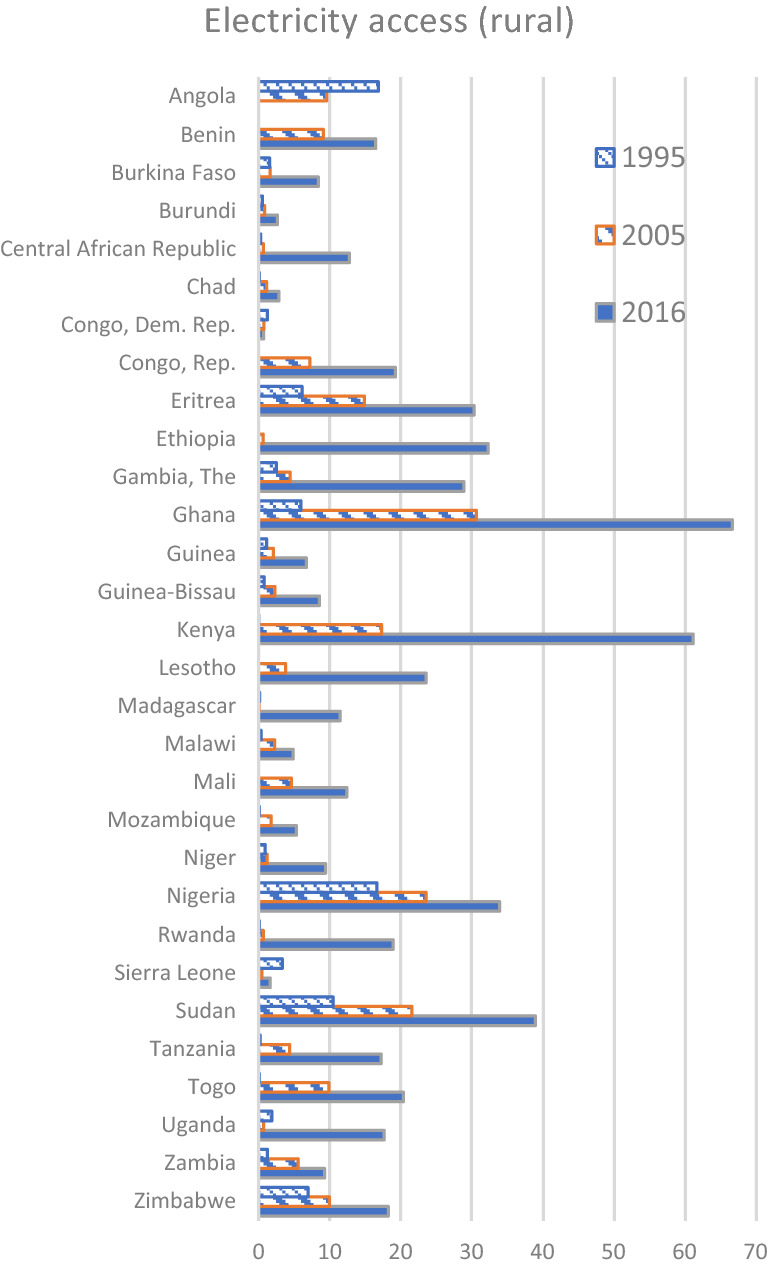
The Covid-19 pandemic has shocked the global energy system. It has resulted in tremendous uncertainty and diminished the recent advances to increase access to affordable, reliable, sustainable and modern energy-an objective preserved in the UN Sustainable Development Goal 7 (SDG-7). According to the IEA, attaining universal electricity access in Africa in line with SDG-7 entails annual investments of approximately $20 billion over the next decade. Given the sizeable magnitudes involved, it is inevitable that energy projects will need to rely on richer nations for energy aid. This paper explores the linkages between energy-related external aid, carbon emissions, per capita GDP, and electricity access for a sample of 30 low-income SSA countries over 1995 to 2016. Our econometric analysis reveals that while all types of energy aid facilitate economic growth in the long run, there is no direct impact of energy-related aid on electricity access. However, an increase in per capita GDP is positively associated with electricity access in both rural and urban areas. We also find that energy-related aid helps mitigate carbon emissions as well as contribute to GDP. Taken together, our results suggest that enhanced energy-related aid to low-income SSA countries can directly facilitate climate compatible growth and indirectly impel improvements in electricity access thereby helping with poverty reduction. We also advocate regional cooperation among SSA countries as a collective effort to confront shared energy challenges.



 京公网安备 11010802042870号
京ICP备2023020795号-1
京公网安备 11010802042870号
京ICP备2023020795号-1

 分享
分享
 求助内容:
求助内容: 应助结果提醒方式:
 扫码关注我们
