mGlu5 inhibition in the basolateral amygdala prevents estrous cycle-dependent changes in cue-induced cocaine seeking

Claire M. Corbett , Emily N.D. Miller , Jessica A. Loweth
{"title":"mGlu5 inhibition in the basolateral amygdala prevents estrous cycle-dependent changes in cue-induced cocaine seeking","authors":"Claire M. Corbett ,&nbsp;Emily N.D. Miller ,&nbsp;Jessica A. Loweth","doi":"10.1016/j.addicn.2022.100055","DOIUrl":null,"url":null,"abstract":"<div><p>Drug associated cues are a common relapse trigger for individuals recovering from cocaine use disorder. Sex and ovarian hormones influence patterns of cocaine use and relapse vulnerability, with studies indicating that females show increased cue-induced craving and relapse vulnerability compared to males. In a rodent model of cocaine craving and relapse vulnerability, cue-induced cocaine seeking behavior following weeks of withdrawal from extended-access cocaine self-administration is higher in females in the estrus stage of the reproductive (estrous) cycle (Estrus Females) compared to both Males and females in all other stages (Non-Estrus Females). However, the neuronal substrates and cellular mechanisms underlying these sex differences is not fully understood. One region that contributes to both sex differences in behavioral responding and cue-induced cocaine seeking is the basolateral amygdala (BLA), while one receptor known to play a critical role in mediating cocaine seeking behavior is metabotropic glutamate receptor 5 (mGlu5). Here we assessed the effects of BLA mGlu5 inhibition following prolonged withdrawal from cocaine self-administration on observed estrous cycle-dependent changes in cue-induced cocaine seeking behavior. We found that BLA microinjections of the mGlu5 antagonist MTEP selectively reduced the enhanced cue-induced cocaine seeking normally observed in Estrus Females while having no effect on cocaine seeking in Males and Non-Estrus Females. These findings identify a unique interaction between cocaine-exposure, estrous cycle fluctuations and BLA mGlu5-dependent transmission on cue-induced cocaine seeking behavior.</p></div>","PeriodicalId":72067,"journal":{"name":"Addiction neuroscience","volume":"5 ","pages":"Article 100055"},"PeriodicalIF":2.2000,"publicationDate":"2023-03-01","publicationTypes":"Journal Article","fieldsOfStudy":null,"isOpenAccess":false,"openAccessPdf":"https://ftp.ncbi.nlm.nih.gov/pub/pmc/oa_pdf/3c/37/nihms-1867735.PMC9915145.pdf","citationCount":"3","resultStr":null,"platform":"Semanticscholar","paperid":null,"PeriodicalName":"Addiction neuroscience","FirstCategoryId":"1085","ListUrlMain":"https://www.sciencedirect.com/science/article/pii/S2772392522000505","RegionNum":0,"RegionCategory":null,"ArticlePicture":[],"TitleCN":null,"AbstractTextCN":null,"PMCID":null,"EPubDate":"","PubModel":"","JCR":"","JCRName":"","Score":null,"Total":0}
引用次数: 3

Abstract

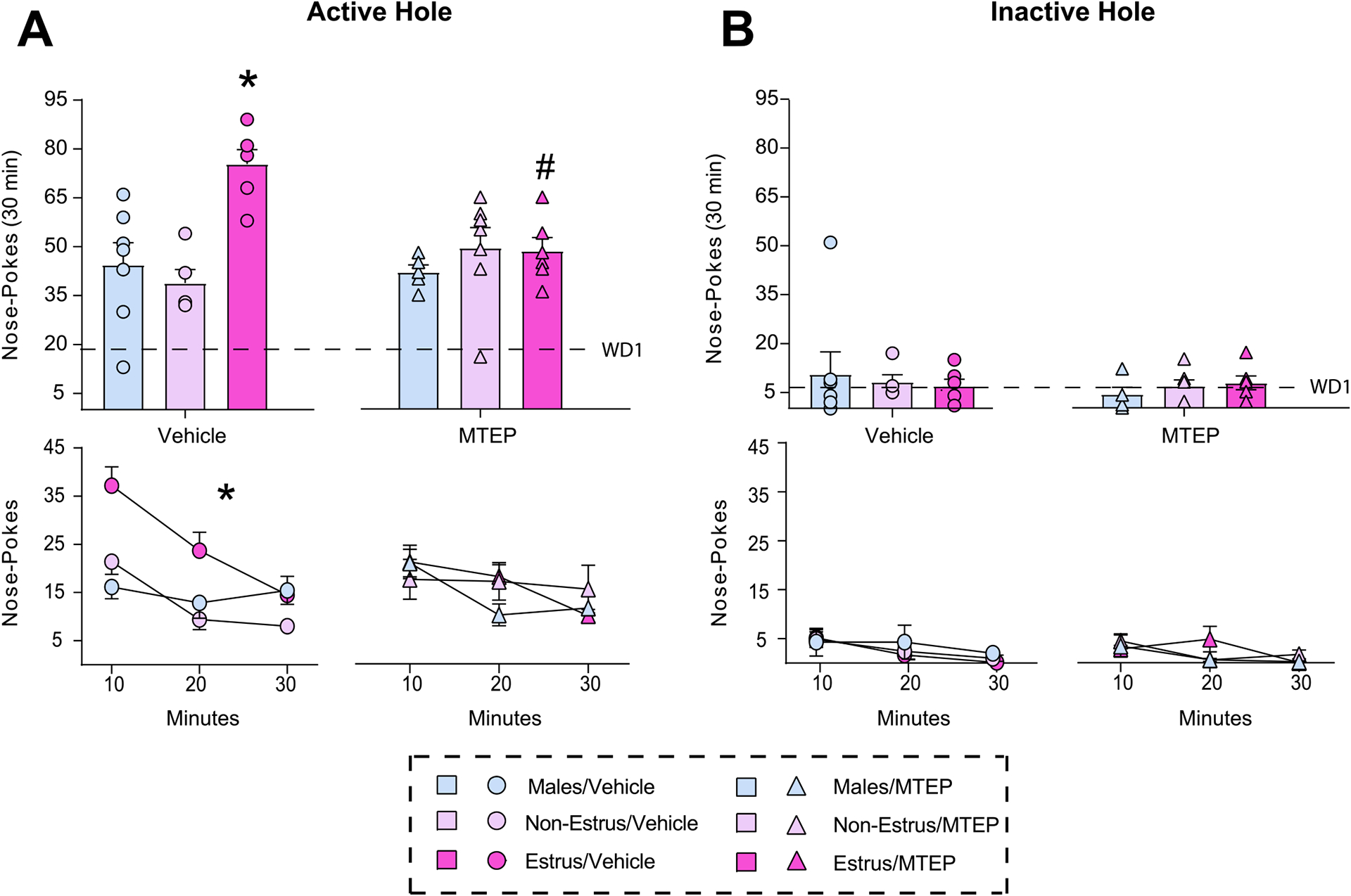
Drug associated cues are a common relapse trigger for individuals recovering from cocaine use disorder. Sex and ovarian hormones influence patterns of cocaine use and relapse vulnerability, with studies indicating that females show increased cue-induced craving and relapse vulnerability compared to males. In a rodent model of cocaine craving and relapse vulnerability, cue-induced cocaine seeking behavior following weeks of withdrawal from extended-access cocaine self-administration is higher in females in the estrus stage of the reproductive (estrous) cycle (Estrus Females) compared to both Males and females in all other stages (Non-Estrus Females). However, the neuronal substrates and cellular mechanisms underlying these sex differences is not fully understood. One region that contributes to both sex differences in behavioral responding and cue-induced cocaine seeking is the basolateral amygdala (BLA), while one receptor known to play a critical role in mediating cocaine seeking behavior is metabotropic glutamate receptor 5 (mGlu5). Here we assessed the effects of BLA mGlu5 inhibition following prolonged withdrawal from cocaine self-administration on observed estrous cycle-dependent changes in cue-induced cocaine seeking behavior. We found that BLA microinjections of the mGlu5 antagonist MTEP selectively reduced the enhanced cue-induced cocaine seeking normally observed in Estrus Females while having no effect on cocaine seeking in Males and Non-Estrus Females. These findings identify a unique interaction between cocaine-exposure, estrous cycle fluctuations and BLA mGlu5-dependent transmission on cue-induced cocaine seeking behavior.
Abstract Image

Abstract Image

Abstract Image

查看原文
分享 分享
微信好友 朋友圈 QQ好友 复制链接
本刊更多论文
基底外侧杏仁核中的mGlu5抑制可防止线索诱导的可卡因寻求中依赖于发情周期的变化
药物相关线索是可卡因使用障碍患者恢复过程中常见的复发诱因。性激素和卵巢激素影响可卡因使用模式和易复发性,研究表明,与男性相比,女性表现出更多的线索诱导的渴望和易复发性。在一种啮齿类动物的可卡因渴求和复发脆弱性模型中,与所有其他阶段(非发情期)的雄性和雌性相比,在生殖周期(发情期)的发情期(雌性发情期)的雌性在几周内停止可扩展获取的可卡因自我给药后,提示诱导的可卡因寻求行为更高。然而,这些性别差异背后的神经元基质和细胞机制尚未完全了解。在行为反应和线索诱导的可卡因寻求中,一个对性别差异都有贡献的区域是基底外侧杏仁核(BLA),而一个已知在介导可卡因寻求行为中起关键作用的受体是代谢性谷氨酸受体5 (mGlu5)。在这里,我们评估了长期停止可卡因自我给药后BLA mGlu5抑制对观察到的发情周期依赖性线索诱导的可卡因寻求行为变化的影响。我们发现BLA微注射mGlu5拮抗剂MTEP选择性地减少了通常在发情雌性中观察到的线索诱导的可卡因寻求,而对雄性和非发情雌性的可卡因寻求没有影响。这些发现确定了可卡因暴露、发情周期波动和BLA mglu5依赖于线索诱导的可卡因寻求行为之间的独特相互作用。
本文章由计算机程序翻译,如有差异,请以英文原文为准。
求助全文
约1分钟内获得全文 去求助
来源期刊
Addiction neuroscience
Addiction neuroscience Neuroscience (General)
CiteScore
1.30
自引率
0.00%
发文量
0
审稿时长
118 days
期刊最新文献
The central amygdala corticotropin releasing factor system regulates anxiety-like behavior in an age- and sex- dependent manner in rats Comparable reductions in subcortical activity during Stroop task performance in individuals with opioid use disorder receiving treatment for cocaine use disorder and a healthy control group Influence of sex, anxiety, and risk-taking behavior on opioid and alcohol polysubstance consumption patterns Effects of prenatal methadone and buprenorphine exposure on motivated responding for sucrose and gene expression in adult male and female rats Editorial Board
×
引用
GB/T 7714-2015
复制
MLA
复制
APA
复制
导出至
BibTeX EndNote RefMan NoteFirst NoteExpress
×
×
提示
您的信息不完整,为了账户安全,请先补充。
现在去补充
×
提示
您因"违规操作"
具体请查看互助需知
我知道了
×
提示
现在去查看 取消
×
提示
确定
0
微信
客服QQ
Book学术公众号 扫码关注我们
反馈
×
意见反馈
请填写您的意见或建议
请填写您的手机或邮箱
已复制链接
已复制链接
快去分享给好友吧!
我知道了
×
扫码分享
扫码分享
Book学术官方微信
Book学术文献互助
Book学术文献互助群
群 号:604180095
Book学术
文献互助 智能选刊 最新文献 互助须知 联系我们:info@booksci.cn
Book学术提供免费学术资源搜索服务,方便国内外学者检索中英文文献。致力于提供最便捷和优质的服务体验。
Copyright © 2023 Book学术 All rights reserved.
ghs 京公网安备 11010802042870号 京ICP备2023020795号-1