Devivasha Bordoloi, Peng Xiao, Hyeree Choi, Michelle Ho, Alfredo Perales-Puchalt, Makan Khoshnejad, J Joseph Kim, Laurent Humeau, Alagarsamy Srinivasan, David B Weiner, Kar Muthumani
{"title":"Immunotherapy of prostate cancer using novel synthetic DNA vaccines targeting multiple tumor antigens.","authors":"Devivasha Bordoloi, Peng Xiao, Hyeree Choi, Michelle Ho, Alfredo Perales-Puchalt, Makan Khoshnejad, J Joseph Kim, Laurent Humeau, Alagarsamy Srinivasan, David B Weiner, Kar Muthumani","doi":"10.18632/genesandcancer.214","DOIUrl":null,"url":null,"abstract":"<p><p>Prostate cancer is a prevalent cancer in men and consists of both indolent and aggressive phenotypes. While active surveillance is recommended for the former, current treatments for the latter include surgery, radiation, chemo and hormonal therapy. It has been observed that the recurrence in the treated patients is high and results in castration resistant prostate cancer for which treatment options are limited. This scenario has prompted us to consider immunotherapy with synthetic DNA vaccines, as this approach can generate antigen-specific tumor-killing immune cells. Given the multifocal and heterogeneous nature of prostate cancer, we hypothesized that synthetic DNA vaccines targeting different prostate specific antigens are likely to induce broader and improved immunity who are at high risk as well as advanced clinical stage of prostate cancer, compared to a single antigen approach. Utilizing a bioinformatics approach, synthetic enhanced DNA vaccine (SEV) constructs were generated against STEAP1, PAP, PARM1, PSCA, PCTA and PSP94. Synthetic enhanced vaccines for prostate cancer antigens were shown to elicit antigen-specific immune responses in mice and the anti-tumor activity was evident in a prostate tumor challenge mouse model. These studies support further evaluation of the DNA tools for immunotherapy of prostate cancer and perhaps other cancers.</p>","PeriodicalId":38987,"journal":{"name":"Genes and Cancer","volume":"12 ","pages":"51-64"},"PeriodicalIF":0.0000,"publicationDate":"2021-01-01","publicationTypes":"Journal Article","fieldsOfStudy":null,"isOpenAccess":false,"openAccessPdf":"https://www.ncbi.nlm.nih.gov/pmc/articles/PMC8045963/pdf/","citationCount":"5","resultStr":null,"platform":"Semanticscholar","paperid":null,"PeriodicalName":"Genes and Cancer","FirstCategoryId":"1085","ListUrlMain":"https://doi.org/10.18632/genesandcancer.214","RegionNum":0,"RegionCategory":null,"ArticlePicture":[],"TitleCN":null,"AbstractTextCN":null,"PMCID":null,"EPubDate":"","PubModel":"","JCR":"Q2","JCRName":"Biochemistry, Genetics and Molecular Biology","Score":null,"Total":0}
引用次数: 5
Abstract
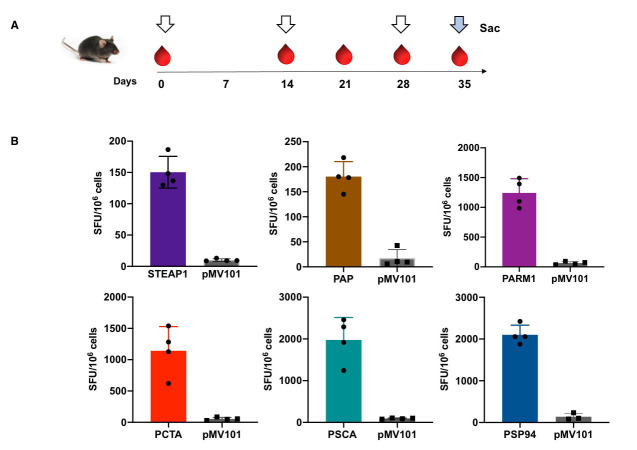
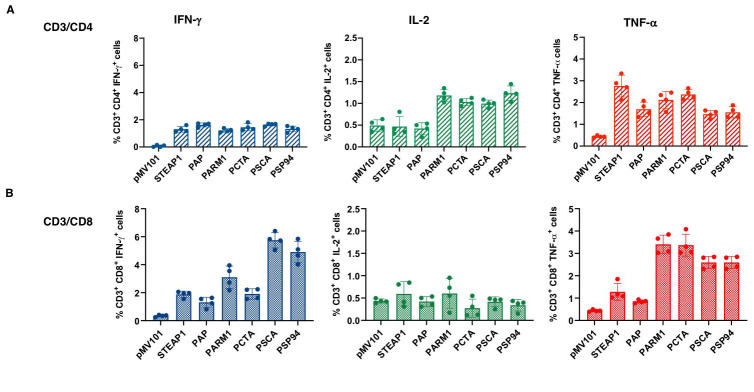
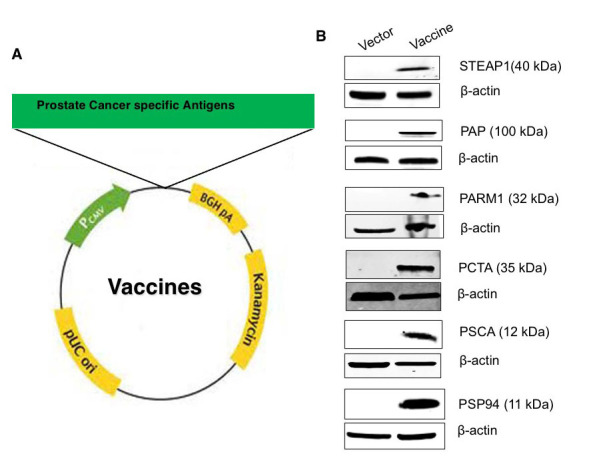
Prostate cancer is a prevalent cancer in men and consists of both indolent and aggressive phenotypes. While active surveillance is recommended for the former, current treatments for the latter include surgery, radiation, chemo and hormonal therapy. It has been observed that the recurrence in the treated patients is high and results in castration resistant prostate cancer for which treatment options are limited. This scenario has prompted us to consider immunotherapy with synthetic DNA vaccines, as this approach can generate antigen-specific tumor-killing immune cells. Given the multifocal and heterogeneous nature of prostate cancer, we hypothesized that synthetic DNA vaccines targeting different prostate specific antigens are likely to induce broader and improved immunity who are at high risk as well as advanced clinical stage of prostate cancer, compared to a single antigen approach. Utilizing a bioinformatics approach, synthetic enhanced DNA vaccine (SEV) constructs were generated against STEAP1, PAP, PARM1, PSCA, PCTA and PSP94. Synthetic enhanced vaccines for prostate cancer antigens were shown to elicit antigen-specific immune responses in mice and the anti-tumor activity was evident in a prostate tumor challenge mouse model. These studies support further evaluation of the DNA tools for immunotherapy of prostate cancer and perhaps other cancers.




 京公网安备 11010802042870号
京ICP备2023020795号-1
京公网安备 11010802042870号
京ICP备2023020795号-1

 分享
分享
 求助内容:
求助内容: 应助结果提醒方式:
 扫码关注我们
