{"title":"Spectacled Flying-fox conflicts—tucker, totem, taunt and threat\n 眼镜狐蝠的冲突——食物、图腾、挑战与威胁","authors":"Noel Preece","doi":"10.1002/inc3.26","DOIUrl":null,"url":null,"abstract":"<p>Flying-foxes worldwide have suffered population declines and some extinctions, and due to negative attitudes to bats, achieving population recovery is challenging. The Spectacled Flying-fox of north-east Australia, a species vital to the wet tropics region, experienced a population crash of over 75% in <15 years. Despite this decline, little action has been taken over the last two decades to help the species recover. The scientific evidence of the continuing population decline of the Spectacled Flying-fox has been presented to multiple levels of government, but detrimental decisions have been made despite the evidence. Scientific evidence and arguments by themselves are clearly not sufficient to change attitudes. The approach and narrative have to change to persuade people that the species is important for the rainforests and other forests that people love. Better engagement, narrative and story-telling are required. Bringing together communication specialists, social scientists and wildlife scientists are necessary to create narratives that people understand and accept, and that persuades them that the Spectacled Flying-fox is worth protecting. Actions to reduce impacts on the human community are essential but need to be done in tandem with changing hearts and minds. Otherwise, the Spectacled Flying-fox will continue its decline.</p>","PeriodicalId":100680,"journal":{"name":"Integrative Conservation","volume":"2 3","pages":"112-118"},"PeriodicalIF":0.0000,"publicationDate":"2023-10-16","publicationTypes":"Journal Article","fieldsOfStudy":null,"isOpenAccess":false,"openAccessPdf":"https://onlinelibrary.wiley.com/doi/epdf/10.1002/inc3.26","citationCount":"0","resultStr":null,"platform":"Semanticscholar","paperid":null,"PeriodicalName":"Integrative Conservation","FirstCategoryId":"1085","ListUrlMain":"https://onlinelibrary.wiley.com/doi/10.1002/inc3.26","RegionNum":0,"RegionCategory":null,"ArticlePicture":[],"TitleCN":null,"AbstractTextCN":null,"PMCID":null,"EPubDate":"","PubModel":"","JCR":"","JCRName":"","Score":null,"Total":0}
引用次数: 0
Abstract
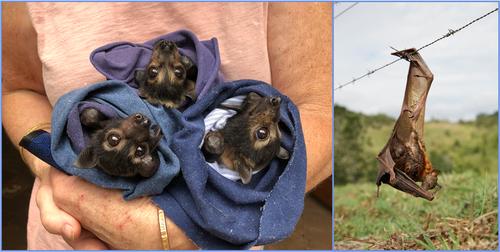
Flying-foxes worldwide have suffered population declines and some extinctions, and due to negative attitudes to bats, achieving population recovery is challenging. The Spectacled Flying-fox of north-east Australia, a species vital to the wet tropics region, experienced a population crash of over 75% in <15 years. Despite this decline, little action has been taken over the last two decades to help the species recover. The scientific evidence of the continuing population decline of the Spectacled Flying-fox has been presented to multiple levels of government, but detrimental decisions have been made despite the evidence. Scientific evidence and arguments by themselves are clearly not sufficient to change attitudes. The approach and narrative have to change to persuade people that the species is important for the rainforests and other forests that people love. Better engagement, narrative and story-telling are required. Bringing together communication specialists, social scientists and wildlife scientists are necessary to create narratives that people understand and accept, and that persuades them that the Spectacled Flying-fox is worth protecting. Actions to reduce impacts on the human community are essential but need to be done in tandem with changing hearts and minds. Otherwise, the Spectacled Flying-fox will continue its decline.



 京公网安备 11010802042870号
京ICP备2023020795号-1
京公网安备 11010802042870号
京ICP备2023020795号-1

 分享
分享

 求助内容:
求助内容: 应助结果提醒方式:
 扫码关注我们
