{"title":"Computational approach for assessing the involvement of SMYD2 protein in human cancers using TCGA data","authors":"Arvind Kumar Yadav , Tiratha Raj Singh","doi":"10.1186/s43141-023-00594-7","DOIUrl":null,"url":null,"abstract":"<div><h3>Background</h3><div>SMYD2 is a protein of the SET and MYND domain-containing family SMYD. It can methylate the lysine residue of various histone and nonhistone cancer-related proteins and plays a critical role in tumorigenesis. Although emerging evidence supports the association of SMYD2 in the progression of cancers, but its definitive effect is not yet clear. Therefore, further study of the gene in relation with cancer progression needs to be conducted. In the current study, investigators used TCGA data to determine the potential carcinogenic effect of SMYD2 in 11 cancer types. The transcriptional expression, survival rate, mutations, enriched pathways, and Gene Ontology of the SMYD2 were explored using different bioinformatics tools and servers. In addition, we also examined the correlation between SMYD2 gene expression and immunocyte infiltration in multiple cancer types.</div></div><div><h3>Results</h3><div>Findings revealed that higher expression of SMYD2 was significantly correlated with cancer incidents. In CESC and KIRC, the mRNA expression of SMYD2 was significantly correlated with overall survival (OS). In BRCA, KIRC, COAD, and HNSC, the mRNA expression of SMYD2 was significantly correlated with disease-free survival (DFS). We detected 15 missense, 4 truncating, 4 fusions, and 1 splice type of mutation. The expression of SMYD2 was significantly correlated with tumor purity and immunocyte infiltration in six cancer types. The gene GNPAT was highly associated with SMYD2. Significant pathways and Gene Ontology (GO) terms for co-expressed genes were associated to various processes linked with cancer formation.</div></div><div><h3>Conclusion</h3><div>Collectively, our data-driven results may provide reasonably comprehensive insights for understanding the carcinogenic effect of SMYD2. It suggests that SMYD2 might be used as a significant target for identifying new biomarkers for various human tumors.</div></div>","PeriodicalId":53463,"journal":{"name":"Journal of Genetic Engineering and Biotechnology","volume":"21 1","pages":"Article 122"},"PeriodicalIF":2.8000,"publicationDate":"2023-12-01","publicationTypes":"Journal Article","fieldsOfStudy":null,"isOpenAccess":false,"openAccessPdf":"https://www.ncbi.nlm.nih.gov/pmc/articles/PMC10654300/pdf/","citationCount":"0","resultStr":null,"platform":"Semanticscholar","paperid":null,"PeriodicalName":"Journal of Genetic Engineering and Biotechnology","FirstCategoryId":"1085","ListUrlMain":"https://www.sciencedirect.com/science/article/pii/S1687157X23010004","RegionNum":0,"RegionCategory":null,"ArticlePicture":[],"TitleCN":null,"AbstractTextCN":null,"PMCID":null,"EPubDate":"","PubModel":"","JCR":"Q3","JCRName":"Biochemistry, Genetics and Molecular Biology","Score":null,"Total":0}
引用次数: 0
Abstract
Background
SMYD2 is a protein of the SET and MYND domain-containing family SMYD. It can methylate the lysine residue of various histone and nonhistone cancer-related proteins and plays a critical role in tumorigenesis. Although emerging evidence supports the association of SMYD2 in the progression of cancers, but its definitive effect is not yet clear. Therefore, further study of the gene in relation with cancer progression needs to be conducted. In the current study, investigators used TCGA data to determine the potential carcinogenic effect of SMYD2 in 11 cancer types. The transcriptional expression, survival rate, mutations, enriched pathways, and Gene Ontology of the SMYD2 were explored using different bioinformatics tools and servers. In addition, we also examined the correlation between SMYD2 gene expression and immunocyte infiltration in multiple cancer types.
Results
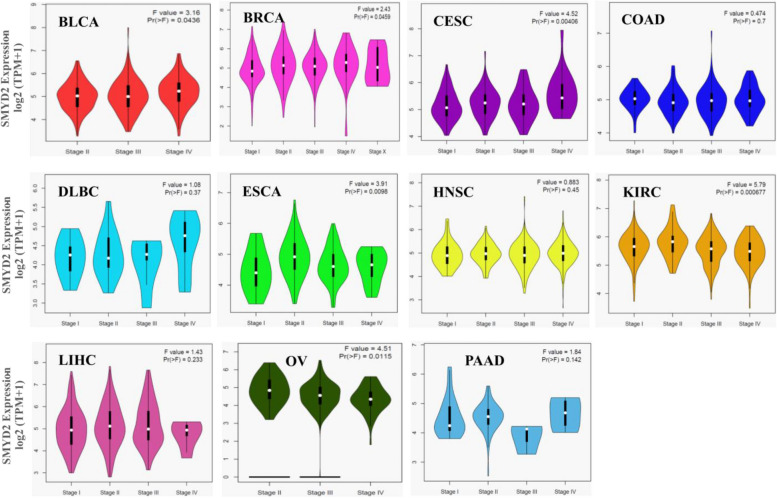
Findings revealed that higher expression of SMYD2 was significantly correlated with cancer incidents. In CESC and KIRC, the mRNA expression of SMYD2 was significantly correlated with overall survival (OS). In BRCA, KIRC, COAD, and HNSC, the mRNA expression of SMYD2 was significantly correlated with disease-free survival (DFS). We detected 15 missense, 4 truncating, 4 fusions, and 1 splice type of mutation. The expression of SMYD2 was significantly correlated with tumor purity and immunocyte infiltration in six cancer types. The gene GNPAT was highly associated with SMYD2. Significant pathways and Gene Ontology (GO) terms for co-expressed genes were associated to various processes linked with cancer formation.
Conclusion
Collectively, our data-driven results may provide reasonably comprehensive insights for understanding the carcinogenic effect of SMYD2. It suggests that SMYD2 might be used as a significant target for identifying new biomarkers for various human tumors.
期刊介绍:
Journal of genetic engineering and biotechnology is devoted to rapid publication of full-length research papers that leads to significant contribution in advancing knowledge in genetic engineering and biotechnology and provide novel perspectives in this research area. JGEB includes all major themes related to genetic engineering and recombinant DNA. The area of interest of JGEB includes but not restricted to: •Plant genetics •Animal genetics •Bacterial enzymes •Agricultural Biotechnology, •Biochemistry, •Biophysics, •Bioinformatics, •Environmental Biotechnology, •Industrial Biotechnology, •Microbial biotechnology, •Medical Biotechnology, •Bioenergy, Biosafety, •Biosecurity, •Bioethics, •GMOS, •Genomic, •Proteomic JGEB accepts





 京公网安备 11010802042870号
京ICP备2023020795号-1
京公网安备 11010802042870号
京ICP备2023020795号-1

 分享
分享
 求助内容:
求助内容: 应助结果提醒方式:
 扫码关注我们
