{"title":"Immunoinformatics study to explore dengue (DENV-1) proteome to design multi-epitope vaccine construct by using CD4+ epitopes","authors":"Nishat Bano , Ajay Kumar","doi":"10.1186/s43141-023-00592-9","DOIUrl":null,"url":null,"abstract":"<div><h3>Background</h3><div>Immunoinformatics is an emerging interdisciplinary field which integrates immunology, bioinformatics, and computational biology to study the immune system. In this study, we apply immunoinformatics approaches to explore the dengue proteome in order to design a multi-epitope vaccine construct.</div></div><div><h3>Methods</h3><div>We used existing databases and algorithms to predict potential epitopes on dengue proteins and used a bioinformatics approach to identify the most promising epitopes. We then used molecular modelling to develop a multi-epitope construct which could be used as a potential vaccine. The results of this study demonstrate that immunoinformatics is a powerful tool for exploring and designing potential vaccines for infectious diseases like dengue.</div></div><div><h3>Results</h3><div>Here, we found four CD4+ epitopes NLKYSVIVTVHTGDQ, ANPIVTDKEKPVNIE, LDPVVYDAKFEKQL, and VGAIALDFKPGTSGS that were used to design vaccine construct. The vaccine construct docked with TLR5. RMSD values suggest that docked complex of TLR5 and vaccine construct have putative stable interaction to induce immunogenic effects on host.</div></div><div><h3>Conclusions</h3><div>Furthermore, our study provides a proof of concept for the use of immunoinformatics approaches in DENV vaccine design. This vaccine can be effective in treating patients infected with DENV virus.</div></div>","PeriodicalId":53463,"journal":{"name":"Journal of Genetic Engineering and Biotechnology","volume":"21 1","pages":"Article 128"},"PeriodicalIF":2.8000,"publicationDate":"2023-12-01","publicationTypes":"Journal Article","fieldsOfStudy":null,"isOpenAccess":false,"openAccessPdf":"https://www.ncbi.nlm.nih.gov/pmc/articles/PMC10663418/pdf/","citationCount":"0","resultStr":null,"platform":"Semanticscholar","paperid":null,"PeriodicalName":"Journal of Genetic Engineering and Biotechnology","FirstCategoryId":"1085","ListUrlMain":"https://www.sciencedirect.com/science/article/pii/S1687157X23009940","RegionNum":0,"RegionCategory":null,"ArticlePicture":[],"TitleCN":null,"AbstractTextCN":null,"PMCID":null,"EPubDate":"2023/11/21 0:00:00","PubModel":"Epub","JCR":"Q3","JCRName":"Biochemistry, Genetics and Molecular Biology","Score":null,"Total":0}
引用次数: 0
Abstract
Background
Immunoinformatics is an emerging interdisciplinary field which integrates immunology, bioinformatics, and computational biology to study the immune system. In this study, we apply immunoinformatics approaches to explore the dengue proteome in order to design a multi-epitope vaccine construct.
Methods
We used existing databases and algorithms to predict potential epitopes on dengue proteins and used a bioinformatics approach to identify the most promising epitopes. We then used molecular modelling to develop a multi-epitope construct which could be used as a potential vaccine. The results of this study demonstrate that immunoinformatics is a powerful tool for exploring and designing potential vaccines for infectious diseases like dengue.
Results
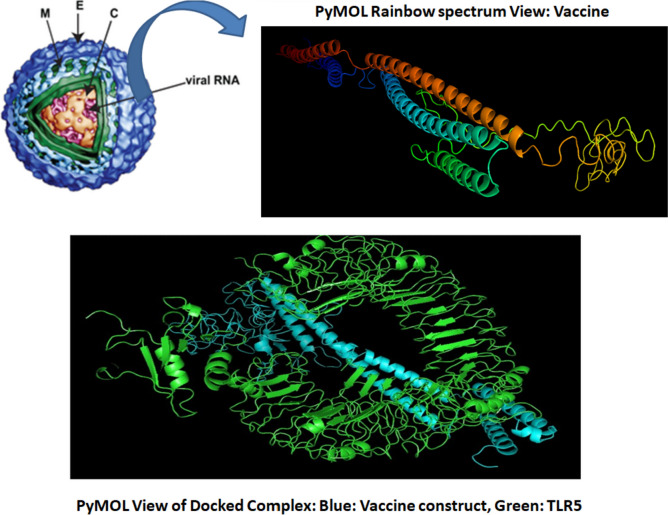
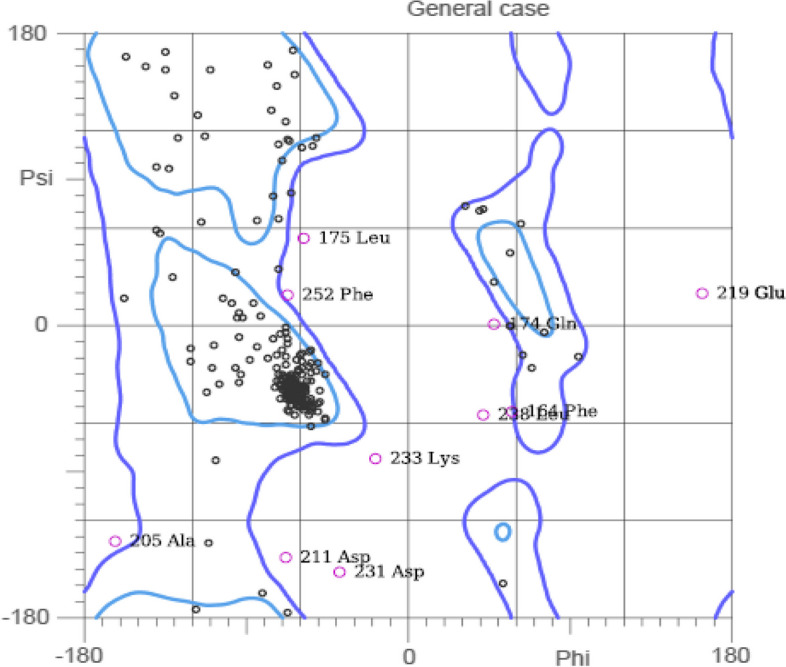
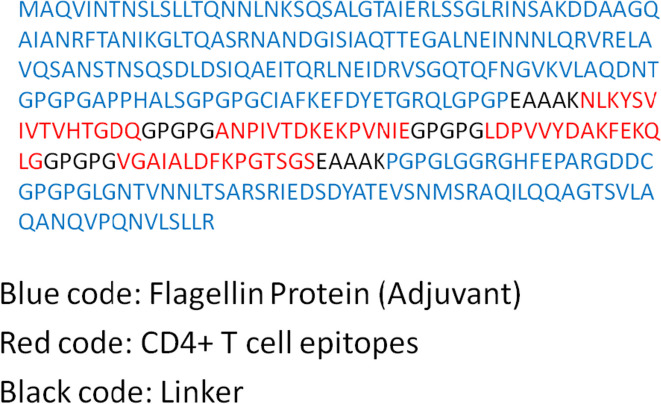
Here, we found four CD4+ epitopes NLKYSVIVTVHTGDQ, ANPIVTDKEKPVNIE, LDPVVYDAKFEKQL, and VGAIALDFKPGTSGS that were used to design vaccine construct. The vaccine construct docked with TLR5. RMSD values suggest that docked complex of TLR5 and vaccine construct have putative stable interaction to induce immunogenic effects on host.
Conclusions
Furthermore, our study provides a proof of concept for the use of immunoinformatics approaches in DENV vaccine design. This vaccine can be effective in treating patients infected with DENV virus.
期刊介绍:
Journal of genetic engineering and biotechnology is devoted to rapid publication of full-length research papers that leads to significant contribution in advancing knowledge in genetic engineering and biotechnology and provide novel perspectives in this research area. JGEB includes all major themes related to genetic engineering and recombinant DNA. The area of interest of JGEB includes but not restricted to: •Plant genetics •Animal genetics •Bacterial enzymes •Agricultural Biotechnology, •Biochemistry, •Biophysics, •Bioinformatics, •Environmental Biotechnology, •Industrial Biotechnology, •Microbial biotechnology, •Medical Biotechnology, •Bioenergy, Biosafety, •Biosecurity, •Bioethics, •GMOS, •Genomic, •Proteomic JGEB accepts




 京公网安备 11010802042870号
京ICP备2023020795号-1
京公网安备 11010802042870号
京ICP备2023020795号-1

 分享
分享
 求助内容:
求助内容: 应助结果提醒方式:
 扫码关注我们
