{"title":"Functional roles and localization of hydrolases in the Japanese mitten crab Eriocheir japonica","authors":"Masato Takahashi , Kohei Takahashi , Taichi Yamaguchi , Takeshi Kohama , Masakiyo Hosokawa","doi":"10.1016/j.cbpb.2023.110932","DOIUrl":null,"url":null,"abstract":"<div><p>The Japanese mitten crab <em>Eriocheir japonica</em><span><span><span><span><span> inhabits rivers throughout Japan and is being cultivated for food. To conduct aquaculture efficiently, it is crucial to comprehend the physiological functions of the target organisms. However, there is a lack of fundamental information on Japanese mitten crabs. In this study, hydrolases were extracted from the midgut glands of Japanese mitten crabs and their metabolic activities were analyzed. An </span>enzyme with hydrolytic activity was discovered within the cytosol of the midgut gland. </span>Western blot analysis<span> also revealed that the Japanese mitten crab contains a hydrolase with cross-reactivity to human carboxylesterase 1 (hCES1) antibodies. The </span></span>substrate specificity<span> of the S9 fraction of the midgut gland was investigated and, interestingly, it was revealed that it reacts well with indomethacin phenyl ester and fluorescein diacetate, which are substrates of hCES2, not substrates of hCES1. Furthermore, this enzyme was observed to metabolize the ester derivative of </span></span>astaxanthin, which is a red pigment inherent to the Japanese mitten crab. These findings underscore the significance the midgut gland in the Japanese mitten crab as an important organ for metabolizing both endogenous and exogenous ester–type compounds.</span></p></div>","PeriodicalId":55236,"journal":{"name":"Comparative Biochemistry and Physiology B-Biochemistry & Molecular Biology","volume":"270 ","pages":"Article 110932"},"PeriodicalIF":1.8000,"publicationDate":"2024-02-01","publicationTypes":"Journal Article","fieldsOfStudy":null,"isOpenAccess":false,"openAccessPdf":"","citationCount":"0","resultStr":null,"platform":"Semanticscholar","paperid":null,"PeriodicalName":"Comparative Biochemistry and Physiology B-Biochemistry & Molecular Biology","FirstCategoryId":"99","ListUrlMain":"https://www.sciencedirect.com/science/article/pii/S1096495923001070","RegionNum":3,"RegionCategory":"生物学","ArticlePicture":[],"TitleCN":null,"AbstractTextCN":null,"PMCID":null,"EPubDate":"2023/12/12 0:00:00","PubModel":"Epub","JCR":"Q4","JCRName":"BIOCHEMISTRY & MOLECULAR BIOLOGY","Score":null,"Total":0}
引用次数: 0
Abstract
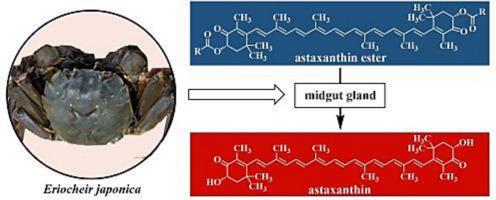
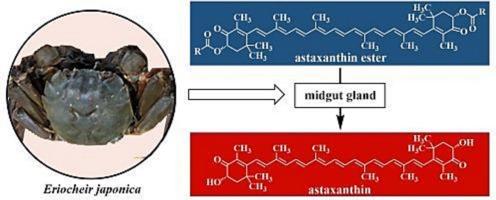
The Japanese mitten crab Eriocheir japonica inhabits rivers throughout Japan and is being cultivated for food. To conduct aquaculture efficiently, it is crucial to comprehend the physiological functions of the target organisms. However, there is a lack of fundamental information on Japanese mitten crabs. In this study, hydrolases were extracted from the midgut glands of Japanese mitten crabs and their metabolic activities were analyzed. An enzyme with hydrolytic activity was discovered within the cytosol of the midgut gland. Western blot analysis also revealed that the Japanese mitten crab contains a hydrolase with cross-reactivity to human carboxylesterase 1 (hCES1) antibodies. The substrate specificity of the S9 fraction of the midgut gland was investigated and, interestingly, it was revealed that it reacts well with indomethacin phenyl ester and fluorescein diacetate, which are substrates of hCES2, not substrates of hCES1. Furthermore, this enzyme was observed to metabolize the ester derivative of astaxanthin, which is a red pigment inherent to the Japanese mitten crab. These findings underscore the significance the midgut gland in the Japanese mitten crab as an important organ for metabolizing both endogenous and exogenous ester–type compounds.
期刊介绍:
Comparative Biochemistry & Physiology (CBP) publishes papers in comparative, environmental and evolutionary physiology.
Part B: Biochemical and Molecular Biology (CBPB), focuses on biochemical physiology, primarily bioenergetics/energy metabolism, cell biology, cellular stress responses, enzymology, intermediary metabolism, macromolecular structure and function, gene regulation, evolutionary genetics. Most studies focus on biochemical or molecular analyses that have clear ramifications for physiological processes.



 京公网安备 11010802042870号
京ICP备2023020795号-1
京公网安备 11010802042870号
京ICP备2023020795号-1

 分享
分享
 求助内容:
求助内容: 应助结果提醒方式:
 扫码关注我们
