{"title":"When leadership goes awry: the nexus between tyrannical leadership and knowledge hiding","authors":"Maohong Guo, Osama Khassawneh, Tamara Mohammad, Xintian Pei","doi":"10.1108/jkm-04-2023-0313","DOIUrl":null,"url":null,"abstract":"\nPurpose\nGrounded on the conservation of resources (COR) theory, this study examines the relationship between tyrannical leadership and knowledge hiding. Additionally, this study aims to investigate the mediating role of psychological distress and the moderating role of psychological safety.\n\n\nDesign/methodology/approach\nData was gathered from 435 employees in the corporate sector in China. The study used the partial least squares structural equation modelling approach to assess the proposed connections and analysed the data collected with the help of SmartPLS 4 software.\n\n\nFindings\nIn the study, it was found that there is a positive relationship between tyrannical leadership and knowledge hiding, and this association is mediated by psychological distress. Additionally, the results asserted that the positive effect of tyrannical leadership on knowledge hiding through psychological distress is less pronounced when there is a greater degree of psychological safety.\n\n\nPractical implications\nLeaders should avoid being tyrannical and adopt a supportive leadership style. They should be aware of the effects of their behaviour on employee well-being, provide resources to help employees cope with distress and foster a culture of psychological safety. This approach promotes knowledge sharing, innovation and employee well-being within the organisation.\n\n\nOriginality/value\nThis study contributes to the existing literature by investigating a new factor that influences knowledge hiding: tyrannical leadership. Furthermore, it explains that employees who experience tyrannical leadership are more prone to psychological distress, such as anxiety and fear, and are likelier to engage in knowledge-hiding behaviours. Finally, the study identifies psychological safety as a factor that can mitigate the negative effects of tyrannical leadership on knowledge hiding.\n","PeriodicalId":6,"journal":{"name":"ACS Applied Nano Materials","volume":"42 4","pages":""},"PeriodicalIF":5.5000,"publicationDate":"2024-01-23","publicationTypes":"Journal Article","fieldsOfStudy":null,"isOpenAccess":false,"openAccessPdf":"","citationCount":"0","resultStr":null,"platform":"Semanticscholar","paperid":null,"PeriodicalName":"ACS Applied Nano Materials","FirstCategoryId":"91","ListUrlMain":"https://doi.org/10.1108/jkm-04-2023-0313","RegionNum":2,"RegionCategory":"材料科学","ArticlePicture":[],"TitleCN":null,"AbstractTextCN":null,"PMCID":null,"EPubDate":"","PubModel":"","JCR":"Q2","JCRName":"MATERIALS SCIENCE, MULTIDISCIPLINARY","Score":null,"Total":0}
引用次数: 0
Abstract
Purpose
Grounded on the conservation of resources (COR) theory, this study examines the relationship between tyrannical leadership and knowledge hiding. Additionally, this study aims to investigate the mediating role of psychological distress and the moderating role of psychological safety.
Design/methodology/approach
Data was gathered from 435 employees in the corporate sector in China. The study used the partial least squares structural equation modelling approach to assess the proposed connections and analysed the data collected with the help of SmartPLS 4 software.
Findings
In the study, it was found that there is a positive relationship between tyrannical leadership and knowledge hiding, and this association is mediated by psychological distress. Additionally, the results asserted that the positive effect of tyrannical leadership on knowledge hiding through psychological distress is less pronounced when there is a greater degree of psychological safety.
Practical implications
Leaders should avoid being tyrannical and adopt a supportive leadership style. They should be aware of the effects of their behaviour on employee well-being, provide resources to help employees cope with distress and foster a culture of psychological safety. This approach promotes knowledge sharing, innovation and employee well-being within the organisation.
Originality/value
This study contributes to the existing literature by investigating a new factor that influences knowledge hiding: tyrannical leadership. Furthermore, it explains that employees who experience tyrannical leadership are more prone to psychological distress, such as anxiety and fear, and are likelier to engage in knowledge-hiding behaviours. Finally, the study identifies psychological safety as a factor that can mitigate the negative effects of tyrannical leadership on knowledge hiding.
期刊介绍:
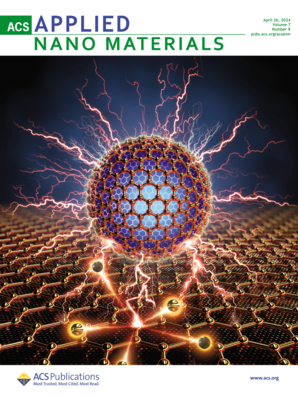
ACS Applied Nano Materials is an interdisciplinary journal publishing original research covering all aspects of engineering, chemistry, physics and biology relevant to applications of nanomaterials. The journal is devoted to reports of new and original experimental and theoretical research of an applied nature that integrate knowledge in the areas of materials, engineering, physics, bioscience, and chemistry into important applications of nanomaterials.




 京公网安备 11010802042870号
京ICP备2023020795号-1
京公网安备 11010802042870号
京ICP备2023020795号-1

 分享
分享
 求助内容:
求助内容: 应助结果提醒方式:
 扫码关注我们
