{"title":"License to Broker: How Mobility Eliminates Gender Gaps in Network Advantage","authors":"Evelyn Y. Zhang, B. Aven, Adam M. Kleinbaum","doi":"10.1177/00018392231221070","DOIUrl":null,"url":null,"abstract":"Brokerage in intra-organizational networks is critical to performance, but women exhibit less brokerage in their social networks and receive lower performance returns to the brokerage they exhibit than men do. We uncover a condition under which the gender gaps in network advantage are entirely negated: mobility. When women move between units of the organization, they increase their brokerage more than mobile men do. Further, such mobility eliminates the gender gap in returns to brokerage. Using a rich dataset including the personnel records, monthly performance, and email communications of thousands of employees in a large financial institution, we find support for our arguments by comparing the networks and objective performance of those who changed jobs with matched non-movers prior to and following each job change. In probing why this might be the case, we find that women movers are more likely to maintain communication ties to colleagues from their previous roles and that these persistent ties give them a discernible and gender-role-congruent explanation for connecting otherwise disconnected units and benefiting from network brokerage. Our results illuminate important mechanisms by which social network dynamics and mobility affect gender inequality and performance in organizations.","PeriodicalId":8,"journal":{"name":"ACS Biomaterials Science & Engineering","volume":"9 9","pages":""},"PeriodicalIF":5.5000,"publicationDate":"2024-01-19","publicationTypes":"Journal Article","fieldsOfStudy":null,"isOpenAccess":false,"openAccessPdf":"","citationCount":"0","resultStr":null,"platform":"Semanticscholar","paperid":null,"PeriodicalName":"ACS Biomaterials Science & Engineering","FirstCategoryId":"91","ListUrlMain":"https://doi.org/10.1177/00018392231221070","RegionNum":2,"RegionCategory":"医学","ArticlePicture":[],"TitleCN":null,"AbstractTextCN":null,"PMCID":null,"EPubDate":"","PubModel":"","JCR":"Q2","JCRName":"MATERIALS SCIENCE, BIOMATERIALS","Score":null,"Total":0}
引用次数: 0
Abstract
Brokerage in intra-organizational networks is critical to performance, but women exhibit less brokerage in their social networks and receive lower performance returns to the brokerage they exhibit than men do. We uncover a condition under which the gender gaps in network advantage are entirely negated: mobility. When women move between units of the organization, they increase their brokerage more than mobile men do. Further, such mobility eliminates the gender gap in returns to brokerage. Using a rich dataset including the personnel records, monthly performance, and email communications of thousands of employees in a large financial institution, we find support for our arguments by comparing the networks and objective performance of those who changed jobs with matched non-movers prior to and following each job change. In probing why this might be the case, we find that women movers are more likely to maintain communication ties to colleagues from their previous roles and that these persistent ties give them a discernible and gender-role-congruent explanation for connecting otherwise disconnected units and benefiting from network brokerage. Our results illuminate important mechanisms by which social network dynamics and mobility affect gender inequality and performance in organizations.
期刊介绍:
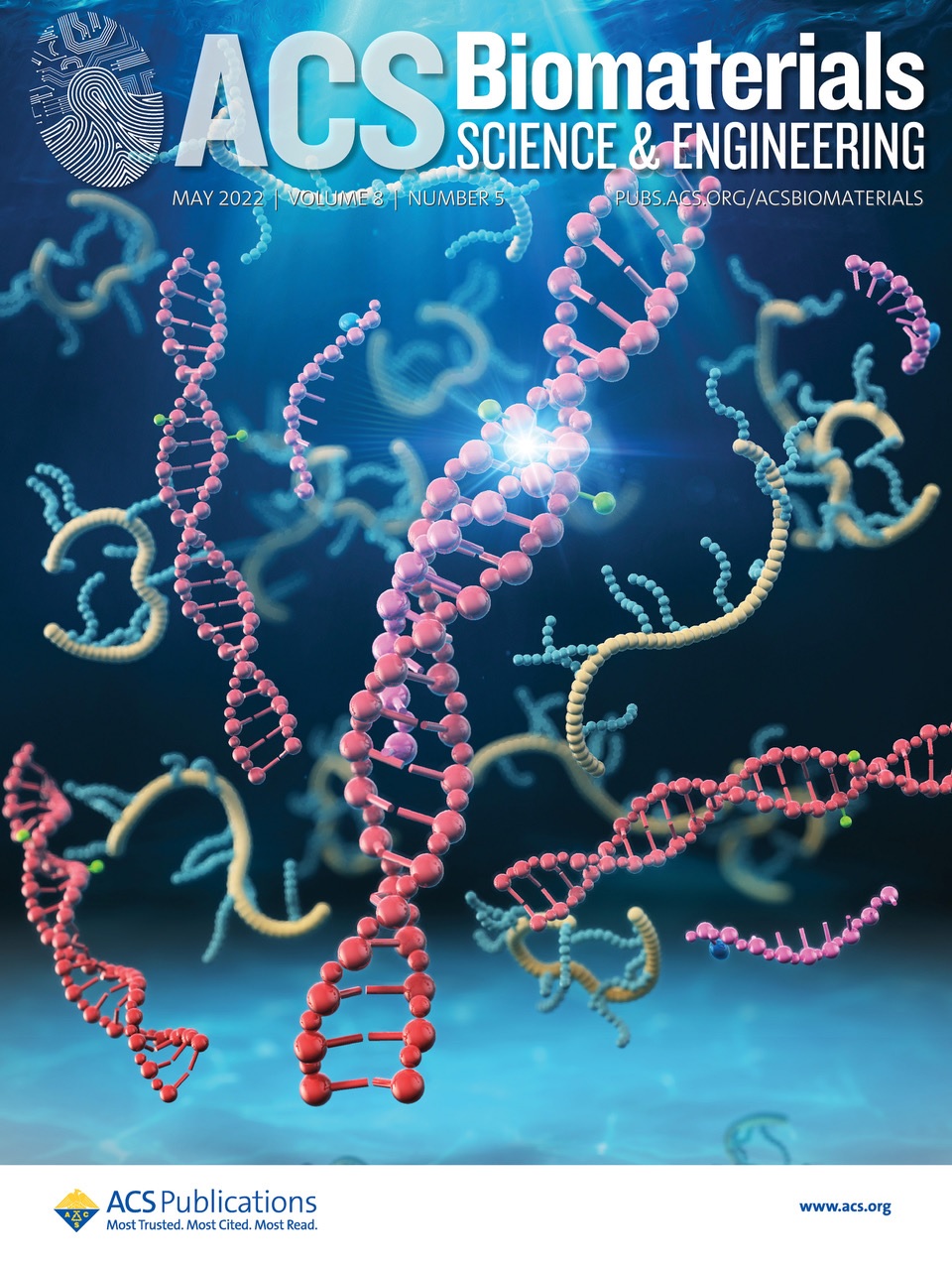
ACS Biomaterials Science & Engineering is the leading journal in the field of biomaterials, serving as an international forum for publishing cutting-edge research and innovative ideas on a broad range of topics:
Applications and Health – implantable tissues and devices, prosthesis, health risks, toxicology
Bio-interactions and Bio-compatibility – material-biology interactions, chemical/morphological/structural communication, mechanobiology, signaling and biological responses, immuno-engineering, calcification, coatings, corrosion and degradation of biomaterials and devices, biophysical regulation of cell functions
Characterization, Synthesis, and Modification – new biomaterials, bioinspired and biomimetic approaches to biomaterials, exploiting structural hierarchy and architectural control, combinatorial strategies for biomaterials discovery, genetic biomaterials design, synthetic biology, new composite systems, bionics, polymer synthesis
Controlled Release and Delivery Systems – biomaterial-based drug and gene delivery, bio-responsive delivery of regulatory molecules, pharmaceutical engineering
Healthcare Advances – clinical translation, regulatory issues, patient safety, emerging trends
Imaging and Diagnostics – imaging agents and probes, theranostics, biosensors, monitoring
Manufacturing and Technology – 3D printing, inks, organ-on-a-chip, bioreactor/perfusion systems, microdevices, BioMEMS, optics and electronics interfaces with biomaterials, systems integration
Modeling and Informatics Tools – scaling methods to guide biomaterial design, predictive algorithms for structure-function, biomechanics, integrating bioinformatics with biomaterials discovery, metabolomics in the context of biomaterials
Tissue Engineering and Regenerative Medicine – basic and applied studies, cell therapies, scaffolds, vascularization, bioartificial organs, transplantation and functionality, cellular agriculture



 京公网安备 11010802042870号
京ICP备2023020795号-1
京公网安备 11010802042870号
京ICP备2023020795号-1

 分享
分享
 求助内容:
求助内容: 应助结果提醒方式:
 扫码关注我们
