Hui Kou, Jia Zheng, Guangbin Ye, Zongwei Qiao, Kaizheng Zhang, Huibo Luo, Wei Zou
{"title":"Optimization of Clostridium beijerinckii semi-solid fermentation of rape straw to produce butyric acid by genome analysis","authors":"Hui Kou, Jia Zheng, Guangbin Ye, Zongwei Qiao, Kaizheng Zhang, Huibo Luo, Wei Zou","doi":"10.1186/s40643-024-00742-y","DOIUrl":null,"url":null,"abstract":"<p>Butyric acid is a volatile saturated monocarboxylic acid, which is widely used in the chemical, food, pharmaceutical, energy, and animal feed industries. This study focuses on producing butyric acid from pre-treated rape straw using simultaneous enzymatic hydrolysis semi-solid fermentation (SEHSF). <i>Clostridium beijerinckii</i> BRM001 screened from pit mud of Chinese nongxiangxing baijiu was used. The genome of <i>C. beijerinckii</i> BRM001 was sequenced and annotated. Using rape straw as the sole carbon source, fermentation optimization was carried out based on the genomic analysis of BRM001. The optimized butyric acid yield was as high as 13.86 ± 0.77 g/L, which was 2.1 times higher than that of the initial screening. Furthermore, under optimal conditions, non-sterile SEHSF was carried out, and the yield of butyric acid was 13.42 ± 0.83 g/L in a 2.5-L fermentor. This study provides a new approach for butyric acid production which eliminates the need for detoxification of straw hydrolysate and makes full use of the value of fermentation waste residue without secondary pollution, making the whole process greener and more economical, which has a certain industrial potential.</p><h3 data-test=\"abstract-sub-heading\">Graphical Abstract</h3>\n","PeriodicalId":9067,"journal":{"name":"Bioresources and Bioprocessing","volume":"254 1","pages":""},"PeriodicalIF":5.1000,"publicationDate":"2024-02-14","publicationTypes":"Journal Article","fieldsOfStudy":null,"isOpenAccess":false,"openAccessPdf":"","citationCount":"0","resultStr":null,"platform":"Semanticscholar","paperid":null,"PeriodicalName":"Bioresources and Bioprocessing","FirstCategoryId":"5","ListUrlMain":"https://doi.org/10.1186/s40643-024-00742-y","RegionNum":3,"RegionCategory":"生物学","ArticlePicture":[],"TitleCN":null,"AbstractTextCN":null,"PMCID":null,"EPubDate":"","PubModel":"","JCR":"Q1","JCRName":"BIOTECHNOLOGY & APPLIED MICROBIOLOGY","Score":null,"Total":0}
引用次数: 0
Abstract
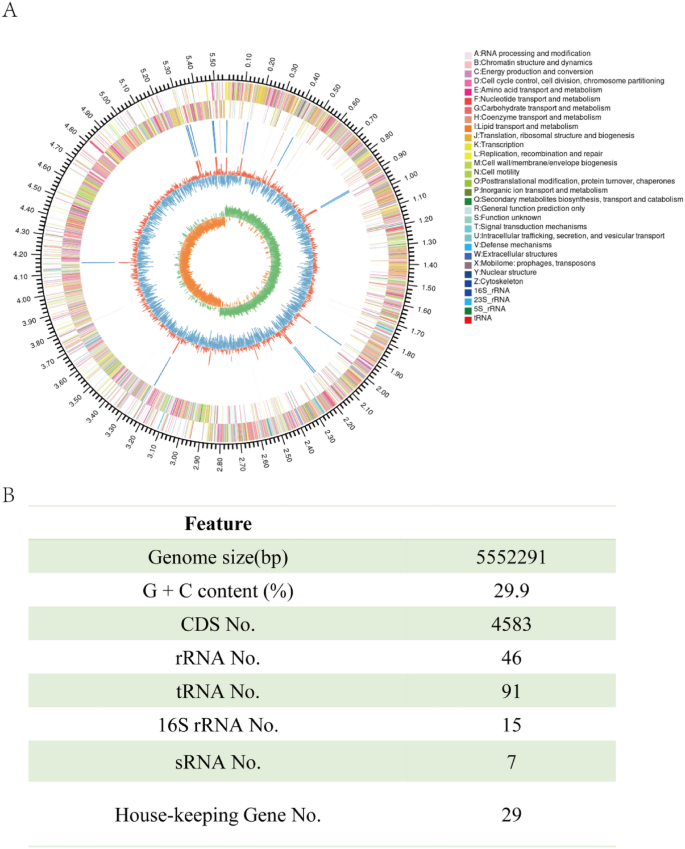
Butyric acid is a volatile saturated monocarboxylic acid, which is widely used in the chemical, food, pharmaceutical, energy, and animal feed industries. This study focuses on producing butyric acid from pre-treated rape straw using simultaneous enzymatic hydrolysis semi-solid fermentation (SEHSF). Clostridium beijerinckii BRM001 screened from pit mud of Chinese nongxiangxing baijiu was used. The genome of C. beijerinckii BRM001 was sequenced and annotated. Using rape straw as the sole carbon source, fermentation optimization was carried out based on the genomic analysis of BRM001. The optimized butyric acid yield was as high as 13.86 ± 0.77 g/L, which was 2.1 times higher than that of the initial screening. Furthermore, under optimal conditions, non-sterile SEHSF was carried out, and the yield of butyric acid was 13.42 ± 0.83 g/L in a 2.5-L fermentor. This study provides a new approach for butyric acid production which eliminates the need for detoxification of straw hydrolysate and makes full use of the value of fermentation waste residue without secondary pollution, making the whole process greener and more economical, which has a certain industrial potential.
期刊介绍:
Bioresources and Bioprocessing (BIOB) is a peer-reviewed open access journal published under the brand SpringerOpen. BIOB aims at providing an international academic platform for exchanging views on and promoting research to support bioresource development, processing and utilization in a sustainable manner. As an application-oriented research journal, BIOB covers not only the application and management of bioresource technology but also the design and development of bioprocesses that will lead to new and sustainable production processes. BIOB publishes original and review articles on most topics relating to bioresource and bioprocess engineering, including: -Biochemical and microbiological engineering -Biocatalysis and biotransformation -Biosynthesis and metabolic engineering -Bioprocess and biosystems engineering -Bioenergy and biorefinery -Cell culture and biomedical engineering -Food, agricultural and marine biotechnology -Bioseparation and biopurification engineering -Bioremediation and environmental biotechnology




 京公网安备 11010802042870号
京ICP备2023020795号-1
京公网安备 11010802042870号
京ICP备2023020795号-1

 分享
分享
 求助内容:
求助内容: 应助结果提醒方式:
 扫码关注我们
