K. Walsh, Helen O’Donnell, Mark O’Loughlin, Heather Eames, Jingjing Jiang, Katie M. O’Brien, N. Broderick, Kirsty O'Brien, M. Carrigan, L. Comber, Karen Cardwell, Joan Quigley, Susan M. Smith, Eamon O Murchu, Karina Butler, Brenda Corcoran, Kevin Connolly, P. Harrington, M. Ryan, M. O’Neill
{"title":"Duration of protective immunity following COVID‐19 vaccination of individuals with underlying health conditions: A rapid review","authors":"K. Walsh, Helen O’Donnell, Mark O’Loughlin, Heather Eames, Jingjing Jiang, Katie M. O’Brien, N. Broderick, Kirsty O'Brien, M. Carrigan, L. Comber, Karen Cardwell, Joan Quigley, Susan M. Smith, Eamon O Murchu, Karina Butler, Brenda Corcoran, Kevin Connolly, P. Harrington, M. Ryan, M. O’Neill","doi":"10.1002/rmv.2504","DOIUrl":null,"url":null,"abstract":"The World Health Organization has stated that the primary goal of immunisation in the COVID‐19 pandemic remains to protect against hospitalisation, severe disease and death. Vaccination is particularly important for those with underlying health conditions given the high risk of severe disease in this population. The aim of this review was to examine the change in efficacy and effectiveness of COVID‐19 vaccination over time in individuals with underlying conditions. A rapid review was undertaken in Cochrane, Embase, Medline, Europe PMC, MedRxiv and Google Scholar from 01/01/2020 to 27/10/2021. A total of 14 unique studies (3 randomised controlled trials and 11 observational studies) were included. Overall, there was limited and inconsistent evidence regarding vaccine efficacy and effectiveness in those with underlying health conditions. However, the evidence suggests potentially faster waning of vaccine effectiveness against infection, severe disease and death in individuals with underlying conditions, particularly for older adults with these conditions, and in those who are immunocompromised. Protection in younger age groups with underlying conditions who are not immunocompromised, may be largely comparable to that observed in the general population, though this is uncertain. Given the significant burden of infection on individuals with underlying conditions, any small decrease in protection is likely to have a substantial impact in this population. Hence, the evidence supports a policy of providing additional doses to those who are immunocompromised, and boosters to all those with underlying health conditions. Further research is required to understand the impact of new variants on vaccine efficacy/effectiveness in this population.","PeriodicalId":9,"journal":{"name":"ACS Catalysis ","volume":"1974 3","pages":""},"PeriodicalIF":13.1000,"publicationDate":"2024-02-03","publicationTypes":"Journal Article","fieldsOfStudy":null,"isOpenAccess":false,"openAccessPdf":"","citationCount":"0","resultStr":null,"platform":"Semanticscholar","paperid":null,"PeriodicalName":"ACS Catalysis ","FirstCategoryId":"3","ListUrlMain":"https://doi.org/10.1002/rmv.2504","RegionNum":1,"RegionCategory":"化学","ArticlePicture":[],"TitleCN":null,"AbstractTextCN":null,"PMCID":null,"EPubDate":"","PubModel":"","JCR":"Q1","JCRName":"CHEMISTRY, PHYSICAL","Score":null,"Total":0}
引用次数: 0
Abstract
The World Health Organization has stated that the primary goal of immunisation in the COVID‐19 pandemic remains to protect against hospitalisation, severe disease and death. Vaccination is particularly important for those with underlying health conditions given the high risk of severe disease in this population. The aim of this review was to examine the change in efficacy and effectiveness of COVID‐19 vaccination over time in individuals with underlying conditions. A rapid review was undertaken in Cochrane, Embase, Medline, Europe PMC, MedRxiv and Google Scholar from 01/01/2020 to 27/10/2021. A total of 14 unique studies (3 randomised controlled trials and 11 observational studies) were included. Overall, there was limited and inconsistent evidence regarding vaccine efficacy and effectiveness in those with underlying health conditions. However, the evidence suggests potentially faster waning of vaccine effectiveness against infection, severe disease and death in individuals with underlying conditions, particularly for older adults with these conditions, and in those who are immunocompromised. Protection in younger age groups with underlying conditions who are not immunocompromised, may be largely comparable to that observed in the general population, though this is uncertain. Given the significant burden of infection on individuals with underlying conditions, any small decrease in protection is likely to have a substantial impact in this population. Hence, the evidence supports a policy of providing additional doses to those who are immunocompromised, and boosters to all those with underlying health conditions. Further research is required to understand the impact of new variants on vaccine efficacy/effectiveness in this population.
期刊介绍:
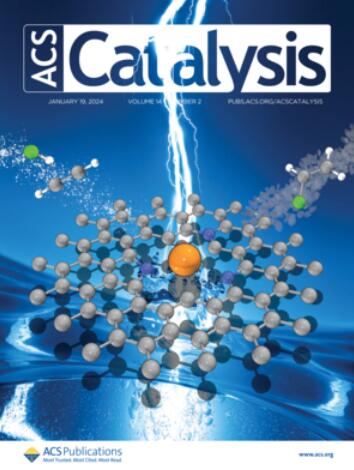
ACS Catalysis is an esteemed journal that publishes original research in the fields of heterogeneous catalysis, molecular catalysis, and biocatalysis. It offers broad coverage across diverse areas such as life sciences, organometallics and synthesis, photochemistry and electrochemistry, drug discovery and synthesis, materials science, environmental protection, polymer discovery and synthesis, and energy and fuels.
The scope of the journal is to showcase innovative work in various aspects of catalysis. This includes new reactions and novel synthetic approaches utilizing known catalysts, the discovery or modification of new catalysts, elucidation of catalytic mechanisms through cutting-edge investigations, practical enhancements of existing processes, as well as conceptual advances in the field. Contributions to ACS Catalysis can encompass both experimental and theoretical research focused on catalytic molecules, macromolecules, and materials that exhibit catalytic turnover.



 京公网安备 11010802042870号
京ICP备2023020795号-1
京公网安备 11010802042870号
京ICP备2023020795号-1

 分享
分享
 求助内容:
求助内容: 应助结果提醒方式:
 扫码关注我们
