G. Zia, Tinku Gupta, Vandana Garg, Mahima Chauhan, Rohit Dutt
{"title":"Antidiabetic and Antioxidant Activities of Plumbago zeylanica Roots in Streptozotocin-induced Diabetic Rats","authors":"G. Zia, Tinku Gupta, Vandana Garg, Mahima Chauhan, Rohit Dutt","doi":"10.4103/2311-8571.395060","DOIUrl":null,"url":null,"abstract":"\n \n \n The concurrent usage of oral hypoglycemic agents produces side effects, and the herbal medicine Plumbago zeylanica L. (PZ) is being studied to reduce these effects. The antioxidant and antidiabetic effects of PZ roots on streptozotocin-nicotinamide-induced diabetic rats were investigated.\n \n \n \n Triple maceration method was used for the development of PZ extracts. Standardization of the plant extract and in vitro study was carried out by the physicochemical study, 1, 1-diphenyl-2-picryl-hydrazyl, and α-amylase methods. Animals were divided into seven groups, and the experiment was designed into two parts. Seven groups were taken normal control, diabetic control, hydroalcoholic extract of PZ at different doses (100–200 mg/kg), and metformin (MET, 25 mg/kg) for 21 days. The coadministration of a low dose of PZ (100 mg/kg) and MET (100 mg/kg) was administered orally. Blood glucose level (BGL) was measured continuously for 3 weeks of overnight-fasted animals. Biochemical estimation was assessed by total protein, catalase, nitric oxide, and reduced glutathione content. Histological features of the β-cells were observed through histopathological study.\n \n \n \n Hydroalcoholic PZ (HAPZ) showed the highest antioxidant and antidiabetic activities, respectively. Oral administration of HAPZ extract (200 mg/ml) for 21 days diminished the BGL significantly from 298 ± 7.05 to 230 ± 5.69 mg/dL, whereas coadministration of HAPZ (100 mg/kg) with MET (10 mg/kg) had also reduced BGL from 286 ± 4.10 to 231 ± 5.75 mg/dL. The best outcomes were obtained when PZ extract (100 mg/kg) was combined with a low dose of MET (10 mg/kg).\n \n \n \n We can conclude that PZ might be the alternative to synthetic medicines for the management of diabetic disorders.\n","PeriodicalId":4,"journal":{"name":"ACS Applied Energy Materials","volume":"37 7","pages":""},"PeriodicalIF":5.5000,"publicationDate":"2024-02-02","publicationTypes":"Journal Article","fieldsOfStudy":null,"isOpenAccess":false,"openAccessPdf":"","citationCount":"0","resultStr":null,"platform":"Semanticscholar","paperid":null,"PeriodicalName":"ACS Applied Energy Materials","FirstCategoryId":"3","ListUrlMain":"https://doi.org/10.4103/2311-8571.395060","RegionNum":3,"RegionCategory":"材料科学","ArticlePicture":[],"TitleCN":null,"AbstractTextCN":null,"PMCID":null,"EPubDate":"","PubModel":"","JCR":"Q2","JCRName":"CHEMISTRY, PHYSICAL","Score":null,"Total":0}
引用次数: 0
Abstract
The concurrent usage of oral hypoglycemic agents produces side effects, and the herbal medicine Plumbago zeylanica L. (PZ) is being studied to reduce these effects. The antioxidant and antidiabetic effects of PZ roots on streptozotocin-nicotinamide-induced diabetic rats were investigated.
Triple maceration method was used for the development of PZ extracts. Standardization of the plant extract and in vitro study was carried out by the physicochemical study, 1, 1-diphenyl-2-picryl-hydrazyl, and α-amylase methods. Animals were divided into seven groups, and the experiment was designed into two parts. Seven groups were taken normal control, diabetic control, hydroalcoholic extract of PZ at different doses (100–200 mg/kg), and metformin (MET, 25 mg/kg) for 21 days. The coadministration of a low dose of PZ (100 mg/kg) and MET (100 mg/kg) was administered orally. Blood glucose level (BGL) was measured continuously for 3 weeks of overnight-fasted animals. Biochemical estimation was assessed by total protein, catalase, nitric oxide, and reduced glutathione content. Histological features of the β-cells were observed through histopathological study.
Hydroalcoholic PZ (HAPZ) showed the highest antioxidant and antidiabetic activities, respectively. Oral administration of HAPZ extract (200 mg/ml) for 21 days diminished the BGL significantly from 298 ± 7.05 to 230 ± 5.69 mg/dL, whereas coadministration of HAPZ (100 mg/kg) with MET (10 mg/kg) had also reduced BGL from 286 ± 4.10 to 231 ± 5.75 mg/dL. The best outcomes were obtained when PZ extract (100 mg/kg) was combined with a low dose of MET (10 mg/kg).
We can conclude that PZ might be the alternative to synthetic medicines for the management of diabetic disorders.
期刊介绍:
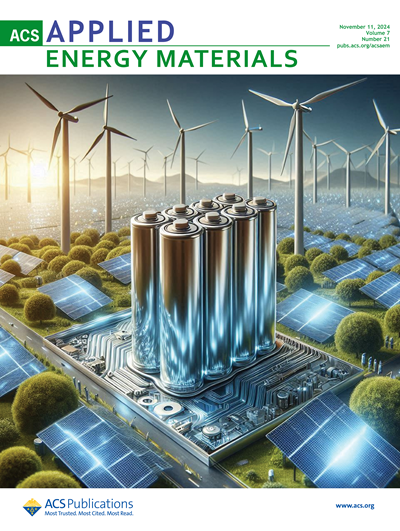
ACS Applied Energy Materials is an interdisciplinary journal publishing original research covering all aspects of materials, engineering, chemistry, physics and biology relevant to energy conversion and storage. The journal is devoted to reports of new and original experimental and theoretical research of an applied nature that integrate knowledge in the areas of materials, engineering, physics, bioscience, and chemistry into important energy applications.



 京公网安备 11010802042870号
京ICP备2023020795号-1
京公网安备 11010802042870号
京ICP备2023020795号-1

 分享
分享
 求助内容:
求助内容: 应助结果提醒方式:
 扫码关注我们
