Rafaela Nasser Veiga, Alexandre Luiz Korte de Azevedo, Jaqueline Carvalho de Oliveira, Daniela Fiori Gradia
{"title":"Targeting EphA2: a promising strategy to overcome chemoresistance and drug resistance in cancer.","authors":"Rafaela Nasser Veiga, Alexandre Luiz Korte de Azevedo, Jaqueline Carvalho de Oliveira, Daniela Fiori Gradia","doi":"10.1007/s00109-024-02431-x","DOIUrl":null,"url":null,"abstract":"<p><p>Erythropoietin-producing hepatocellular A2 (EphA2) is a vital member of the Eph tyrosine kinase receptor family and has been associated with developmental processes. However, it is often overexpressed in tumors and correlates with cancer progression and worse prognosis due to the activation of its noncanonical signaling pathway. Throughout cancer treatment, the emergence of drug-resistant tumor cells is relatively common. Since the early 2000s, researchers have focused on understanding the role of EphA2 in promoting drug resistance in different types of cancer, as well as finding efficient and secure EphA2 inhibitors. In this review, the current knowledge regarding induced resistance by EphA2 in cancer treatment is summarized, and the types of cancer that lead to the most cancer-related deaths are highlighted. Some EphA2 inhibitors were also investigated. Regardless of whether the cancer treatment has reached a drug-resistance stage in EphA2-overexpressing tumors, once EphA2 is involved in cancer progression and aggressiveness, targeting EphA2 is a promising therapeutic strategy, especially in combination with other target-drugs for synergistic effect. For that reason, monoclonal antibodies against EphA2 and inhibitors of this receptor should be investigated for efficacy and drug toxicity.</p>","PeriodicalId":50127,"journal":{"name":"Journal of Molecular Medicine-Jmm","volume":" ","pages":"479-493"},"PeriodicalIF":4.2000,"publicationDate":"2024-04-01","publicationTypes":"Journal Article","fieldsOfStudy":null,"isOpenAccess":false,"openAccessPdf":"","citationCount":"0","resultStr":null,"platform":"Semanticscholar","paperid":null,"PeriodicalName":"Journal of Molecular Medicine-Jmm","FirstCategoryId":"3","ListUrlMain":"https://doi.org/10.1007/s00109-024-02431-x","RegionNum":3,"RegionCategory":"医学","ArticlePicture":[],"TitleCN":null,"AbstractTextCN":null,"PMCID":null,"EPubDate":"2024/2/23 0:00:00","PubModel":"Epub","JCR":"Q1","JCRName":"GENETICS & HEREDITY","Score":null,"Total":0}
引用次数: 0
Abstract
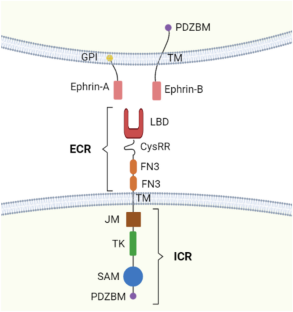
Erythropoietin-producing hepatocellular A2 (EphA2) is a vital member of the Eph tyrosine kinase receptor family and has been associated with developmental processes. However, it is often overexpressed in tumors and correlates with cancer progression and worse prognosis due to the activation of its noncanonical signaling pathway. Throughout cancer treatment, the emergence of drug-resistant tumor cells is relatively common. Since the early 2000s, researchers have focused on understanding the role of EphA2 in promoting drug resistance in different types of cancer, as well as finding efficient and secure EphA2 inhibitors. In this review, the current knowledge regarding induced resistance by EphA2 in cancer treatment is summarized, and the types of cancer that lead to the most cancer-related deaths are highlighted. Some EphA2 inhibitors were also investigated. Regardless of whether the cancer treatment has reached a drug-resistance stage in EphA2-overexpressing tumors, once EphA2 is involved in cancer progression and aggressiveness, targeting EphA2 is a promising therapeutic strategy, especially in combination with other target-drugs for synergistic effect. For that reason, monoclonal antibodies against EphA2 and inhibitors of this receptor should be investigated for efficacy and drug toxicity.
期刊介绍:
The Journal of Molecular Medicine publishes original research articles and review articles that range from basic findings in mechanisms of disease pathogenesis to therapy. The focus includes all human diseases, including but not limited to:
Aging, angiogenesis, autoimmune diseases as well as other inflammatory diseases, cancer, cardiovascular diseases, development and differentiation, endocrinology, gastrointestinal diseases and hepatology, genetics and epigenetics, hematology, hypoxia research, immunology, infectious diseases, metabolic disorders, neuroscience of diseases, -omics based disease research, regenerative medicine, and stem cell research.
Studies solely based on cell lines will not be considered. Studies that are based on model organisms will be considered as long as they are directly relevant to human disease.



 京公网安备 11010802042870号
京ICP备2023020795号-1
京公网安备 11010802042870号
京ICP备2023020795号-1

 分享
分享
 求助内容:
求助内容: 应助结果提醒方式:
 扫码关注我们
