Invasive Teline monspessulana and Ulex europaeus allelochemicals induce differential responses regarding the growth and physiological performance of two native Chilean tree species
Lubia M. Guedes, Denis Coelho de Oliveira, Carolina Sanhueza, Ana S. Moreira, Narciso Aguilera
{"title":"Invasive Teline monspessulana and Ulex europaeus allelochemicals induce differential responses regarding the growth and physiological performance of two native Chilean tree species","authors":"Lubia M. Guedes, Denis Coelho de Oliveira, Carolina Sanhueza, Ana S. Moreira, Narciso Aguilera","doi":"10.1007/s11738-024-03665-5","DOIUrl":null,"url":null,"abstract":"<div><p><i>Teline monspessulana</i> and <i>Ulex europaeus</i> (Fabaceae) are highly invasive species distributed worldwide. In Chile, both species share a similar distribution area with the native species <i>Quillaja saponaria</i> and <i>Peumus boldus</i>. This research focused on determining the effects caused by the aqueous extracts of the aerial organs of both invaders on the initial growth and photosynthetic performance of the two native tree species. Experiments were established under controlled conditions simulating natural conditions where both invasive and native species coexist. Morphometric variables defining root and aerial development were evaluated. Photosynthetic performance was also evaluated by measuring chlorophyll fluorescence, pigment content, and non-structural carbohydrates. In <i>Q. saponaria</i> seedlings, the growth of aerial and root organs was affected, but the production of photoassimilates increased under allelochemical stress. No damage to the photosynthetic machinery was observed in <i>P. boldus</i>, but its initial growth was notably reduced, possibly compromising its survival when interacting with both invasive species. The results indicated that allelochemicals synthesized by the two invasive species differentially affected the morphophysiological performance of the two native species. In terms of carbon administration, our results indicate that <i>Q. saponaria</i> seedlings probably use the assimilated carbon for biomass and defensive compound production. In contrast, <i>P. boldus</i> seedling growth is more sensitive to allelochemical stress and is seriously compromised, maybe because its metabolism is mainly invested in defensive compounds to deal with invasive species.</p></div>","PeriodicalId":6973,"journal":{"name":"Acta Physiologiae Plantarum","volume":"46 3","pages":""},"PeriodicalIF":2.2000,"publicationDate":"2024-02-27","publicationTypes":"Journal Article","fieldsOfStudy":null,"isOpenAccess":false,"openAccessPdf":"","citationCount":"0","resultStr":null,"platform":"Semanticscholar","paperid":null,"PeriodicalName":"Acta Physiologiae Plantarum","FirstCategoryId":"99","ListUrlMain":"https://link.springer.com/article/10.1007/s11738-024-03665-5","RegionNum":4,"RegionCategory":"生物学","ArticlePicture":[],"TitleCN":null,"AbstractTextCN":null,"PMCID":null,"EPubDate":"","PubModel":"","JCR":"Q2","JCRName":"PLANT SCIENCES","Score":null,"Total":0}
引用次数: 0
Abstract
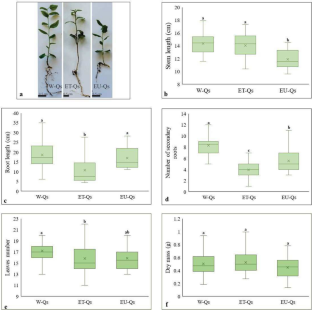
Teline monspessulana and Ulex europaeus (Fabaceae) are highly invasive species distributed worldwide. In Chile, both species share a similar distribution area with the native species Quillaja saponaria and Peumus boldus. This research focused on determining the effects caused by the aqueous extracts of the aerial organs of both invaders on the initial growth and photosynthetic performance of the two native tree species. Experiments were established under controlled conditions simulating natural conditions where both invasive and native species coexist. Morphometric variables defining root and aerial development were evaluated. Photosynthetic performance was also evaluated by measuring chlorophyll fluorescence, pigment content, and non-structural carbohydrates. In Q. saponaria seedlings, the growth of aerial and root organs was affected, but the production of photoassimilates increased under allelochemical stress. No damage to the photosynthetic machinery was observed in P. boldus, but its initial growth was notably reduced, possibly compromising its survival when interacting with both invasive species. The results indicated that allelochemicals synthesized by the two invasive species differentially affected the morphophysiological performance of the two native species. In terms of carbon administration, our results indicate that Q. saponaria seedlings probably use the assimilated carbon for biomass and defensive compound production. In contrast, P. boldus seedling growth is more sensitive to allelochemical stress and is seriously compromised, maybe because its metabolism is mainly invested in defensive compounds to deal with invasive species.
期刊介绍:
Acta Physiologiae Plantarum is an international journal established in 1978 that publishes peer-reviewed articles on all aspects of plant physiology. The coverage ranges across this research field at various levels of biological organization, from relevant aspects in molecular and cell biology to biochemistry.
The coverage is global in scope, offering articles of interest from experts around the world. The range of topics includes measuring effects of environmental pollution on crop species; analysis of genomic organization; effects of drought and climatic conditions on plants; studies of photosynthesis in ornamental plants, and more.



 京公网安备 11010802042870号
京ICP备2023020795号-1
京公网安备 11010802042870号
京ICP备2023020795号-1

 分享
分享
 求助内容:
求助内容: 应助结果提醒方式:
 扫码关注我们
