{"title":"Chronic Inflammatory Demyelinating Polyradiculoneuropathy: Current Therapeutic Approaches and Future Outlooks.","authors":"Yusuf A Rajabally","doi":"10.2147/ITT.S388151","DOIUrl":null,"url":null,"abstract":"<p><p>Chronic inflammatory demyelinating polyradiculoneuropathy (CIDP) is a treatable autoimmune disorder, for which different treatment options are available. Current first-line evidence-based therapies for CIDP include intravenous and subcutaneous immunoglobulins, corticosteroids and plasma exchanges. Despite lack of evidence, cyclophosphamide, rituximab and mycophenolate mofetil are commonly used in circumstances of refractoriness and, more debatably, of perceived overdependence on first-line therapies. Rituximab is currently the object of a randomized controlled trial for CIDP. Based on case series, and although rarely considered, haematopoietic autologous stem cell transplants may be effective in refractory disease, with low mortality and high remission rates. A new therapeutic option has appeared with efgartigimod, a neonatal Fc receptor blocker, recently shown to significantly lower relapse rate versus placebo, after withdrawal from previous immunotherapy. Other neonatal Fc receptor blockers, nipocalimab and batoclimab, are under study. The C1 complement-inhibitor SAR445088, acting in the proximal portion of the classical complement system, is currently the subject of a new study in treatment-responsive, refractory and treatment-naïve subjects. Finally, Bruton Tyrosine Kinase inhibitors, which exert anti-B cell effects, may represent another future research avenue. The widening of the therapeutic armamentarium enhances the need for improved evaluation of treatment effects and reliable biomarkers in CIDP.</p>","PeriodicalId":30986,"journal":{"name":"ImmunoTargets and Therapy","volume":"13 ","pages":"99-110"},"PeriodicalIF":4.4000,"publicationDate":"2024-02-26","publicationTypes":"Journal Article","fieldsOfStudy":null,"isOpenAccess":false,"openAccessPdf":"https://www.ncbi.nlm.nih.gov/pmc/articles/PMC10906673/pdf/","citationCount":"0","resultStr":null,"platform":"Semanticscholar","paperid":null,"PeriodicalName":"ImmunoTargets and Therapy","FirstCategoryId":"1085","ListUrlMain":"https://doi.org/10.2147/ITT.S388151","RegionNum":0,"RegionCategory":null,"ArticlePicture":[],"TitleCN":null,"AbstractTextCN":null,"PMCID":null,"EPubDate":"2024/1/1 0:00:00","PubModel":"eCollection","JCR":"Q1","JCRName":"IMMUNOLOGY","Score":null,"Total":0}
引用次数: 0
Abstract
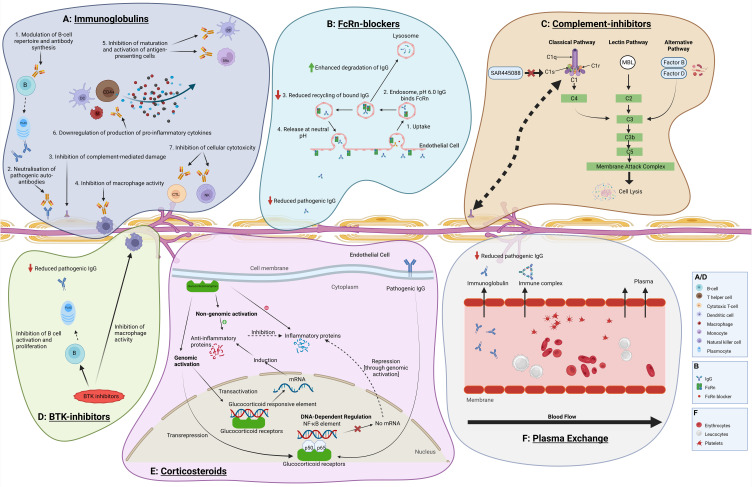
Chronic inflammatory demyelinating polyradiculoneuropathy (CIDP) is a treatable autoimmune disorder, for which different treatment options are available. Current first-line evidence-based therapies for CIDP include intravenous and subcutaneous immunoglobulins, corticosteroids and plasma exchanges. Despite lack of evidence, cyclophosphamide, rituximab and mycophenolate mofetil are commonly used in circumstances of refractoriness and, more debatably, of perceived overdependence on first-line therapies. Rituximab is currently the object of a randomized controlled trial for CIDP. Based on case series, and although rarely considered, haematopoietic autologous stem cell transplants may be effective in refractory disease, with low mortality and high remission rates. A new therapeutic option has appeared with efgartigimod, a neonatal Fc receptor blocker, recently shown to significantly lower relapse rate versus placebo, after withdrawal from previous immunotherapy. Other neonatal Fc receptor blockers, nipocalimab and batoclimab, are under study. The C1 complement-inhibitor SAR445088, acting in the proximal portion of the classical complement system, is currently the subject of a new study in treatment-responsive, refractory and treatment-naïve subjects. Finally, Bruton Tyrosine Kinase inhibitors, which exert anti-B cell effects, may represent another future research avenue. The widening of the therapeutic armamentarium enhances the need for improved evaluation of treatment effects and reliable biomarkers in CIDP.
期刊介绍:
Immuno Targets and Therapy is an international, peer-reviewed open access journal focusing on the immunological basis of diseases, potential targets for immune based therapy and treatment protocols employed to improve patient management. Basic immunology and physiology of the immune system in health, and disease will be also covered.In addition, the journal will focus on the impact of management programs and new therapeutic agents and protocols on patient perspectives such as quality of life, adherence and satisfaction.



 京公网安备 11010802042870号
京ICP备2023020795号-1
京公网安备 11010802042870号
京ICP备2023020795号-1

 分享
分享
 求助内容:
求助内容: 应助结果提醒方式:
 扫码关注我们
