Laura Dörrenbächer-Ulrich, Jörn R. Sparfeldt, Franziska Perels
{"title":"Knowing how to learn: development and validation of the strategy knowledge test for self-regulated learning (SKT-SRL) for college students","authors":"Laura Dörrenbächer-Ulrich, Jörn R. Sparfeldt, Franziska Perels","doi":"10.1007/s11409-024-09379-w","DOIUrl":null,"url":null,"abstract":"<p>Self-regulated learning (SRL) encompasses cognitive, metacognitive, and motivational learning strategies and is highly relevant for academic achievement. Although students have mostly acquired high-level SRL strategy knowledge by the time they reach college, they often show deficiencies in their application of SRL strategies. In order to investigate the gap between SRL strategy knowledge and its application in more depth, it is necessary to develop instruments that assess conditional SRL strategy knowledge for the whole learning process with sufficient validity and reliability. Therefore, based on four distinct studies conducted in Germany, the development and validation of a new Strategy Knowledge Test for Self-Regulated Learning (SKT-SRL) for college students are described. Study 1 describes the development of the test and the results of expert ratings that speak in favour of the test’s content validity. Study 2, the pilot study, was undertaken to gain insight into the psychometric characteristics of the SKT-SRL, examine its relationship to other SRL assessment methods and academic achievement, and reach a sense of its validity. Studies 3 and 4 present the results of two validation studies for the SKT-SRL; they investigated its psychometric characteristics, convergent validity, factorial structure, test–retest reliability, and its relationship to academic achievement as well as other study-relevant factors. Overall, the results are promising and the SKT-SRL mostly showed sufficiently valid assessments. To conclude, the SKT-SRL is a useful tool for analysing conditional SRL strategy knowledge in college students and can be used for further research on the relationship between SRL strategy knowledge and strategy usage.</p>","PeriodicalId":47385,"journal":{"name":"Metacognition and Learning","volume":"126 1","pages":""},"PeriodicalIF":4.8000,"publicationDate":"2024-03-07","publicationTypes":"Journal Article","fieldsOfStudy":null,"isOpenAccess":false,"openAccessPdf":"","citationCount":"0","resultStr":null,"platform":"Semanticscholar","paperid":null,"PeriodicalName":"Metacognition and Learning","FirstCategoryId":"95","ListUrlMain":"https://doi.org/10.1007/s11409-024-09379-w","RegionNum":2,"RegionCategory":"教育学","ArticlePicture":[],"TitleCN":null,"AbstractTextCN":null,"PMCID":null,"EPubDate":"","PubModel":"","JCR":"Q1","JCRName":"EDUCATION & EDUCATIONAL RESEARCH","Score":null,"Total":0}
引用次数: 0
Abstract
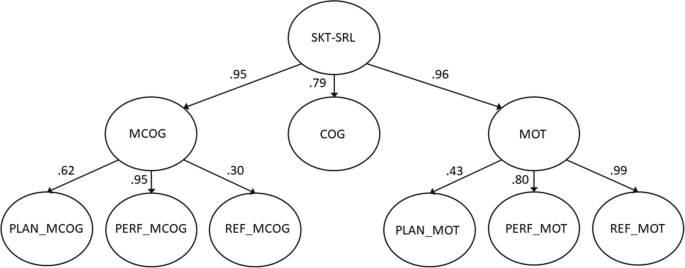
Self-regulated learning (SRL) encompasses cognitive, metacognitive, and motivational learning strategies and is highly relevant for academic achievement. Although students have mostly acquired high-level SRL strategy knowledge by the time they reach college, they often show deficiencies in their application of SRL strategies. In order to investigate the gap between SRL strategy knowledge and its application in more depth, it is necessary to develop instruments that assess conditional SRL strategy knowledge for the whole learning process with sufficient validity and reliability. Therefore, based on four distinct studies conducted in Germany, the development and validation of a new Strategy Knowledge Test for Self-Regulated Learning (SKT-SRL) for college students are described. Study 1 describes the development of the test and the results of expert ratings that speak in favour of the test’s content validity. Study 2, the pilot study, was undertaken to gain insight into the psychometric characteristics of the SKT-SRL, examine its relationship to other SRL assessment methods and academic achievement, and reach a sense of its validity. Studies 3 and 4 present the results of two validation studies for the SKT-SRL; they investigated its psychometric characteristics, convergent validity, factorial structure, test–retest reliability, and its relationship to academic achievement as well as other study-relevant factors. Overall, the results are promising and the SKT-SRL mostly showed sufficiently valid assessments. To conclude, the SKT-SRL is a useful tool for analysing conditional SRL strategy knowledge in college students and can be used for further research on the relationship between SRL strategy knowledge and strategy usage.
期刊介绍:
The journal "Metacognition and Learning" addresses various components of metacognition, such as metacognitive awareness, experiences, knowledge, and executive skills.
Both general metacognition as well as domain-specific metacognitions in various task domains (mathematics, physics, reading, writing etc.) are considered. Papers may address fundamental theoretical issues, measurement issues regarding both quantitative and qualitative methods, as well as empirical studies about individual differences in metacognition, relations with other learner characteristics and learning strategies, developmental issues, the training of metacognition components in learning, and the teacher’s role in metacognition training. Studies highlighting the role of metacognition in self- or co-regulated learning as well as its relations with motivation and affect are also welcomed.
Submitted papers are judged on theoretical relevance, methodological thoroughness, and appeal to an international audience. The journal aims for a high academic standard with relevance to the field of educational practices.
One restriction is that papers should pertain to the role of metacognition in learning situations. Self-regulation in clinical settings, such as coping with phobia or anxiety outside learning situations, is beyond the scope of the journal.



 京公网安备 11010802042870号
京ICP备2023020795号-1
京公网安备 11010802042870号
京ICP备2023020795号-1

 分享
分享
 求助内容:
求助内容: 应助结果提醒方式:
 扫码关注我们
