Tresa López-Royo, Laura Moreno-Martínez, Leticia Moreno-García, Ana Cristina Calvo, Raquel Manzano, Rosario Osta
{"title":"Sex differences on constitutive long non-coding RNA expression: Modulatory effect of estradiol and testosterone in muscle cells","authors":"Tresa López-Royo, Laura Moreno-Martínez, Leticia Moreno-García, Ana Cristina Calvo, Raquel Manzano, Rosario Osta","doi":"10.1111/andr.13624","DOIUrl":null,"url":null,"abstract":"<div>\n \n \n <section>\n \n <h3> Introduction</h3>\n \n <p>Despite the growing awareness of sexual dimorphism between males and females under pathological and physiological conditions, sex bias in biomedical research in animal models and patients is still present nowadays. The main objective of this work was to investigate sex differences in constitutive long non-coding RNA expression in spinal cord and skeletal muscle from wild-type mice.</p>\n </section>\n \n <section>\n \n <h3> Materials and Methods</h3>\n \n <p>To assess the influence of gender on long non-coding RNAs, we extracted RNA from tissues of male and female mice and analyzed the expression on nine long non-coding RNAs, selected for being among the most commonly studied or exerting an important role in muscle, at 50, 60, and 120 days of age.</p>\n </section>\n \n <section>\n \n <h3> Results and Discussion</h3>\n \n <p>We observed age- and tissue-dependent significant sex differences, being more prominent in skeletal muscle. We also studied the effect of sex steroid hormones on long non-coding RNA expression in vitro, noticing a modulation of long non-coding RNA levels upon estradiol and dihydrotestosterone treatment in muscle.</p>\n </section>\n \n <section>\n \n <h3> Conclusions</h3>\n \n <p>Taken together, results obtained evidenced sex differences on constitutive long non-coding RNA expression and suggested an influence of steroid hormones complementary to other possible factors. These findings emphasize the importance of including both sexes in experimental design to minimize any potential sex bias.</p>\n </section>\n </div>","PeriodicalId":7898,"journal":{"name":"Andrology","volume":"12 8","pages":"1887-1896"},"PeriodicalIF":3.4000,"publicationDate":"2024-03-12","publicationTypes":"Journal Article","fieldsOfStudy":null,"isOpenAccess":false,"openAccessPdf":"https://onlinelibrary.wiley.com/doi/epdf/10.1111/andr.13624","citationCount":"0","resultStr":null,"platform":"Semanticscholar","paperid":null,"PeriodicalName":"Andrology","FirstCategoryId":"3","ListUrlMain":"https://onlinelibrary.wiley.com/doi/10.1111/andr.13624","RegionNum":2,"RegionCategory":"医学","ArticlePicture":[],"TitleCN":null,"AbstractTextCN":null,"PMCID":null,"EPubDate":"","PubModel":"","JCR":"Q1","JCRName":"ANDROLOGY","Score":null,"Total":0}
引用次数: 0
Abstract
Introduction
Despite the growing awareness of sexual dimorphism between males and females under pathological and physiological conditions, sex bias in biomedical research in animal models and patients is still present nowadays. The main objective of this work was to investigate sex differences in constitutive long non-coding RNA expression in spinal cord and skeletal muscle from wild-type mice.
Materials and Methods
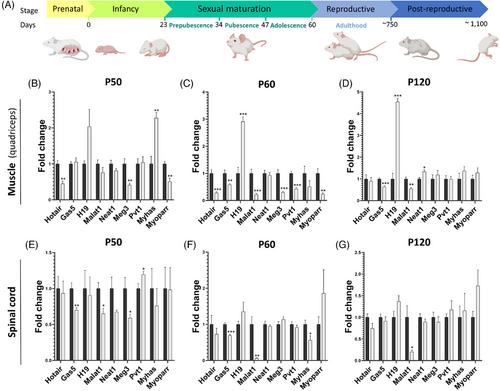
To assess the influence of gender on long non-coding RNAs, we extracted RNA from tissues of male and female mice and analyzed the expression on nine long non-coding RNAs, selected for being among the most commonly studied or exerting an important role in muscle, at 50, 60, and 120 days of age.
Results and Discussion
We observed age- and tissue-dependent significant sex differences, being more prominent in skeletal muscle. We also studied the effect of sex steroid hormones on long non-coding RNA expression in vitro, noticing a modulation of long non-coding RNA levels upon estradiol and dihydrotestosterone treatment in muscle.
Conclusions
Taken together, results obtained evidenced sex differences on constitutive long non-coding RNA expression and suggested an influence of steroid hormones complementary to other possible factors. These findings emphasize the importance of including both sexes in experimental design to minimize any potential sex bias.
期刊介绍:
Andrology is the study of the male reproductive system and other male gender related health issues. Andrology deals with basic and clinical aspects of the male reproductive system (gonads, endocrine and accessory organs) in all species, including the diagnosis and treatment of medical problems associated with sexual development, infertility, sexual dysfunction, sex hormone action and other urological problems. In medicine, Andrology as a specialty is a recent development, as it had previously been considered a subspecialty of urology or endocrinology




 京公网安备 11010802042870号
京ICP备2023020795号-1
京公网安备 11010802042870号
京ICP备2023020795号-1

 分享
分享
 求助内容:
求助内容: 应助结果提醒方式:
 扫码关注我们
