{"title":"Anexelekto (AXL) no more: microRNA-155 (miR-155) controls the \"Uncontrolled\" in SARS-CoV-2.","authors":"K I Papadopoulos, A Papadopoulou, T C Aw","doi":"10.1007/s13577-024-01041-6","DOIUrl":null,"url":null,"abstract":"<p><p>AXL is the gene that encodes the Anexelekto (AXL) receptor tyrosine kinase that demonstrates significant roles in various cellular processes, including cell growth, survival, and migration. Anexelekto is a Greek word meaning excessive and uncontrolled, semantically implying the crucial involvement of AXL in cancer and immune biology, and in promoting cancer metastasis. AXL overexpression appears to drive epithelial to mesenchymal transition, tumor angiogenesis, decreased antitumor immune response, and resistance to therapeutic agents. Recently, AXL has been reported to play important roles in several viral infections, including SARS-CoV-2. We have previously outlined the importance of microRNAs (miRNAs, miRs) and especially miR-155 in SARS-CoV-2 pathophysiology through regulation of the Renin-Angiotensin Aldosterone System (RAAS) and influence on several aspects of host innate immunity. MiRNAs are negative regulators of gene expression, decreasing the stability of target RNAs or limiting their translation and, enthrallingly, miR-155 is also involved in AXL homeostasis-both endogenously and pharmaceutically using repurposed drugs (e.g., metformin)-highlighting thrifty evolutionary host innate immunity mechanisms that successfully can thwart viral entry and replication. Cancer, infections, and immune system disturbances will increasingly involve miRNA diagnostics and therapeutics in the future.</p>","PeriodicalId":49194,"journal":{"name":"Human Cell","volume":" ","pages":"582-592"},"PeriodicalIF":3.1000,"publicationDate":"2024-05-01","publicationTypes":"Journal Article","fieldsOfStudy":null,"isOpenAccess":false,"openAccessPdf":"","citationCount":"0","resultStr":null,"platform":"Semanticscholar","paperid":null,"PeriodicalName":"Human Cell","FirstCategoryId":"99","ListUrlMain":"https://doi.org/10.1007/s13577-024-01041-6","RegionNum":3,"RegionCategory":"生物学","ArticlePicture":[],"TitleCN":null,"AbstractTextCN":null,"PMCID":null,"EPubDate":"2024/3/12 0:00:00","PubModel":"Epub","JCR":"Q3","JCRName":"CELL BIOLOGY","Score":null,"Total":0}
引用次数: 0
Abstract
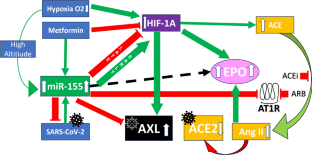
AXL is the gene that encodes the Anexelekto (AXL) receptor tyrosine kinase that demonstrates significant roles in various cellular processes, including cell growth, survival, and migration. Anexelekto is a Greek word meaning excessive and uncontrolled, semantically implying the crucial involvement of AXL in cancer and immune biology, and in promoting cancer metastasis. AXL overexpression appears to drive epithelial to mesenchymal transition, tumor angiogenesis, decreased antitumor immune response, and resistance to therapeutic agents. Recently, AXL has been reported to play important roles in several viral infections, including SARS-CoV-2. We have previously outlined the importance of microRNAs (miRNAs, miRs) and especially miR-155 in SARS-CoV-2 pathophysiology through regulation of the Renin-Angiotensin Aldosterone System (RAAS) and influence on several aspects of host innate immunity. MiRNAs are negative regulators of gene expression, decreasing the stability of target RNAs or limiting their translation and, enthrallingly, miR-155 is also involved in AXL homeostasis-both endogenously and pharmaceutically using repurposed drugs (e.g., metformin)-highlighting thrifty evolutionary host innate immunity mechanisms that successfully can thwart viral entry and replication. Cancer, infections, and immune system disturbances will increasingly involve miRNA diagnostics and therapeutics in the future.
期刊介绍:
Human Cell is the official English-language journal of the Japan Human Cell Society. The journal serves as a forum for international research on all aspects of the human cell, encompassing not only cell biology but also pathology, cytology, and oncology, including clinical oncology. Embryonic stem cells derived from animals, regenerative medicine using animal cells, and experimental animal models with implications for human diseases are covered as well.
Submissions in any of the following categories will be considered: Research Articles, Cell Lines, Rapid Communications, Reviews, and Letters to the Editor. A brief clinical case report focusing on cellular responses to pathological insults in human studies may also be submitted as a Letter to the Editor in a concise and short format.
Not only basic scientists but also gynecologists, oncologists, and other clinical scientists are welcome to submit work expressing new ideas or research using human cells.




 京公网安备 11010802042870号
京ICP备2023020795号-1
京公网安备 11010802042870号
京ICP备2023020795号-1

 分享
分享
 求助内容:
求助内容: 应助结果提醒方式:
 扫码关注我们
