{"title":"Degradation meets development: Implications in β-cell development and diabetes","authors":"Akshaya Ashok, Guruprasad Kalthur, Anujith Kumar","doi":"10.1002/cbin.12155","DOIUrl":null,"url":null,"abstract":"<p>Pancreatic development is orchestrated by timely synthesis and degradation of stage-specific transcription factors (TFs). The transition from one stage to another stage is dependent on the precise expression of the developmentally relevant TFs. Persistent expression of particular TF would impede the exit from the progenitor stage to the matured cell type. Intracellular protein degradation-mediated protein turnover contributes to a major extent to the turnover of these TFs and thereby dictates the development of different tissues. Since even subtle changes in the crucial cellular pathways would dramatically impact pancreatic β-cell performance, it is generally acknowledged that the biological activity of these pathways is tightly regulated by protein synthesis and degradation process. Intracellular protein degradation is executed majorly by the ubiquitin proteasome system (UPS) and Lysosomal degradation pathway. As more than 90% of the TFs are targeted to proteasomal degradation, this review aims to examine the crucial role of UPS in normal pancreatic β-cell development and how dysfunction of these pathways manifests in metabolic syndromes such as diabetes. Such understanding would facilitate designing a faithful approach to obtain a therapeutic quality of β-cells from stem cells.</p>","PeriodicalId":9806,"journal":{"name":"Cell Biology International","volume":"48 6","pages":"759-776"},"PeriodicalIF":3.1000,"publicationDate":"2024-03-18","publicationTypes":"Journal Article","fieldsOfStudy":null,"isOpenAccess":false,"openAccessPdf":"https://onlinelibrary.wiley.com/doi/epdf/10.1002/cbin.12155","citationCount":"0","resultStr":null,"platform":"Semanticscholar","paperid":null,"PeriodicalName":"Cell Biology International","FirstCategoryId":"99","ListUrlMain":"https://onlinelibrary.wiley.com/doi/10.1002/cbin.12155","RegionNum":3,"RegionCategory":"生物学","ArticlePicture":[],"TitleCN":null,"AbstractTextCN":null,"PMCID":null,"EPubDate":"","PubModel":"","JCR":"Q3","JCRName":"CELL BIOLOGY","Score":null,"Total":0}
引用次数: 0
Abstract
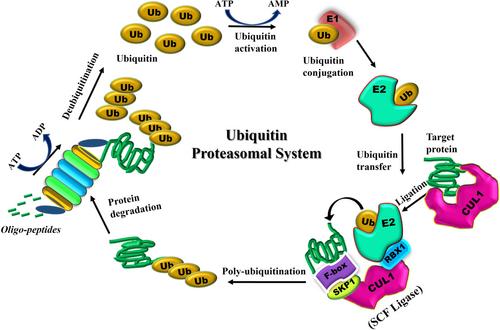
Pancreatic development is orchestrated by timely synthesis and degradation of stage-specific transcription factors (TFs). The transition from one stage to another stage is dependent on the precise expression of the developmentally relevant TFs. Persistent expression of particular TF would impede the exit from the progenitor stage to the matured cell type. Intracellular protein degradation-mediated protein turnover contributes to a major extent to the turnover of these TFs and thereby dictates the development of different tissues. Since even subtle changes in the crucial cellular pathways would dramatically impact pancreatic β-cell performance, it is generally acknowledged that the biological activity of these pathways is tightly regulated by protein synthesis and degradation process. Intracellular protein degradation is executed majorly by the ubiquitin proteasome system (UPS) and Lysosomal degradation pathway. As more than 90% of the TFs are targeted to proteasomal degradation, this review aims to examine the crucial role of UPS in normal pancreatic β-cell development and how dysfunction of these pathways manifests in metabolic syndromes such as diabetes. Such understanding would facilitate designing a faithful approach to obtain a therapeutic quality of β-cells from stem cells.
期刊介绍:
Each month, the journal publishes easy-to-assimilate, up-to-the minute reports of experimental findings by researchers using a wide range of the latest techniques. Promoting the aims of cell biologists worldwide, papers reporting on structure and function - especially where they relate to the physiology of the whole cell - are strongly encouraged. Molecular biology is welcome, as long as articles report findings that are seen in the wider context of cell biology. In covering all areas of the cell, the journal is both appealing and accessible to a broad audience. Authors whose papers do not appeal to cell biologists in general because their topic is too specialized (e.g. infectious microbes, protozoology) are recommended to send them to more relevant journals. Papers reporting whole animal studies or work more suited to a medical journal, e.g. histopathological studies or clinical immunology, are unlikely to be accepted, unless they are fully focused on some important cellular aspect.
These last remarks extend particularly to papers on cancer. Unless firmly based on some deeper cellular or molecular biological principle, papers that are highly specialized in this field, with limited appeal to cell biologists at large, should be directed towards journals devoted to cancer, there being very many from which to choose.



 京公网安备 11010802042870号
京ICP备2023020795号-1
京公网安备 11010802042870号
京ICP备2023020795号-1

 分享
分享
 求助内容:
求助内容: 应助结果提醒方式:
 扫码关注我们
