Maria Miguel Gonçalves, A. Marcão, Carmen Sousa, C. Nogueira, H. Fonseca, H. Rocha, L. Vilarinho
{"title":"Portuguese Neonatal Screening Program: A Cohort Study of 18 Years Using MS/MS","authors":"Maria Miguel Gonçalves, A. Marcão, Carmen Sousa, C. Nogueira, H. Fonseca, H. Rocha, L. Vilarinho","doi":"10.3390/ijns10010025","DOIUrl":null,"url":null,"abstract":"The Portuguese Neonatal Screening Program (PNSP) conducts nationwide screening for rare diseases, covering nearly 100% of neonates and screening for 28 disorders, including 24 inborn errors of metabolism (IEMs). The study’s purpose is to assess the epidemiology of the screened metabolic diseases and to evaluate the impact of second-tier testing (2TT) within the PNSP. From 2004 to 2022, 1,764,830 neonates underwent screening using tandem mass spectrometry (MS/MS) to analyze amino acids and acylcarnitines in dried blood spot samples. 2TT was applied when necessary. Neonates with profiles indicating an IEM were reported to a reference treatment center, and subsequent biochemical and molecular studies were conducted for diagnostic confirmation. Among the screened neonates, 677 patients of IEM were identified, yielding an estimated birth prevalence of 1:2607 neonates. The introduction of 2TT significantly reduced false positives for various disorders, and 59 maternal cases were also detected. This study underscores the transformative role of MS/MS in neonatal screening, emphasizing the positive impact of 2TT in enhancing sensitivity, specificity, and positive predictive value. Our data highlight the efficiency and robustness of neonatal screening for IEM in Portugal, contributing to early and life-changing diagnoses.","PeriodicalId":4,"journal":{"name":"ACS Applied Energy Materials","volume":"84 1","pages":""},"PeriodicalIF":5.5000,"publicationDate":"2024-03-20","publicationTypes":"Journal Article","fieldsOfStudy":null,"isOpenAccess":false,"openAccessPdf":"","citationCount":"0","resultStr":null,"platform":"Semanticscholar","paperid":null,"PeriodicalName":"ACS Applied Energy Materials","FirstCategoryId":"1085","ListUrlMain":"https://doi.org/10.3390/ijns10010025","RegionNum":3,"RegionCategory":"材料科学","ArticlePicture":[],"TitleCN":null,"AbstractTextCN":null,"PMCID":null,"EPubDate":"","PubModel":"","JCR":"Q2","JCRName":"CHEMISTRY, PHYSICAL","Score":null,"Total":0}
引用次数: 0
Abstract
The Portuguese Neonatal Screening Program (PNSP) conducts nationwide screening for rare diseases, covering nearly 100% of neonates and screening for 28 disorders, including 24 inborn errors of metabolism (IEMs). The study’s purpose is to assess the epidemiology of the screened metabolic diseases and to evaluate the impact of second-tier testing (2TT) within the PNSP. From 2004 to 2022, 1,764,830 neonates underwent screening using tandem mass spectrometry (MS/MS) to analyze amino acids and acylcarnitines in dried blood spot samples. 2TT was applied when necessary. Neonates with profiles indicating an IEM were reported to a reference treatment center, and subsequent biochemical and molecular studies were conducted for diagnostic confirmation. Among the screened neonates, 677 patients of IEM were identified, yielding an estimated birth prevalence of 1:2607 neonates. The introduction of 2TT significantly reduced false positives for various disorders, and 59 maternal cases were also detected. This study underscores the transformative role of MS/MS in neonatal screening, emphasizing the positive impact of 2TT in enhancing sensitivity, specificity, and positive predictive value. Our data highlight the efficiency and robustness of neonatal screening for IEM in Portugal, contributing to early and life-changing diagnoses.
期刊介绍:
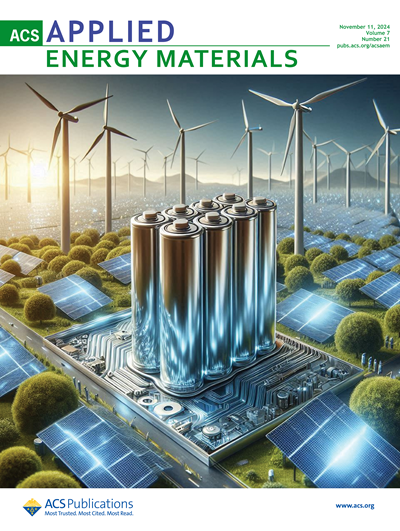
ACS Applied Energy Materials is an interdisciplinary journal publishing original research covering all aspects of materials, engineering, chemistry, physics and biology relevant to energy conversion and storage. The journal is devoted to reports of new and original experimental and theoretical research of an applied nature that integrate knowledge in the areas of materials, engineering, physics, bioscience, and chemistry into important energy applications.



 京公网安备 11010802042870号
京ICP备2023020795号-1
京公网安备 11010802042870号
京ICP备2023020795号-1

 分享
分享
 求助内容:
求助内容: 应助结果提醒方式:
 扫码关注我们
