Aiden Hoyle, Thomas E. Powell, B. Doosje, Helma van den Berg, Charlotte Wagnsson
{"title":"Weapons of mass division: Sputnik Latvia's Russophobia narratives and testing the rejection‐identification model in Russian speakers in Latvia","authors":"Aiden Hoyle, Thomas E. Powell, B. Doosje, Helma van den Berg, Charlotte Wagnsson","doi":"10.1111/pops.12964","DOIUrl":null,"url":null,"abstract":"The effects of exposure to Russian propaganda have long been feared; however, academic research examining responses is scarce. This study aims to investigate the responses of Russian speakers in Latvia to a narrative propagated by the Kremlin‐sponsored media outlet Sputnik Latvia that narrates Latvian government policy as Russophobic. The potential to entrench existing ethnopolitical divisions has been highlighted as a possible effect of Russian speakers consuming this narration. We adopt a comprehensive, mixed‐method research approach, where we first provide an analysis of the content of Sputnik Latvia's Russophobia narrative in its recent output. Then, using this analysis, we examine how Russian‐speaking participants respond to this content in a preregistered survey experiment and a focus group. Theoretically, we orient around the rejection‐identification model. This predicts individuals to generally experience lower well‐being after perceiving group‐based discrimination, but that embracing the stigmatized identity can help maintain well‐being despite this perceived devaluation. Our results showed that even brief exposure to Sputnik Latvia's Russophobia narrative led to higher levels of perceived discrimination and group identification in Russian speakers. However, we found no significant effects on well‐being, which deviates from extant literature on discrimination. We discuss the reasons for this and suggest future directions.","PeriodicalId":4,"journal":{"name":"ACS Applied Energy Materials","volume":"21 12","pages":""},"PeriodicalIF":5.5000,"publicationDate":"2024-03-11","publicationTypes":"Journal Article","fieldsOfStudy":null,"isOpenAccess":false,"openAccessPdf":"","citationCount":"0","resultStr":null,"platform":"Semanticscholar","paperid":null,"PeriodicalName":"ACS Applied Energy Materials","FirstCategoryId":"90","ListUrlMain":"https://doi.org/10.1111/pops.12964","RegionNum":3,"RegionCategory":"材料科学","ArticlePicture":[],"TitleCN":null,"AbstractTextCN":null,"PMCID":null,"EPubDate":"","PubModel":"","JCR":"Q2","JCRName":"CHEMISTRY, PHYSICAL","Score":null,"Total":0}
引用次数: 0
Abstract
The effects of exposure to Russian propaganda have long been feared; however, academic research examining responses is scarce. This study aims to investigate the responses of Russian speakers in Latvia to a narrative propagated by the Kremlin‐sponsored media outlet Sputnik Latvia that narrates Latvian government policy as Russophobic. The potential to entrench existing ethnopolitical divisions has been highlighted as a possible effect of Russian speakers consuming this narration. We adopt a comprehensive, mixed‐method research approach, where we first provide an analysis of the content of Sputnik Latvia's Russophobia narrative in its recent output. Then, using this analysis, we examine how Russian‐speaking participants respond to this content in a preregistered survey experiment and a focus group. Theoretically, we orient around the rejection‐identification model. This predicts individuals to generally experience lower well‐being after perceiving group‐based discrimination, but that embracing the stigmatized identity can help maintain well‐being despite this perceived devaluation. Our results showed that even brief exposure to Sputnik Latvia's Russophobia narrative led to higher levels of perceived discrimination and group identification in Russian speakers. However, we found no significant effects on well‐being, which deviates from extant literature on discrimination. We discuss the reasons for this and suggest future directions.
期刊介绍:
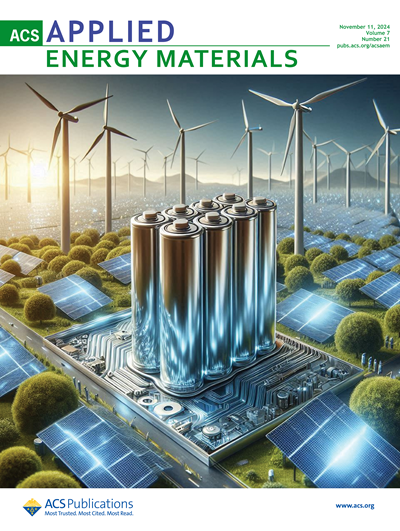
ACS Applied Energy Materials is an interdisciplinary journal publishing original research covering all aspects of materials, engineering, chemistry, physics and biology relevant to energy conversion and storage. The journal is devoted to reports of new and original experimental and theoretical research of an applied nature that integrate knowledge in the areas of materials, engineering, physics, bioscience, and chemistry into important energy applications.



 京公网安备 11010802042870号
京ICP备2023020795号-1
京公网安备 11010802042870号
京ICP备2023020795号-1

 分享
分享
 求助内容:
求助内容: 应助结果提醒方式:
 扫码关注我们
