Pablo Pádua Barbosa, Vithor Xavier Resende de Oliveira, João Vitor Goulart, Rogério Margonar, Marcos Boaventura de Moura, Guilherme José Pimentel Lopes de Oliveira
{"title":"Effect of different thread configurations on hydrophilic implant stability. A split-mouth RCT.","authors":"Pablo Pádua Barbosa, Vithor Xavier Resende de Oliveira, João Vitor Goulart, Rogério Margonar, Marcos Boaventura de Moura, Guilherme José Pimentel Lopes de Oliveira","doi":"10.1590/0103-6440202405632","DOIUrl":null,"url":null,"abstract":"<p><p>This split-mouth randomized controlled trial aimed to evaluate the primary and secondary stability of hybrid implants with different thread configurations and hydrophilic surfaces. Twenty patients with a partially edentulous maxilla were selected. These patients received two types of implants with the same hydrophilic surface: CTP group: Cylindrical-Tapered implant with perforating threads; CTH: Cylindrical-Tapered implant with hybrid threads configuration (perforating and condensing threads). The primary and secondary stability parameters were measured by insertion torque and resonance frequency analysis at the time of implant placement and 7, 28, 56, and 90 days after the surgical procedure. The paired t-test was used to compare the data on the implant's stability between the groups. The statistical analysis was performed with a confidence level set at 95%. It was found that the implants in the CTH group presented higher primary stability values at the time of implant placement, due to the higher ISQ (63.61 ± 9.44 vs. 40.59 ±7.46) and insertion torque (36.92 ± 16.50 Ncm vs. 28.00 ± 14.40 Ncm), than the implants in the CTP group. The CTH group presented higher ISQ values in all follow-up periods: 7 days (68.67 ± 7.60 vs. 41.55 ± 9.07), 28 days (68.61 ± 5.98 vs. 47.90 ±13.10), 56 days (74.09 ± 3.96 vs. 55.85 ± 13.18), and 90 days (75.45 ± 4.02 vs. 63.47 ± 6.92) after implant placement. Hybrid implants with perforating and condensing threads demonstrated greater stability than hybrid implants with only perforating threads.</p>","PeriodicalId":101363,"journal":{"name":"Brazilian dental journal","volume":"35 ","pages":"e245632"},"PeriodicalIF":0.0000,"publicationDate":"2024-03-22","publicationTypes":"Journal Article","fieldsOfStudy":null,"isOpenAccess":false,"openAccessPdf":"https://www.ncbi.nlm.nih.gov/pmc/articles/PMC10976314/pdf/","citationCount":"0","resultStr":null,"platform":"Semanticscholar","paperid":null,"PeriodicalName":"Brazilian dental journal","FirstCategoryId":"1085","ListUrlMain":"https://doi.org/10.1590/0103-6440202405632","RegionNum":0,"RegionCategory":null,"ArticlePicture":[],"TitleCN":null,"AbstractTextCN":null,"PMCID":null,"EPubDate":"2024/1/1 0:00:00","PubModel":"eCollection","JCR":"","JCRName":"","Score":null,"Total":0}
引用次数: 0
Abstract
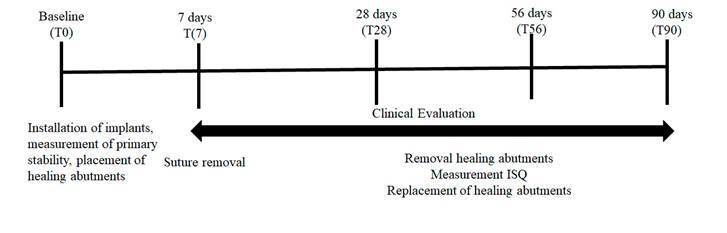
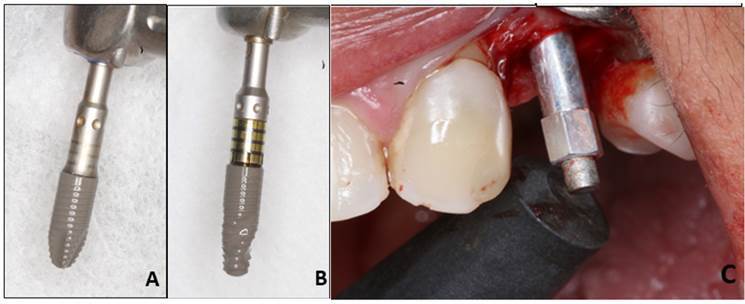
This split-mouth randomized controlled trial aimed to evaluate the primary and secondary stability of hybrid implants with different thread configurations and hydrophilic surfaces. Twenty patients with a partially edentulous maxilla were selected. These patients received two types of implants with the same hydrophilic surface: CTP group: Cylindrical-Tapered implant with perforating threads; CTH: Cylindrical-Tapered implant with hybrid threads configuration (perforating and condensing threads). The primary and secondary stability parameters were measured by insertion torque and resonance frequency analysis at the time of implant placement and 7, 28, 56, and 90 days after the surgical procedure. The paired t-test was used to compare the data on the implant's stability between the groups. The statistical analysis was performed with a confidence level set at 95%. It was found that the implants in the CTH group presented higher primary stability values at the time of implant placement, due to the higher ISQ (63.61 ± 9.44 vs. 40.59 ±7.46) and insertion torque (36.92 ± 16.50 Ncm vs. 28.00 ± 14.40 Ncm), than the implants in the CTP group. The CTH group presented higher ISQ values in all follow-up periods: 7 days (68.67 ± 7.60 vs. 41.55 ± 9.07), 28 days (68.61 ± 5.98 vs. 47.90 ±13.10), 56 days (74.09 ± 3.96 vs. 55.85 ± 13.18), and 90 days (75.45 ± 4.02 vs. 63.47 ± 6.92) after implant placement. Hybrid implants with perforating and condensing threads demonstrated greater stability than hybrid implants with only perforating threads.




 京公网安备 11010802042870号
京ICP备2023020795号-1
京公网安备 11010802042870号
京ICP备2023020795号-1

 分享
分享

 求助内容:
求助内容: 应助结果提醒方式:
 扫码关注我们
