{"title":"What Went Wrong In Hungary","authors":"Veronica Anghel, Erik Jones","doi":"10.1353/jod.2024.a922833","DOIUrl":null,"url":null,"abstract":"Abstract: Why did Hungarian democracy have a harder time developing and rooting itself than democracy in other countries? The answer lies in the overlapping institutions and incentives that create democratic resilience. Hungary's political elites never finished their constitutional transition from communism to democracy by agreeing on a new democratic constitution. The 1998 elections polarized Hungarian politics around competing conceptions of democracy in ways that made it hard to reach consensus on a shared constitutional arrangement. Viktor Orbán and his Fidesz party rose to power in the late 1990s by offering a strong state that would protect Hungarian society from the threat of social liberalism and foreclose a potential return of communism. Orbán returned to power in 2010, on the heels of the global financial crisis, and began centralizing and entrenching power by deft manipulation of democratic institutions. The case of Hungary tells us what to look for in anticipating democratic failure and serves as a cautionary tale for the EU.","PeriodicalId":4,"journal":{"name":"ACS Applied Energy Materials","volume":"72 21","pages":""},"PeriodicalIF":5.5000,"publicationDate":"2024-04-01","publicationTypes":"Journal Article","fieldsOfStudy":null,"isOpenAccess":false,"openAccessPdf":"","citationCount":"0","resultStr":null,"platform":"Semanticscholar","paperid":null,"PeriodicalName":"ACS Applied Energy Materials","FirstCategoryId":"90","ListUrlMain":"https://doi.org/10.1353/jod.2024.a922833","RegionNum":3,"RegionCategory":"材料科学","ArticlePicture":[],"TitleCN":null,"AbstractTextCN":null,"PMCID":null,"EPubDate":"","PubModel":"","JCR":"Q2","JCRName":"CHEMISTRY, PHYSICAL","Score":null,"Total":0}
引用次数: 0
Abstract
Abstract: Why did Hungarian democracy have a harder time developing and rooting itself than democracy in other countries? The answer lies in the overlapping institutions and incentives that create democratic resilience. Hungary's political elites never finished their constitutional transition from communism to democracy by agreeing on a new democratic constitution. The 1998 elections polarized Hungarian politics around competing conceptions of democracy in ways that made it hard to reach consensus on a shared constitutional arrangement. Viktor Orbán and his Fidesz party rose to power in the late 1990s by offering a strong state that would protect Hungarian society from the threat of social liberalism and foreclose a potential return of communism. Orbán returned to power in 2010, on the heels of the global financial crisis, and began centralizing and entrenching power by deft manipulation of democratic institutions. The case of Hungary tells us what to look for in anticipating democratic failure and serves as a cautionary tale for the EU.
期刊介绍:
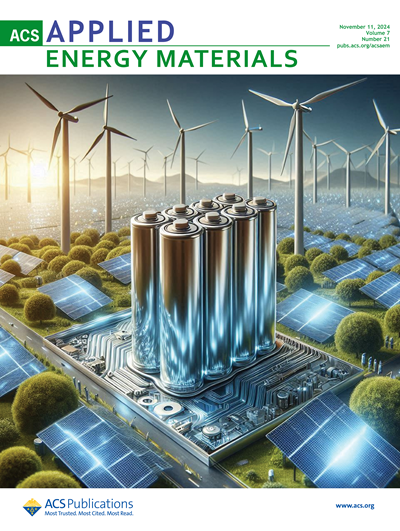
ACS Applied Energy Materials is an interdisciplinary journal publishing original research covering all aspects of materials, engineering, chemistry, physics and biology relevant to energy conversion and storage. The journal is devoted to reports of new and original experimental and theoretical research of an applied nature that integrate knowledge in the areas of materials, engineering, physics, bioscience, and chemistry into important energy applications.



 京公网安备 11010802042870号
京ICP备2023020795号-1
京公网安备 11010802042870号
京ICP备2023020795号-1

 分享
分享
 求助内容:
求助内容: 应助结果提醒方式:
 扫码关注我们
