Rui Guo, Jingxian Wang, Min Zhou, Zixia Cao, Lan Tao, Yang Luo, Wei Zhang, Jiajia Chen
{"title":"Resonance or resistance? The dual impact of green brand ritual on customer engagement behavior","authors":"Rui Guo, Jingxian Wang, Min Zhou, Zixia Cao, Lan Tao, Yang Luo, Wei Zhang, Jiajia Chen","doi":"10.1108/jrim-12-2023-0444","DOIUrl":null,"url":null,"abstract":"PurposeThe study aims to examine how different types of green brand ritual (GBR) influence customer engagement behavior and the mediation mechanisms and boundary conditions of the positive and negative pathways.Design/methodology/approachThe study conducts two online experiments to collect data from a total of 940 consumers in China. Hypotheses are tested by independent samples t-test, two-way ANOVA and Hayes' PROCESS model.FindingsDifferent kinds of GBR have different effects on customer engagement behavior. Internal GBR is more likely to play a positive role by inciting connectedness to nature. External GBR is more likely to play a negative role by inciting psychological resistance. This dual effect is especially pronounced for warm brands rather than competent brands.Originality/valueThe study pioneers the brand ritual into the field of interactive marketing and enriches its dual effect research. Additionally, the study figures out whether the category of brand ritual can trigger negative effect.Practical implicationsInappropriate brand rituals are worse than no rituals at all. The results provide guidance for green companies to design effective brand rituals to strengthen the connection with consumers. Green brands should describe brand rituals in vivid detail and consciously lead consumers to immerse themselves in them.","PeriodicalId":9,"journal":{"name":"ACS Catalysis ","volume":"78 1","pages":""},"PeriodicalIF":13.1000,"publicationDate":"2024-03-29","publicationTypes":"Journal Article","fieldsOfStudy":null,"isOpenAccess":false,"openAccessPdf":"","citationCount":"0","resultStr":null,"platform":"Semanticscholar","paperid":null,"PeriodicalName":"ACS Catalysis ","FirstCategoryId":"91","ListUrlMain":"https://doi.org/10.1108/jrim-12-2023-0444","RegionNum":1,"RegionCategory":"化学","ArticlePicture":[],"TitleCN":null,"AbstractTextCN":null,"PMCID":null,"EPubDate":"","PubModel":"","JCR":"Q1","JCRName":"CHEMISTRY, PHYSICAL","Score":null,"Total":0}
引用次数: 0
Abstract
PurposeThe study aims to examine how different types of green brand ritual (GBR) influence customer engagement behavior and the mediation mechanisms and boundary conditions of the positive and negative pathways.Design/methodology/approachThe study conducts two online experiments to collect data from a total of 940 consumers in China. Hypotheses are tested by independent samples t-test, two-way ANOVA and Hayes' PROCESS model.FindingsDifferent kinds of GBR have different effects on customer engagement behavior. Internal GBR is more likely to play a positive role by inciting connectedness to nature. External GBR is more likely to play a negative role by inciting psychological resistance. This dual effect is especially pronounced for warm brands rather than competent brands.Originality/valueThe study pioneers the brand ritual into the field of interactive marketing and enriches its dual effect research. Additionally, the study figures out whether the category of brand ritual can trigger negative effect.Practical implicationsInappropriate brand rituals are worse than no rituals at all. The results provide guidance for green companies to design effective brand rituals to strengthen the connection with consumers. Green brands should describe brand rituals in vivid detail and consciously lead consumers to immerse themselves in them.
期刊介绍:
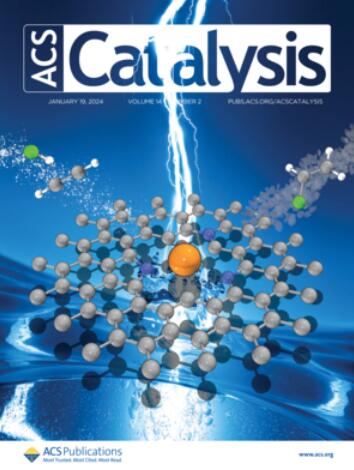
ACS Catalysis is an esteemed journal that publishes original research in the fields of heterogeneous catalysis, molecular catalysis, and biocatalysis. It offers broad coverage across diverse areas such as life sciences, organometallics and synthesis, photochemistry and electrochemistry, drug discovery and synthesis, materials science, environmental protection, polymer discovery and synthesis, and energy and fuels.
The scope of the journal is to showcase innovative work in various aspects of catalysis. This includes new reactions and novel synthetic approaches utilizing known catalysts, the discovery or modification of new catalysts, elucidation of catalytic mechanisms through cutting-edge investigations, practical enhancements of existing processes, as well as conceptual advances in the field. Contributions to ACS Catalysis can encompass both experimental and theoretical research focused on catalytic molecules, macromolecules, and materials that exhibit catalytic turnover.



 京公网安备 11010802042870号
京ICP备2023020795号-1
京公网安备 11010802042870号
京ICP备2023020795号-1

 分享
分享
 求助内容:
求助内容: 应助结果提醒方式:
 扫码关注我们
