T. Bacile, A. B. Elmadağ, Mehmet Okan, Denitsa Dineva, A. Rynarzewska
{"title":"EXPRESS: Schadenfreude and Sympathy: Observer Reactions to Malicious Joy During Social Media Service Recovery","authors":"T. Bacile, A. B. Elmadağ, Mehmet Okan, Denitsa Dineva, A. Rynarzewska","doi":"10.1177/10949968241246252","DOIUrl":null,"url":null,"abstract":"Complex social dynamics occur when complaints are voiced on firms’ social media channels. In combination, a complainer criticizes a firm, which may be responded to uncivilly by different online personas, i.e., Internet trolls or loyal customers, with virtually-present observers watching how a firm responds. This research examines customer-to-customer (C2C) uncivil commentary from troll persona and loyal customer persona comments perceived by observers to elicit schadenfreude: malicious joy due to another’s adverse event. Three studies show how C2C schadenfreude targeting a complainer elicits sympathy from observers, which influences observers’ future purchase intent. A preliminary study’s online content analysis using field data shows the frequency of C2C schadenfreude during social media service recovery. Study 2 uncovers moderated mediation of C2C schadenfreude-sympathy-purchase intent, with loyal customer persona comments producing more observer sympathy than troll persona comments. Study 3 finds the harmful effect of observer sympathy on purchase intent varies based on how or if a firm addresses the C2C dialogue. Taken altogether, this research uses a novel cognition (perceived schadenfreude from another’s comment), lesser-studied emotion in marketing (sympathy), and is the first marketing-related work to incorporate backlash theory from organizational management to exemplify how loyal customer comments produce a backlash effect in observers.","PeriodicalId":6,"journal":{"name":"ACS Applied Nano Materials","volume":"19 5","pages":""},"PeriodicalIF":5.5000,"publicationDate":"2024-03-28","publicationTypes":"Journal Article","fieldsOfStudy":null,"isOpenAccess":false,"openAccessPdf":"","citationCount":"0","resultStr":null,"platform":"Semanticscholar","paperid":null,"PeriodicalName":"ACS Applied Nano Materials","FirstCategoryId":"91","ListUrlMain":"https://doi.org/10.1177/10949968241246252","RegionNum":2,"RegionCategory":"材料科学","ArticlePicture":[],"TitleCN":null,"AbstractTextCN":null,"PMCID":null,"EPubDate":"","PubModel":"","JCR":"Q2","JCRName":"MATERIALS SCIENCE, MULTIDISCIPLINARY","Score":null,"Total":0}
引用次数: 0
Abstract
Complex social dynamics occur when complaints are voiced on firms’ social media channels. In combination, a complainer criticizes a firm, which may be responded to uncivilly by different online personas, i.e., Internet trolls or loyal customers, with virtually-present observers watching how a firm responds. This research examines customer-to-customer (C2C) uncivil commentary from troll persona and loyal customer persona comments perceived by observers to elicit schadenfreude: malicious joy due to another’s adverse event. Three studies show how C2C schadenfreude targeting a complainer elicits sympathy from observers, which influences observers’ future purchase intent. A preliminary study’s online content analysis using field data shows the frequency of C2C schadenfreude during social media service recovery. Study 2 uncovers moderated mediation of C2C schadenfreude-sympathy-purchase intent, with loyal customer persona comments producing more observer sympathy than troll persona comments. Study 3 finds the harmful effect of observer sympathy on purchase intent varies based on how or if a firm addresses the C2C dialogue. Taken altogether, this research uses a novel cognition (perceived schadenfreude from another’s comment), lesser-studied emotion in marketing (sympathy), and is the first marketing-related work to incorporate backlash theory from organizational management to exemplify how loyal customer comments produce a backlash effect in observers.
期刊介绍:
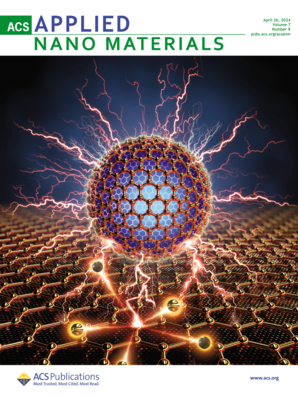
ACS Applied Nano Materials is an interdisciplinary journal publishing original research covering all aspects of engineering, chemistry, physics and biology relevant to applications of nanomaterials. The journal is devoted to reports of new and original experimental and theoretical research of an applied nature that integrate knowledge in the areas of materials, engineering, physics, bioscience, and chemistry into important applications of nanomaterials.



 京公网安备 11010802042870号
京ICP备2023020795号-1
京公网安备 11010802042870号
京ICP备2023020795号-1

 分享
分享
 求助内容:
求助内容: 应助结果提醒方式:
 扫码关注我们
