{"title":"Amelioration in nanobiosensors for the control of plant diseases: current status and future challenges","authors":"Verinder Virk, Himani Deepak, Khushbu Taneja, Rishita Srivastava, Sadhana Giri","doi":"10.3389/fnano.2024.1310165","DOIUrl":null,"url":null,"abstract":"The increase in global population has had a tremendous impact on sustainable agri-food practices. With the growth in world population, various modern technologies are being utilized that more often result in the opening of tremendous opportunities in the agriculture and food sectors. Nanotechnology is used in agri-food sectors for a variety of purposes, including enhancing flavor, pest/pathogen diagnosis, production, processing, storage, packaging, and transportation of agricultural products. Plant pathogenic microorganisms including bacteria, viruses, fungi, and nematodes have a significant impact on the global economy. In particular, advances in nanotechnology, including nanobiosensors, have been used in the detection of plant diseases and pathogens, the evaluation and examination of infections caused by microorganisms, the management of diseases and, thus, the promotion of food security. Apart from the management of plant diseases, nanobiosensors offer better opportunities for sustainable agri-food production by controlling physical, chemical, and biological processes, thus improving food safety and the agricultural economy. This review outlines the application of nano-integrated nanobiosensors for better agricultural and food practices.","PeriodicalId":4,"journal":{"name":"ACS Applied Energy Materials","volume":"2 6","pages":""},"PeriodicalIF":5.5000,"publicationDate":"2024-03-27","publicationTypes":"Journal Article","fieldsOfStudy":null,"isOpenAccess":false,"openAccessPdf":"","citationCount":"0","resultStr":null,"platform":"Semanticscholar","paperid":null,"PeriodicalName":"ACS Applied Energy Materials","FirstCategoryId":"1085","ListUrlMain":"https://doi.org/10.3389/fnano.2024.1310165","RegionNum":3,"RegionCategory":"材料科学","ArticlePicture":[],"TitleCN":null,"AbstractTextCN":null,"PMCID":null,"EPubDate":"","PubModel":"","JCR":"Q2","JCRName":"CHEMISTRY, PHYSICAL","Score":null,"Total":0}
引用次数: 0
Abstract
The increase in global population has had a tremendous impact on sustainable agri-food practices. With the growth in world population, various modern technologies are being utilized that more often result in the opening of tremendous opportunities in the agriculture and food sectors. Nanotechnology is used in agri-food sectors for a variety of purposes, including enhancing flavor, pest/pathogen diagnosis, production, processing, storage, packaging, and transportation of agricultural products. Plant pathogenic microorganisms including bacteria, viruses, fungi, and nematodes have a significant impact on the global economy. In particular, advances in nanotechnology, including nanobiosensors, have been used in the detection of plant diseases and pathogens, the evaluation and examination of infections caused by microorganisms, the management of diseases and, thus, the promotion of food security. Apart from the management of plant diseases, nanobiosensors offer better opportunities for sustainable agri-food production by controlling physical, chemical, and biological processes, thus improving food safety and the agricultural economy. This review outlines the application of nano-integrated nanobiosensors for better agricultural and food practices.
期刊介绍:
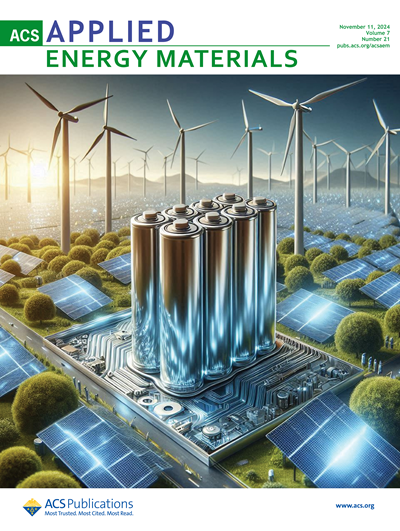
ACS Applied Energy Materials is an interdisciplinary journal publishing original research covering all aspects of materials, engineering, chemistry, physics and biology relevant to energy conversion and storage. The journal is devoted to reports of new and original experimental and theoretical research of an applied nature that integrate knowledge in the areas of materials, engineering, physics, bioscience, and chemistry into important energy applications.



 京公网安备 11010802042870号
京ICP备2023020795号-1
京公网安备 11010802042870号
京ICP备2023020795号-1

 分享
分享
 求助内容:
求助内容: 应助结果提醒方式:
 扫码关注我们
