Jenny Roth, Miriam Steinmann, J. Loughnane, Paula Devine, Orla Muldoon, Catriona Shelly, Wijnand A. P. van Tilburg, Melanie C. Steffens, Claire Campbell
{"title":"Election results can decrease intergroup threat and through that positively affect intergroup relations","authors":"Jenny Roth, Miriam Steinmann, J. Loughnane, Paula Devine, Orla Muldoon, Catriona Shelly, Wijnand A. P. van Tilburg, Melanie C. Steffens, Claire Campbell","doi":"10.1111/pops.12960","DOIUrl":null,"url":null,"abstract":"Previous research has established that intergroup threat is pivotal to intergroup relations in divided societies. We used the Northern Ireland Assembly Elections in 2022 as a unique chance to investigate how elections can affect feelings of threat and intergroup relations between communities with a history of violent intergroup conflict. We argued that because of their conflicting goals, if Sinn Féin (i.e., a Republican party that promotes a united Ireland) gains more votes than the Democratic Unionist Party (DUP, i.e., a party promoting Northern Ireland's union with the United Kingdom), it would threaten DUP supporters and vice versa. We assessed whether participants supported Sinn Féin or DUP relatively to each other, intergroup threat, and intergroup bias before and after the elections (N = 285). Following an election outcome where Sinn Féin gained more votes than DUP, Sinn Féin supporters showed decreased feelings of threat which in turn decreased their intergroup bias. DUP supporters, the party that received fewer votes, showed no changes in their feelings of threat or intergroup bias. This research highlights how electoral results affect intergroup relations in postconflict societies.","PeriodicalId":4,"journal":{"name":"ACS Applied Energy Materials","volume":"101 5","pages":""},"PeriodicalIF":5.5000,"publicationDate":"2024-02-25","publicationTypes":"Journal Article","fieldsOfStudy":null,"isOpenAccess":false,"openAccessPdf":"","citationCount":"0","resultStr":null,"platform":"Semanticscholar","paperid":null,"PeriodicalName":"ACS Applied Energy Materials","FirstCategoryId":"90","ListUrlMain":"https://doi.org/10.1111/pops.12960","RegionNum":3,"RegionCategory":"材料科学","ArticlePicture":[],"TitleCN":null,"AbstractTextCN":null,"PMCID":null,"EPubDate":"","PubModel":"","JCR":"Q2","JCRName":"CHEMISTRY, PHYSICAL","Score":null,"Total":0}
引用次数: 0
Abstract
Previous research has established that intergroup threat is pivotal to intergroup relations in divided societies. We used the Northern Ireland Assembly Elections in 2022 as a unique chance to investigate how elections can affect feelings of threat and intergroup relations between communities with a history of violent intergroup conflict. We argued that because of their conflicting goals, if Sinn Féin (i.e., a Republican party that promotes a united Ireland) gains more votes than the Democratic Unionist Party (DUP, i.e., a party promoting Northern Ireland's union with the United Kingdom), it would threaten DUP supporters and vice versa. We assessed whether participants supported Sinn Féin or DUP relatively to each other, intergroup threat, and intergroup bias before and after the elections (N = 285). Following an election outcome where Sinn Féin gained more votes than DUP, Sinn Féin supporters showed decreased feelings of threat which in turn decreased their intergroup bias. DUP supporters, the party that received fewer votes, showed no changes in their feelings of threat or intergroup bias. This research highlights how electoral results affect intergroup relations in postconflict societies.
期刊介绍:
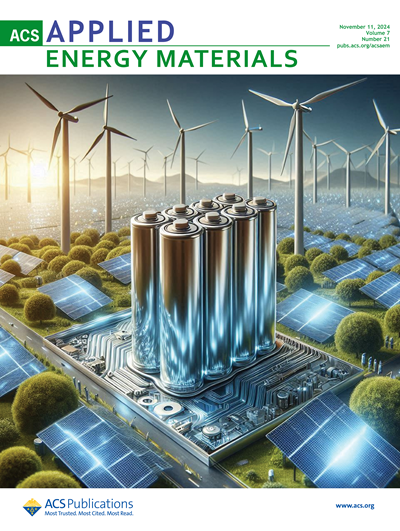
ACS Applied Energy Materials is an interdisciplinary journal publishing original research covering all aspects of materials, engineering, chemistry, physics and biology relevant to energy conversion and storage. The journal is devoted to reports of new and original experimental and theoretical research of an applied nature that integrate knowledge in the areas of materials, engineering, physics, bioscience, and chemistry into important energy applications.




 京公网安备 11010802042870号
京ICP备2023020795号-1
京公网安备 11010802042870号
京ICP备2023020795号-1

 分享
分享
 求助内容:
求助内容: 应助结果提醒方式:
 扫码关注我们
