{"title":"Lay theories of place effects","authors":"Sophie Borwein, Jack Lucas, Cameron D. Anderson","doi":"10.1111/pops.12959","DOIUrl":null,"url":null,"abstract":"Combining research in political geography and social psychology, this article investigates lay theories of “place effects”—that is, ordinary citizens' beliefs about the effects that urban or rural places have on the individuals who live in them. We do so using a novel survey vignette embedded in a large‐scale survey of the Canadian public. Our results suggest that (1) citizens see rural identities as less malleable than urban identities, (2) lay theories of place effects depend on citizens' own place identities, and (3) lay theories of place effects are stronger for nonpolitical than for political place‐based characteristics. We also find that lay theories of place effects are associated with individual‐level characteristics that are connected to cosmopolitan‐communitarian divides, such as ideology and postsecondary education. We conclude with a discussion of the implications of our findings for the growing literature on urban–rural divides and for research on citizens' implicit theories of places and their political consequences.","PeriodicalId":4,"journal":{"name":"ACS Applied Energy Materials","volume":"540 ","pages":""},"PeriodicalIF":5.5000,"publicationDate":"2024-02-20","publicationTypes":"Journal Article","fieldsOfStudy":null,"isOpenAccess":false,"openAccessPdf":"","citationCount":"0","resultStr":null,"platform":"Semanticscholar","paperid":null,"PeriodicalName":"ACS Applied Energy Materials","FirstCategoryId":"90","ListUrlMain":"https://doi.org/10.1111/pops.12959","RegionNum":3,"RegionCategory":"材料科学","ArticlePicture":[],"TitleCN":null,"AbstractTextCN":null,"PMCID":null,"EPubDate":"","PubModel":"","JCR":"Q2","JCRName":"CHEMISTRY, PHYSICAL","Score":null,"Total":0}
引用次数: 0
Abstract
Combining research in political geography and social psychology, this article investigates lay theories of “place effects”—that is, ordinary citizens' beliefs about the effects that urban or rural places have on the individuals who live in them. We do so using a novel survey vignette embedded in a large‐scale survey of the Canadian public. Our results suggest that (1) citizens see rural identities as less malleable than urban identities, (2) lay theories of place effects depend on citizens' own place identities, and (3) lay theories of place effects are stronger for nonpolitical than for political place‐based characteristics. We also find that lay theories of place effects are associated with individual‐level characteristics that are connected to cosmopolitan‐communitarian divides, such as ideology and postsecondary education. We conclude with a discussion of the implications of our findings for the growing literature on urban–rural divides and for research on citizens' implicit theories of places and their political consequences.
期刊介绍:
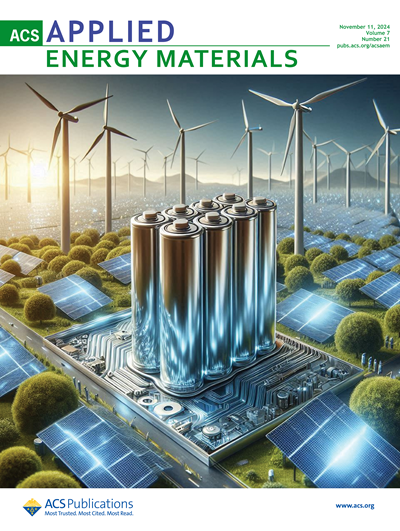
ACS Applied Energy Materials is an interdisciplinary journal publishing original research covering all aspects of materials, engineering, chemistry, physics and biology relevant to energy conversion and storage. The journal is devoted to reports of new and original experimental and theoretical research of an applied nature that integrate knowledge in the areas of materials, engineering, physics, bioscience, and chemistry into important energy applications.



 京公网安备 11010802042870号
京ICP备2023020795号-1
京公网安备 11010802042870号
京ICP备2023020795号-1

 分享
分享
 求助内容:
求助内容: 应助结果提醒方式:
 扫码关注我们
