Rajesh V. Kherde, Kiran C. More, Priyadarshi H. Sawant
{"title":"An evaluation of project risk in Indian infrastructural projects using interpretative structural modeling","authors":"Rajesh V. Kherde, Kiran C. More, Priyadarshi H. Sawant","doi":"10.1007/s42107-024-00991-4","DOIUrl":null,"url":null,"abstract":"<div><p>The research on risk in Indian infrastructure lacks tailored risk management frameworks that consider the country's unique context. More inquiry is needed to address regulatory, political, social, and environmental risks inherent in these projects. There is a scarcity of strategies to mitigate these risks, especially concerning India's diverse socio-economic landscape and regional disparities. Infrastructure plays a pivotal role in a nation's economic advancement, primarily through two key avenues. First, it contributes to economic growth by lowering costs, which, in turn, fosters increased productivity, employment opportunities, and the expansion of the domestic market. Second, it promotes growth by driving structural changes that positively impact the quality of life, overall welfare, and the health of the population. This paper advocates the utilization of interpretative structural modeling (ISM) to construct a hierarchical framework and ascertain the interconnections among various risks. This framework equips decision-makers with the means to take suitable actions. Additionally, the study employs MICMAC analysis to assess the level of dependence and driving influence of these risks. ISM, in conjunction with MICMAC analysis, yields a valuable risk hierarchy, where the relationships between individual risks are clear, yet the collective relationships are too intricate to intuitively organize. This aids professionals in gaining a deeper understanding of risk interdependencies and in effectively prioritizing efforts to mitigate these risks. The research identifies 13 distinct risks encountered in the developmental phase of Indian infrastructural projects. It further reveals that nine of these risks exhibit weak driving and dependency characteristics. Notably, revenue risk, cost overrun risk, partnering risk, and project management risk display the highest degree of dependency on other risk factors.</p></div>","PeriodicalId":8513,"journal":{"name":"Asian Journal of Civil Engineering","volume":"25 4","pages":"3481 - 3493"},"PeriodicalIF":0.0000,"publicationDate":"2024-02-19","publicationTypes":"Journal Article","fieldsOfStudy":null,"isOpenAccess":false,"openAccessPdf":"","citationCount":"0","resultStr":null,"platform":"Semanticscholar","paperid":null,"PeriodicalName":"Asian Journal of Civil Engineering","FirstCategoryId":"1085","ListUrlMain":"https://link.springer.com/article/10.1007/s42107-024-00991-4","RegionNum":0,"RegionCategory":null,"ArticlePicture":[],"TitleCN":null,"AbstractTextCN":null,"PMCID":null,"EPubDate":"","PubModel":"","JCR":"Q2","JCRName":"Engineering","Score":null,"Total":0}
引用次数: 0
Abstract
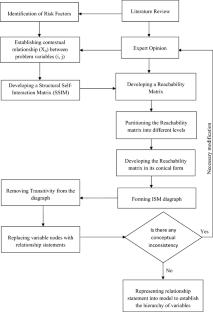
The research on risk in Indian infrastructure lacks tailored risk management frameworks that consider the country's unique context. More inquiry is needed to address regulatory, political, social, and environmental risks inherent in these projects. There is a scarcity of strategies to mitigate these risks, especially concerning India's diverse socio-economic landscape and regional disparities. Infrastructure plays a pivotal role in a nation's economic advancement, primarily through two key avenues. First, it contributes to economic growth by lowering costs, which, in turn, fosters increased productivity, employment opportunities, and the expansion of the domestic market. Second, it promotes growth by driving structural changes that positively impact the quality of life, overall welfare, and the health of the population. This paper advocates the utilization of interpretative structural modeling (ISM) to construct a hierarchical framework and ascertain the interconnections among various risks. This framework equips decision-makers with the means to take suitable actions. Additionally, the study employs MICMAC analysis to assess the level of dependence and driving influence of these risks. ISM, in conjunction with MICMAC analysis, yields a valuable risk hierarchy, where the relationships between individual risks are clear, yet the collective relationships are too intricate to intuitively organize. This aids professionals in gaining a deeper understanding of risk interdependencies and in effectively prioritizing efforts to mitigate these risks. The research identifies 13 distinct risks encountered in the developmental phase of Indian infrastructural projects. It further reveals that nine of these risks exhibit weak driving and dependency characteristics. Notably, revenue risk, cost overrun risk, partnering risk, and project management risk display the highest degree of dependency on other risk factors.
期刊介绍:
The Asian Journal of Civil Engineering (Building and Housing) welcomes articles and research contributions on topics such as:- Structural analysis and design - Earthquake and structural engineering - New building materials and concrete technology - Sustainable building and energy conservation - Housing and planning - Construction management - Optimal design of structuresPlease note that the journal will not accept papers in the area of hydraulic or geotechnical engineering, traffic/transportation or road making engineering, and on materials relevant to non-structural buildings, e.g. materials for road making and asphalt. Although the journal will publish authoritative papers on theoretical and experimental research works and advanced applications, it may also feature, when appropriate: a) tutorial survey type papers reviewing some fields of civil engineering; b) short communications and research notes; c) book reviews and conference announcements.




 京公网安备 11010802042870号
京ICP备2023020795号-1
京公网安备 11010802042870号
京ICP备2023020795号-1

 分享
分享
 求助内容:
求助内容: 应助结果提醒方式:
 扫码关注我们
