Rubber plantation size and global rubber price are linked to forest loss and degradation in Jambi, Sumatra
印度尼西亚苏门答腊占碑省的森林丧失和退化与橡胶种植园的面积和全球天然橡胶价格有关
Luas perkebunan karet dan harga karet dunia menjadi penyebab degradasi hutan alam di Jambi, Sumatra
H. Manjari Jayathilake, Cheng Zhi Wei, Gerald Tan, Côme de la Porte, L. Roman Carrasco
{"title":"Rubber plantation size and global rubber price are linked to forest loss and degradation in Jambi, Sumatra\n 印度尼西亚苏门答腊占碑省的森林丧失和退化与橡胶种植园的面积和全球天然橡胶价格有关\n Luas perkebunan karet dan harga karet dunia menjadi penyebab degradasi hutan alam di Jambi, Sumatra","authors":"H. Manjari Jayathilake, Cheng Zhi Wei, Gerald Tan, Côme de la Porte, L. Roman Carrasco","doi":"10.1002/inc3.43","DOIUrl":null,"url":null,"abstract":"<p>Natural rubber cultivation is one of the main drivers of tropical deforestation and biodiversity loss. This study examines regulatory and socio-economic conditions that increase the susceptibility of rubber plantations to deforestation and degradation, aiming to support zero-deforestation pledges and sustainability commitments made by the natural rubber industry. By combining bottom-up socio-economic survey data from rubber smallholder farmers in Indonesia with top-down spatial datasets on forest loss and degradation, this study identifies factors associated with deforestation, tree cover loss, and degradation of high-risk plantations. In Jambi Province, Indonesia, from 1991 to 2018, the overall tree cover loss in areas adjacent to rubber plantations was positively correlated to plantation size, remoteness (travel time to cities), and distance to the nearest protected areas, indicating that larger, remotely located plantations likely expanded more into forests between 2000 and 2018. Similarly, tropical forest degradation was positively associated with plantation size, travel time to cities, and distance to protected areas. A higher rubber price in the preceding year correlated with increased annual deforestation and forest degradation, whereas lower prices had the opposite effect. These results suggest that monitoring price changes and identifying plantations that are near non-protected forest frontiers could enable early detection and potential mitigation of deforestation threats.</p>","PeriodicalId":100680,"journal":{"name":"Integrative Conservation","volume":"3 1","pages":"22-35"},"PeriodicalIF":0.0000,"publicationDate":"2024-04-10","publicationTypes":"Journal Article","fieldsOfStudy":null,"isOpenAccess":false,"openAccessPdf":"https://onlinelibrary.wiley.com/doi/epdf/10.1002/inc3.43","citationCount":"0","resultStr":null,"platform":"Semanticscholar","paperid":null,"PeriodicalName":"Integrative Conservation","FirstCategoryId":"1085","ListUrlMain":"https://onlinelibrary.wiley.com/doi/10.1002/inc3.43","RegionNum":0,"RegionCategory":null,"ArticlePicture":[],"TitleCN":null,"AbstractTextCN":null,"PMCID":null,"EPubDate":"","PubModel":"","JCR":"","JCRName":"","Score":null,"Total":0}
引用次数: 0
Abstract
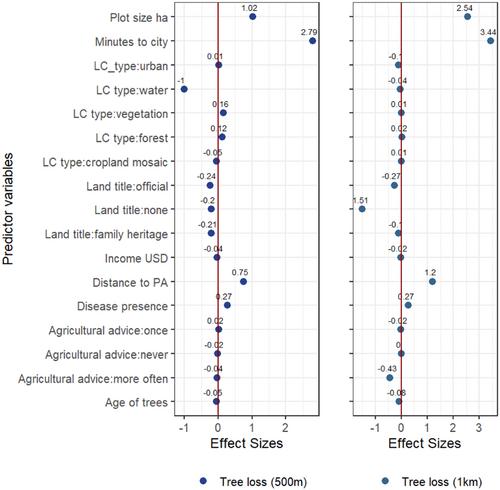
Natural rubber cultivation is one of the main drivers of tropical deforestation and biodiversity loss. This study examines regulatory and socio-economic conditions that increase the susceptibility of rubber plantations to deforestation and degradation, aiming to support zero-deforestation pledges and sustainability commitments made by the natural rubber industry. By combining bottom-up socio-economic survey data from rubber smallholder farmers in Indonesia with top-down spatial datasets on forest loss and degradation, this study identifies factors associated with deforestation, tree cover loss, and degradation of high-risk plantations. In Jambi Province, Indonesia, from 1991 to 2018, the overall tree cover loss in areas adjacent to rubber plantations was positively correlated to plantation size, remoteness (travel time to cities), and distance to the nearest protected areas, indicating that larger, remotely located plantations likely expanded more into forests between 2000 and 2018. Similarly, tropical forest degradation was positively associated with plantation size, travel time to cities, and distance to protected areas. A higher rubber price in the preceding year correlated with increased annual deforestation and forest degradation, whereas lower prices had the opposite effect. These results suggest that monitoring price changes and identifying plantations that are near non-protected forest frontiers could enable early detection and potential mitigation of deforestation threats.



 京公网安备 11010802042870号
京ICP备2023020795号-1
京公网安备 11010802042870号
京ICP备2023020795号-1

 分享
分享

 求助内容:
求助内容: 应助结果提醒方式:
 扫码关注我们
