{"title":"Synthesis of Sn-based nanocomposites using waste polyethylene terephthalate (PET) for the electrochemical reduction of CO2 to formate","authors":"Shweta Shukla, Ramasamy Karvembu","doi":"10.1007/s11144-024-02623-z","DOIUrl":null,"url":null,"abstract":"<div><p>Terephthalic acid (TPA) was recovered by alkaline hydrolysis of waste polyethylene terephthalate (PET) bottles. TPA recovered was used to prepare Sn-based catalyst by solvothermal method. For comparison, commercial TPA was also used to prepare Sn-based catalyst. The catalysts were used for the electrochemical reduction of CO<sub>2</sub> to formate. Both the catalysts were found to possess nanoflake morphology, and were highly porous in nature with Brunauer–Emmett–Teller (BET) surface area of 211.4 and 239.4 m<sup>2</sup>/g for commercial and PET derived TPA-based Sn catalysts, respectively. The catalyst made from the waste PET bottles derived TPA was found to be more effective than the one obtained from the commercial TPA. The Faradaic efficiency obtained for the formation of formate was 68.4% at potential − 1.8 V (<i>vs</i> Ag/AgCl) and current density of 13.5 mA/cm<sup>2</sup>, when catalyst was synthesized using waste PET derived TPA. High activity of the electrocatalysts was attributed to higher capacitance, and lower resistance of the catalysts.</p><h3>Graphical abstract</h3>\n<div><figure><div><div><picture><source><img></source></picture></div></div></figure></div></div>","PeriodicalId":750,"journal":{"name":"Reaction Kinetics, Mechanisms and Catalysis","volume":"137 4","pages":"2065 - 2079"},"PeriodicalIF":1.7000,"publicationDate":"2024-04-09","publicationTypes":"Journal Article","fieldsOfStudy":null,"isOpenAccess":false,"openAccessPdf":"","citationCount":"0","resultStr":null,"platform":"Semanticscholar","paperid":null,"PeriodicalName":"Reaction Kinetics, Mechanisms and Catalysis","FirstCategoryId":"92","ListUrlMain":"https://link.springer.com/article/10.1007/s11144-024-02623-z","RegionNum":4,"RegionCategory":"化学","ArticlePicture":[],"TitleCN":null,"AbstractTextCN":null,"PMCID":null,"EPubDate":"","PubModel":"","JCR":"Q4","JCRName":"CHEMISTRY, PHYSICAL","Score":null,"Total":0}
引用次数: 0
Abstract
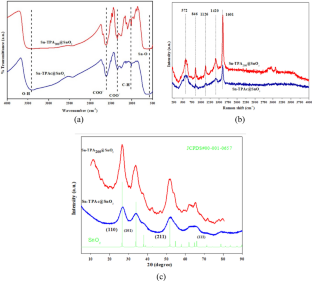
Terephthalic acid (TPA) was recovered by alkaline hydrolysis of waste polyethylene terephthalate (PET) bottles. TPA recovered was used to prepare Sn-based catalyst by solvothermal method. For comparison, commercial TPA was also used to prepare Sn-based catalyst. The catalysts were used for the electrochemical reduction of CO2 to formate. Both the catalysts were found to possess nanoflake morphology, and were highly porous in nature with Brunauer–Emmett–Teller (BET) surface area of 211.4 and 239.4 m2/g for commercial and PET derived TPA-based Sn catalysts, respectively. The catalyst made from the waste PET bottles derived TPA was found to be more effective than the one obtained from the commercial TPA. The Faradaic efficiency obtained for the formation of formate was 68.4% at potential − 1.8 V (vs Ag/AgCl) and current density of 13.5 mA/cm2, when catalyst was synthesized using waste PET derived TPA. High activity of the electrocatalysts was attributed to higher capacitance, and lower resistance of the catalysts.
期刊介绍:
Reaction Kinetics, Mechanisms and Catalysis is a medium for original contributions in the following fields:
-kinetics of homogeneous reactions in gas, liquid and solid phase;
-Homogeneous catalysis;
-Heterogeneous catalysis;
-Adsorption in heterogeneous catalysis;
-Transport processes related to reaction kinetics and catalysis;
-Preparation and study of catalysts;
-Reactors and apparatus.
Reaction Kinetics, Mechanisms and Catalysis was formerly published under the title Reaction Kinetics and Catalysis Letters.



 京公网安备 11010802042870号
京ICP备2023020795号-1
京公网安备 11010802042870号
京ICP备2023020795号-1

 分享
分享
 求助内容:
求助内容: 应助结果提醒方式:
 扫码关注我们
