Mahnoosh Abbaszade Dibavar, Masoud Soleimani, Mohammad Hossein Mohammadi, Mina Soufi Zomorrod
{"title":"High yield killing of lymphoma cells by anti-CD22 CAR-NK cell therapy","authors":"Mahnoosh Abbaszade Dibavar, Masoud Soleimani, Mohammad Hossein Mohammadi, Mina Soufi Zomorrod","doi":"10.1007/s11626-024-00895-2","DOIUrl":null,"url":null,"abstract":"<p>Chimeric antigen receptors (CARs) offer a promising new approach for targeting B cell malignancies through the immune system. Despite the proven effectiveness of CAR T cells targeting CD19 and CD22 in hematological malignancies, it is imperative to note that their production remains a highly complex process. Unlike T cells, NK cells eliminate targets in a non-antigen-specific manner while avoiding graft vs. host disease (GvHD). CAR-NK cells are considered safer than CAR-T cells because they have a shorter lifespan and produce less toxic cytokines. Due to their unlimited ability to proliferate in vitro, NK-92 cells can be used as a source for CAR-engineered NK cells. We found that CARs created from the m971 anti-CD22 mAb, which specifically targets a proximal CD22 epitope, were more effective at anti-leukemic activity compared to those made with other binding domains. To further enhance the anti-leukemic capacity of NK cells, we used lentiviral transduction to generate the m971-CD28-CD3ζ NK-92. CD22 is highly expressed in B cell lymphoma. To evaluate the potential of targeting CD22, Raji cells were selected as CD22-positive cells. Our study aimed to investigate CD22 as a potential target for CAR-NK-92 therapy in the treatment of B cell lymphoma. We first generated m971-CD28-CD3ζ NK-92 that expressed a CAR for binding CD22 in vitro. Flow cytometric analysis was used to evaluate the expression of CAR. The 7AAD determined the cytotoxicity of the m971-CD28-CD3ζ NK-92 towards target lymphoma cell lines by flow cytometry assay. The ELISA assay evaluated cytokine production in CAR NK-92 cells in response to target cells. The m971-CD28-CD3ζ NK-92 cells have successfully expressed the CD22-specific CAR. m971-CD28-CD3ζ NK-92 cells efficiently lysed CD22-expressing lymphoma cell lines and produced large amounts of cytokines such as IFN-γ and GM-CSF but a lower level of IL-6 after coculturing with target cells. Based on our results, it is evident that transferring m971-CD28-CD3ζ NK-92 cells could be a promising immunotherapy for B cell lymphoma.</p>","PeriodicalId":13340,"journal":{"name":"In Vitro Cellular & Developmental Biology. Animal","volume":"149 1","pages":""},"PeriodicalIF":1.7000,"publicationDate":"2024-04-08","publicationTypes":"Journal Article","fieldsOfStudy":null,"isOpenAccess":false,"openAccessPdf":"","citationCount":"0","resultStr":null,"platform":"Semanticscholar","paperid":null,"PeriodicalName":"In Vitro Cellular & Developmental Biology. Animal","FirstCategoryId":"99","ListUrlMain":"https://doi.org/10.1007/s11626-024-00895-2","RegionNum":4,"RegionCategory":"生物学","ArticlePicture":[],"TitleCN":null,"AbstractTextCN":null,"PMCID":null,"EPubDate":"","PubModel":"","JCR":"Q4","JCRName":"CELL BIOLOGY","Score":null,"Total":0}
引用次数: 0
Abstract
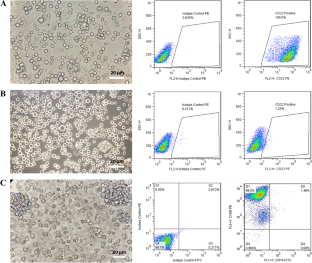
Chimeric antigen receptors (CARs) offer a promising new approach for targeting B cell malignancies through the immune system. Despite the proven effectiveness of CAR T cells targeting CD19 and CD22 in hematological malignancies, it is imperative to note that their production remains a highly complex process. Unlike T cells, NK cells eliminate targets in a non-antigen-specific manner while avoiding graft vs. host disease (GvHD). CAR-NK cells are considered safer than CAR-T cells because they have a shorter lifespan and produce less toxic cytokines. Due to their unlimited ability to proliferate in vitro, NK-92 cells can be used as a source for CAR-engineered NK cells. We found that CARs created from the m971 anti-CD22 mAb, which specifically targets a proximal CD22 epitope, were more effective at anti-leukemic activity compared to those made with other binding domains. To further enhance the anti-leukemic capacity of NK cells, we used lentiviral transduction to generate the m971-CD28-CD3ζ NK-92. CD22 is highly expressed in B cell lymphoma. To evaluate the potential of targeting CD22, Raji cells were selected as CD22-positive cells. Our study aimed to investigate CD22 as a potential target for CAR-NK-92 therapy in the treatment of B cell lymphoma. We first generated m971-CD28-CD3ζ NK-92 that expressed a CAR for binding CD22 in vitro. Flow cytometric analysis was used to evaluate the expression of CAR. The 7AAD determined the cytotoxicity of the m971-CD28-CD3ζ NK-92 towards target lymphoma cell lines by flow cytometry assay. The ELISA assay evaluated cytokine production in CAR NK-92 cells in response to target cells. The m971-CD28-CD3ζ NK-92 cells have successfully expressed the CD22-specific CAR. m971-CD28-CD3ζ NK-92 cells efficiently lysed CD22-expressing lymphoma cell lines and produced large amounts of cytokines such as IFN-γ and GM-CSF but a lower level of IL-6 after coculturing with target cells. Based on our results, it is evident that transferring m971-CD28-CD3ζ NK-92 cells could be a promising immunotherapy for B cell lymphoma.
期刊介绍:
In Vitro Cellular & Developmental Biology - Animal is a journal of the Society for In Vitro Biology (SIVB). Original manuscripts reporting results of research in cellular, molecular, and developmental biology that employ or are relevant to organs, tissue, tumors, and cells in vitro will be considered for publication. Topics covered include:
Biotechnology;
Cell and Tissue Models;
Cell Growth/Differentiation/Apoptosis;
Cellular Pathology/Virology;
Cytokines/Growth Factors/Adhesion Factors;
Establishment of Cell Lines;
Signal Transduction;
Stem Cells;
Toxicology/Chemical Carcinogenesis;
Product Applications.



 京公网安备 11010802042870号
京ICP备2023020795号-1
京公网安备 11010802042870号
京ICP备2023020795号-1

 分享
分享
 求助内容:
求助内容: 应助结果提醒方式:
 扫码关注我们
