{"title":"3,3′-Diindolylmethane inhibits Th17 cell differentiation via impairing IRF-7-mediated plasmacytoid dendritic cell activation in imiquimod-induced psoriasis mice","authors":"Mahaboobkhan Rasool, Manupati Srikanth, Arulkumaran Rithvik","doi":"10.1007/s11626-024-00901-7","DOIUrl":null,"url":null,"abstract":"<p>Psoriasis is a paradigmatic condition characterised by a heightened autoimmune response and chronic inflammation. However, the exact nature and the pathological causes behind it are still unknown. Growing evidence suggest dysregulated cytokine network as a result of over-activated T cells and plasmacytoid dendritic cells (pDCs) as the critical drivers in the development of psoriasis. In the present study, we aimed to investigate the therapeutic efficacy of 3,3′-diindolylmethane (DIM) on pDC activation and Th17 cell development in imiquimod (IMQ)–induced psoriasis mice. Our in vitro research investigated the IRF-7 signalling in pDCs that explained the reduced expression of the transcription factor IRF-7 responsible for pDC activation as a result of DIM treatment. Concurrently, DIM treatment decreased the release of Th17 cell polarising cytokines (IFN-α, IL-23, and IL-6) by pDCs which validated a reduction in differentiated pathogenic Th17 cell population and associated cytokine IL-17A in IMQ-induced psoriatic mice. Thus, our recent findings provide therapeutic evidence in targeting the early potential contributors for psoriasis treatment by preventing IRF-7-mediated pDC activation and Th17 cell development in IMQ-induced psoriasis mice.</p>","PeriodicalId":13340,"journal":{"name":"In Vitro Cellular & Developmental Biology. Animal","volume":"2015 1","pages":""},"PeriodicalIF":1.7000,"publicationDate":"2024-04-11","publicationTypes":"Journal Article","fieldsOfStudy":null,"isOpenAccess":false,"openAccessPdf":"","citationCount":"0","resultStr":null,"platform":"Semanticscholar","paperid":null,"PeriodicalName":"In Vitro Cellular & Developmental Biology. Animal","FirstCategoryId":"99","ListUrlMain":"https://doi.org/10.1007/s11626-024-00901-7","RegionNum":4,"RegionCategory":"生物学","ArticlePicture":[],"TitleCN":null,"AbstractTextCN":null,"PMCID":null,"EPubDate":"","PubModel":"","JCR":"Q4","JCRName":"CELL BIOLOGY","Score":null,"Total":0}
引用次数: 0
Abstract
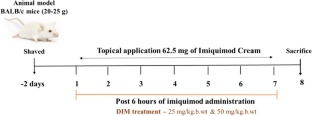
Psoriasis is a paradigmatic condition characterised by a heightened autoimmune response and chronic inflammation. However, the exact nature and the pathological causes behind it are still unknown. Growing evidence suggest dysregulated cytokine network as a result of over-activated T cells and plasmacytoid dendritic cells (pDCs) as the critical drivers in the development of psoriasis. In the present study, we aimed to investigate the therapeutic efficacy of 3,3′-diindolylmethane (DIM) on pDC activation and Th17 cell development in imiquimod (IMQ)–induced psoriasis mice. Our in vitro research investigated the IRF-7 signalling in pDCs that explained the reduced expression of the transcription factor IRF-7 responsible for pDC activation as a result of DIM treatment. Concurrently, DIM treatment decreased the release of Th17 cell polarising cytokines (IFN-α, IL-23, and IL-6) by pDCs which validated a reduction in differentiated pathogenic Th17 cell population and associated cytokine IL-17A in IMQ-induced psoriatic mice. Thus, our recent findings provide therapeutic evidence in targeting the early potential contributors for psoriasis treatment by preventing IRF-7-mediated pDC activation and Th17 cell development in IMQ-induced psoriasis mice.
期刊介绍:
In Vitro Cellular & Developmental Biology - Animal is a journal of the Society for In Vitro Biology (SIVB). Original manuscripts reporting results of research in cellular, molecular, and developmental biology that employ or are relevant to organs, tissue, tumors, and cells in vitro will be considered for publication. Topics covered include:
Biotechnology;
Cell and Tissue Models;
Cell Growth/Differentiation/Apoptosis;
Cellular Pathology/Virology;
Cytokines/Growth Factors/Adhesion Factors;
Establishment of Cell Lines;
Signal Transduction;
Stem Cells;
Toxicology/Chemical Carcinogenesis;
Product Applications.



 京公网安备 11010802042870号
京ICP备2023020795号-1
京公网安备 11010802042870号
京ICP备2023020795号-1

 分享
分享
 求助内容:
求助内容: 应助结果提醒方式:
 扫码关注我们
