{"title":"When the victims fight back: the influence of workplace ostracism on employee knowledge sabotage behavior","authors":"Zhihong Tan, Ling Yuan, Junli Wang, Qunchao Wan","doi":"10.1108/jkm-04-2023-0303","DOIUrl":null,"url":null,"abstract":"\nPurpose\nThis study aims to investigate the negative interpersonal antecedents, emotional mediators and boundary conditions of knowledge sabotage behavior.\n\n\nDesign/methodology/approach\nThe authors collected data from 275 Chinese employees using convenience sampling and snowball sampling across three stages. Subsequently, the authors used both hierarchical regression and bootstrap methods to test the proposed hypotheses.\n\n\nFindings\nThe results confirmed that workplace ostracism has positive effects on employee knowledge sabotage behavior both directly and via employee anger. In addition, the authors found that employee bottom-line mentality (BLM) moderates not only the direct effect of workplace ostracism on employee anger but also the indirect effect of employee anger in this context. Employee conscientiousness moderates only the direct effect of workplace ostracism on employee anger and does not moderate the indirect effect.\n\n\nOriginality/value\nTo the best of the authors’ knowledge, this study not only explores the influence of workplace ostracism on employee knowledge sabotage behavior for the first time but also elucidates the underlying emotional mechanisms (anger) and boundary conditions (employee BLM and conscientiousness) by which workplace ostracism influences employee knowledge sabotage behavior, thus deepening the understanding of how knowledge sabotage emerges in organizations.\n","PeriodicalId":6,"journal":{"name":"ACS Applied Nano Materials","volume":"36 14","pages":""},"PeriodicalIF":5.5000,"publicationDate":"2024-04-24","publicationTypes":"Journal Article","fieldsOfStudy":null,"isOpenAccess":false,"openAccessPdf":"","citationCount":"0","resultStr":null,"platform":"Semanticscholar","paperid":null,"PeriodicalName":"ACS Applied Nano Materials","FirstCategoryId":"91","ListUrlMain":"https://doi.org/10.1108/jkm-04-2023-0303","RegionNum":2,"RegionCategory":"材料科学","ArticlePicture":[],"TitleCN":null,"AbstractTextCN":null,"PMCID":null,"EPubDate":"","PubModel":"","JCR":"Q2","JCRName":"MATERIALS SCIENCE, MULTIDISCIPLINARY","Score":null,"Total":0}
引用次数: 0
Abstract
Purpose
This study aims to investigate the negative interpersonal antecedents, emotional mediators and boundary conditions of knowledge sabotage behavior.
Design/methodology/approach
The authors collected data from 275 Chinese employees using convenience sampling and snowball sampling across three stages. Subsequently, the authors used both hierarchical regression and bootstrap methods to test the proposed hypotheses.
Findings
The results confirmed that workplace ostracism has positive effects on employee knowledge sabotage behavior both directly and via employee anger. In addition, the authors found that employee bottom-line mentality (BLM) moderates not only the direct effect of workplace ostracism on employee anger but also the indirect effect of employee anger in this context. Employee conscientiousness moderates only the direct effect of workplace ostracism on employee anger and does not moderate the indirect effect.
Originality/value
To the best of the authors’ knowledge, this study not only explores the influence of workplace ostracism on employee knowledge sabotage behavior for the first time but also elucidates the underlying emotional mechanisms (anger) and boundary conditions (employee BLM and conscientiousness) by which workplace ostracism influences employee knowledge sabotage behavior, thus deepening the understanding of how knowledge sabotage emerges in organizations.
期刊介绍:
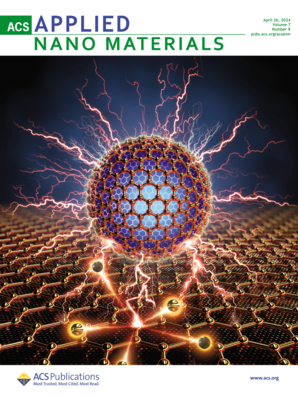
ACS Applied Nano Materials is an interdisciplinary journal publishing original research covering all aspects of engineering, chemistry, physics and biology relevant to applications of nanomaterials. The journal is devoted to reports of new and original experimental and theoretical research of an applied nature that integrate knowledge in the areas of materials, engineering, physics, bioscience, and chemistry into important applications of nanomaterials.



 京公网安备 11010802042870号
京ICP备2023020795号-1
京公网安备 11010802042870号
京ICP备2023020795号-1

 分享
分享
 求助内容:
求助内容: 应助结果提醒方式:
 扫码关注我们
