C. Kyriakopoulos, Athena Gogali, Georgios Markozannes, K. Kostikas
{"title":"Biologic agents licensed for severe asthma: a systematic review and meta-analysis of randomised controlled trials","authors":"C. Kyriakopoulos, Athena Gogali, Georgios Markozannes, K. Kostikas","doi":"10.1183/16000617.0238-2023","DOIUrl":null,"url":null,"abstract":"Background: Six biologic agents are now approved for patients with severe asthma. This meta-analysis aimed to assess the efficacy and safety of licensed biologic agents in patients with severe asthma, including the recently approved tezepelumab. Methods: We searched MEDLINE, Embase and CENTRAL to identify randomised controlled trials involving licensed biologics until 31 January 2023. We used random-effects meta-analysis models for efficacy, including subgroup analyses by individual agents and markers of T2-high inflammation (blood eosinophils and fractional exhaled nitric oxide), and assessed safety. Results: 48 studies with 16 350 patients were included in the meta-analysis. Biologics were associated with a 44% reduction in the annualised rate of asthma exacerbations (rate ratio 0.56, 95% CI 0.51–0.62) and 60% reduction of hospitalisations (rate ratio 0.40, 95% CI 0.27–0.60), a mean increase in the forced expiratory volume in 1 s of 0.11 L (95% CI 0.09–0.14), a reduction in asthma control questionnaire by 0.34 points (95% CI −0.46–−0.23) and an increase in asthma quality of life questionnaire by 0.38 points (95% CI 0.26–0.49). There was heterogeneity between different classes of biologics in certain outcomes, with overall greater efficacy in patients with T2 inflammation. Overall, biologics exhibited a favourable safety profile. Conclusions: This comprehensive meta-analysis demonstrated that licensed asthma biologics reduce exacerbations and hospitalisations, improve lung function, asthma control and quality of life, and limit the use of systemic corticosteroids, with a favourable safety profile. These effects are more prominent in patients with evidence of T2 inflammation.","PeriodicalId":9,"journal":{"name":"ACS Catalysis ","volume":"94 4","pages":""},"PeriodicalIF":13.1000,"publicationDate":"2024-04-24","publicationTypes":"Journal Article","fieldsOfStudy":null,"isOpenAccess":false,"openAccessPdf":"","citationCount":"0","resultStr":null,"platform":"Semanticscholar","paperid":null,"PeriodicalName":"ACS Catalysis ","FirstCategoryId":"3","ListUrlMain":"https://doi.org/10.1183/16000617.0238-2023","RegionNum":1,"RegionCategory":"化学","ArticlePicture":[],"TitleCN":null,"AbstractTextCN":null,"PMCID":null,"EPubDate":"","PubModel":"","JCR":"Q1","JCRName":"CHEMISTRY, PHYSICAL","Score":null,"Total":0}
引用次数: 0
Abstract
Background: Six biologic agents are now approved for patients with severe asthma. This meta-analysis aimed to assess the efficacy and safety of licensed biologic agents in patients with severe asthma, including the recently approved tezepelumab. Methods: We searched MEDLINE, Embase and CENTRAL to identify randomised controlled trials involving licensed biologics until 31 January 2023. We used random-effects meta-analysis models for efficacy, including subgroup analyses by individual agents and markers of T2-high inflammation (blood eosinophils and fractional exhaled nitric oxide), and assessed safety. Results: 48 studies with 16 350 patients were included in the meta-analysis. Biologics were associated with a 44% reduction in the annualised rate of asthma exacerbations (rate ratio 0.56, 95% CI 0.51–0.62) and 60% reduction of hospitalisations (rate ratio 0.40, 95% CI 0.27–0.60), a mean increase in the forced expiratory volume in 1 s of 0.11 L (95% CI 0.09–0.14), a reduction in asthma control questionnaire by 0.34 points (95% CI −0.46–−0.23) and an increase in asthma quality of life questionnaire by 0.38 points (95% CI 0.26–0.49). There was heterogeneity between different classes of biologics in certain outcomes, with overall greater efficacy in patients with T2 inflammation. Overall, biologics exhibited a favourable safety profile. Conclusions: This comprehensive meta-analysis demonstrated that licensed asthma biologics reduce exacerbations and hospitalisations, improve lung function, asthma control and quality of life, and limit the use of systemic corticosteroids, with a favourable safety profile. These effects are more prominent in patients with evidence of T2 inflammation.
期刊介绍:
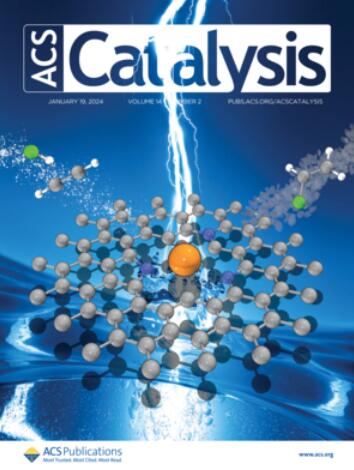
ACS Catalysis is an esteemed journal that publishes original research in the fields of heterogeneous catalysis, molecular catalysis, and biocatalysis. It offers broad coverage across diverse areas such as life sciences, organometallics and synthesis, photochemistry and electrochemistry, drug discovery and synthesis, materials science, environmental protection, polymer discovery and synthesis, and energy and fuels.
The scope of the journal is to showcase innovative work in various aspects of catalysis. This includes new reactions and novel synthetic approaches utilizing known catalysts, the discovery or modification of new catalysts, elucidation of catalytic mechanisms through cutting-edge investigations, practical enhancements of existing processes, as well as conceptual advances in the field. Contributions to ACS Catalysis can encompass both experimental and theoretical research focused on catalytic molecules, macromolecules, and materials that exhibit catalytic turnover.



 京公网安备 11010802042870号
京ICP备2023020795号-1
京公网安备 11010802042870号
京ICP备2023020795号-1

 分享
分享
 求助内容:
求助内容: 应助结果提醒方式:
 扫码关注我们
