M. Waqar, Muhammad Zaman, Muhammad ShafeeqUrRahman, Rabeel Khan, Imtiaz Majeed
{"title":"Navigating the Tumor Microenvironment: Mesenchymal Stem Cell-Mediated Delivery of Anticancer Agents.","authors":"M. Waqar, Muhammad Zaman, Muhammad ShafeeqUrRahman, Rabeel Khan, Imtiaz Majeed","doi":"10.1080/1061186X.2024.2347356","DOIUrl":null,"url":null,"abstract":"Scientific knowledge of cancer has advanced greatly throughout the years, with most recent studies findings includes many hallmarks that capture disease's multifaceted character. One of the novel approach utilized for the delivery of anti-cancer agents includes mesenchymal stem cell mediated drug delivery. Mesenchymal stem cells (MSCs) are non-hematopoietic progenitor cells that may be extracted from bone marrow, tooth pulp, adipose tissue and placenta/umbilical cord blood dealing with adult stem cells. MSCs are mostly involved in regeneration of tissue, they have also been shown to preferentially migrate to location of several types of tumor in-vivo. Usage of MSCs ought to improve both effectiveness and safety of anti-cancer drugs by enhancing delivery efficiency of anti-cancer therapies to tumor site. Numerous researches has demonstrated that various drugs, when delivered via mesenchymal stem cell mediated delivery can elicit anti-tumor effect of cells in cancers of breast cells and thyroid cells. MSCs have minimal immunogenicity because to lack of co-stimulatory molecule expression, which means there is no requirement for immunosuppression after allogenic transplantation. This current review elaborates recent advancements of mesenchyma stem cell mediated drug delivery of anti-cancer agents along with its mechanism and previously reported studies of drugs manufactured via this drug delivery system.","PeriodicalId":4,"journal":{"name":"ACS Applied Energy Materials","volume":"2 8","pages":"1-17"},"PeriodicalIF":5.5000,"publicationDate":"2024-04-23","publicationTypes":"Journal Article","fieldsOfStudy":null,"isOpenAccess":false,"openAccessPdf":"","citationCount":"0","resultStr":null,"platform":"Semanticscholar","paperid":null,"PeriodicalName":"ACS Applied Energy Materials","FirstCategoryId":"3","ListUrlMain":"https://doi.org/10.1080/1061186X.2024.2347356","RegionNum":3,"RegionCategory":"材料科学","ArticlePicture":[],"TitleCN":null,"AbstractTextCN":null,"PMCID":null,"EPubDate":"","PubModel":"","JCR":"Q2","JCRName":"CHEMISTRY, PHYSICAL","Score":null,"Total":0}
引用次数: 0
Abstract
Scientific knowledge of cancer has advanced greatly throughout the years, with most recent studies findings includes many hallmarks that capture disease's multifaceted character. One of the novel approach utilized for the delivery of anti-cancer agents includes mesenchymal stem cell mediated drug delivery. Mesenchymal stem cells (MSCs) are non-hematopoietic progenitor cells that may be extracted from bone marrow, tooth pulp, adipose tissue and placenta/umbilical cord blood dealing with adult stem cells. MSCs are mostly involved in regeneration of tissue, they have also been shown to preferentially migrate to location of several types of tumor in-vivo. Usage of MSCs ought to improve both effectiveness and safety of anti-cancer drugs by enhancing delivery efficiency of anti-cancer therapies to tumor site. Numerous researches has demonstrated that various drugs, when delivered via mesenchymal stem cell mediated delivery can elicit anti-tumor effect of cells in cancers of breast cells and thyroid cells. MSCs have minimal immunogenicity because to lack of co-stimulatory molecule expression, which means there is no requirement for immunosuppression after allogenic transplantation. This current review elaborates recent advancements of mesenchyma stem cell mediated drug delivery of anti-cancer agents along with its mechanism and previously reported studies of drugs manufactured via this drug delivery system.
期刊介绍:
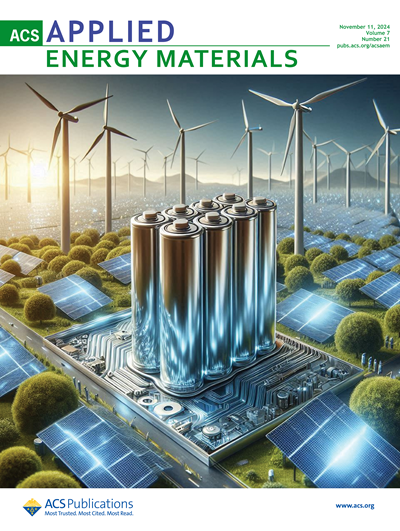
ACS Applied Energy Materials is an interdisciplinary journal publishing original research covering all aspects of materials, engineering, chemistry, physics and biology relevant to energy conversion and storage. The journal is devoted to reports of new and original experimental and theoretical research of an applied nature that integrate knowledge in the areas of materials, engineering, physics, bioscience, and chemistry into important energy applications.




 京公网安备 11010802042870号
京ICP备2023020795号-1
京公网安备 11010802042870号
京ICP备2023020795号-1

 分享
分享
 求助内容:
求助内容: 应助结果提醒方式:
 扫码关注我们
