{"title":"The Entangled Emergencies of COVID-19","authors":"C. L. Decoteau","doi":"10.1177/07352751241247567","DOIUrl":null,"url":null,"abstract":"City of Chicago officials adopted a “racial equity” approach to mitigate the disproportionate racial impact of COVID-19, yet according to interviews with racially and socioeconomically marginalized Chicagoans, this approach failed to address core vulnerabilities associated with health, housing, mental health, and welfare. This article argues that COVID-19 represents and reifies the convergence of three sets of emergencies. First, federal and local governments governed through emergency, enacting temporally bounded governmental strategies that presumed scarcity, triaged care, and naturalized structural inequality by delinking the effects of racism from its causes. This response was spectacular and anticipatory—designed to safeguard the status quo until “normalcy” could be restored. This approach exacerbated two existing endemic emergencies: (1) the slow emergencies racially marginalized populations have faced for decades due to neoliberal restructuring and fragmented care infrastructure and (2) the sacrifice of lower-income frontline workers to premature death to safeguard the economy and protect the middle class.","PeriodicalId":4,"journal":{"name":"ACS Applied Energy Materials","volume":"36 5","pages":""},"PeriodicalIF":5.5000,"publicationDate":"2024-04-23","publicationTypes":"Journal Article","fieldsOfStudy":null,"isOpenAccess":false,"openAccessPdf":"","citationCount":"0","resultStr":null,"platform":"Semanticscholar","paperid":null,"PeriodicalName":"ACS Applied Energy Materials","FirstCategoryId":"90","ListUrlMain":"https://doi.org/10.1177/07352751241247567","RegionNum":3,"RegionCategory":"材料科学","ArticlePicture":[],"TitleCN":null,"AbstractTextCN":null,"PMCID":null,"EPubDate":"","PubModel":"","JCR":"Q2","JCRName":"CHEMISTRY, PHYSICAL","Score":null,"Total":0}
引用次数: 0
Abstract
City of Chicago officials adopted a “racial equity” approach to mitigate the disproportionate racial impact of COVID-19, yet according to interviews with racially and socioeconomically marginalized Chicagoans, this approach failed to address core vulnerabilities associated with health, housing, mental health, and welfare. This article argues that COVID-19 represents and reifies the convergence of three sets of emergencies. First, federal and local governments governed through emergency, enacting temporally bounded governmental strategies that presumed scarcity, triaged care, and naturalized structural inequality by delinking the effects of racism from its causes. This response was spectacular and anticipatory—designed to safeguard the status quo until “normalcy” could be restored. This approach exacerbated two existing endemic emergencies: (1) the slow emergencies racially marginalized populations have faced for decades due to neoliberal restructuring and fragmented care infrastructure and (2) the sacrifice of lower-income frontline workers to premature death to safeguard the economy and protect the middle class.
期刊介绍:
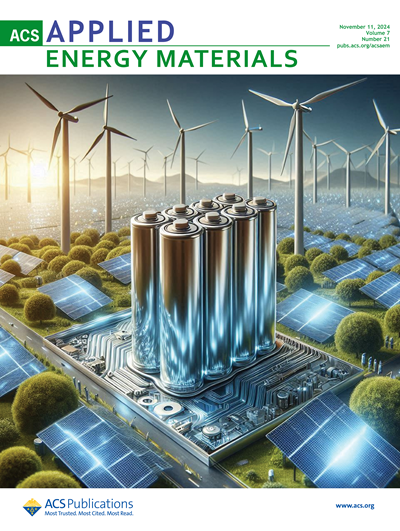
ACS Applied Energy Materials is an interdisciplinary journal publishing original research covering all aspects of materials, engineering, chemistry, physics and biology relevant to energy conversion and storage. The journal is devoted to reports of new and original experimental and theoretical research of an applied nature that integrate knowledge in the areas of materials, engineering, physics, bioscience, and chemistry into important energy applications.




 京公网安备 11010802042870号
京ICP备2023020795号-1
京公网安备 11010802042870号
京ICP备2023020795号-1

 分享
分享
 求助内容:
求助内容: 应助结果提醒方式:
 扫码关注我们
