{"title":"Automation and Augmentation: Artificial Intelligence, Robots, and Work","authors":"Ya-Wen Lei, Rachel Kim","doi":"10.1146/annurev-soc-090523-050708","DOIUrl":null,"url":null,"abstract":"This article reviews the literature that examines the potential, limitations, and consequences of robots and artificial intelligence (AI) in automation and augmentation across various disciplines. It presents key observations and suggestions from the literature review. Firstly, displacement effects from task automation continue to persist. However, one should not assume an unequivocally increasing efficacy of technology in automation or augmentation, especially given the declining productivity growth in high-income countries and some large emerging economies in recent decades. Jobs less likely to be negatively impacted are those that require diverse tasks, physical dexterity, tacit knowledge, or flexibility, or are protected by professional or trade associations. Despite countervailing effects, without policy intervention, automation and augmentation could widen inequality between social groups, labor and capital, and firms. Secondly, AI's promise in task automation and labor augmentation is mixed. AI tools can cause harm, and dissatisfaction and disengagement often arise from their opaqueness, errors, disregard for critical contexts, lack of tacit knowledge, and lack of domain expertise, as well as their demand for extra labor time and resources. The inadequate autonomy to override AI-based assessments further frustrates users who have to use these AI tools at work. Finally, the article calls for sociological research to specify conditions and mechanisms that ameliorate adverse consequences and enhance labor augmentation by embedding the study of automation and augmentation in concrete social and political contexts at multiple levels.","PeriodicalId":8,"journal":{"name":"ACS Biomaterials Science & Engineering","volume":"15 3","pages":""},"PeriodicalIF":5.5000,"publicationDate":"2024-04-22","publicationTypes":"Journal Article","fieldsOfStudy":null,"isOpenAccess":false,"openAccessPdf":"","citationCount":"0","resultStr":null,"platform":"Semanticscholar","paperid":null,"PeriodicalName":"ACS Biomaterials Science & Engineering","FirstCategoryId":"90","ListUrlMain":"https://doi.org/10.1146/annurev-soc-090523-050708","RegionNum":2,"RegionCategory":"医学","ArticlePicture":[],"TitleCN":null,"AbstractTextCN":null,"PMCID":null,"EPubDate":"","PubModel":"","JCR":"Q2","JCRName":"MATERIALS SCIENCE, BIOMATERIALS","Score":null,"Total":0}
引用次数: 0
Abstract
This article reviews the literature that examines the potential, limitations, and consequences of robots and artificial intelligence (AI) in automation and augmentation across various disciplines. It presents key observations and suggestions from the literature review. Firstly, displacement effects from task automation continue to persist. However, one should not assume an unequivocally increasing efficacy of technology in automation or augmentation, especially given the declining productivity growth in high-income countries and some large emerging economies in recent decades. Jobs less likely to be negatively impacted are those that require diverse tasks, physical dexterity, tacit knowledge, or flexibility, or are protected by professional or trade associations. Despite countervailing effects, without policy intervention, automation and augmentation could widen inequality between social groups, labor and capital, and firms. Secondly, AI's promise in task automation and labor augmentation is mixed. AI tools can cause harm, and dissatisfaction and disengagement often arise from their opaqueness, errors, disregard for critical contexts, lack of tacit knowledge, and lack of domain expertise, as well as their demand for extra labor time and resources. The inadequate autonomy to override AI-based assessments further frustrates users who have to use these AI tools at work. Finally, the article calls for sociological research to specify conditions and mechanisms that ameliorate adverse consequences and enhance labor augmentation by embedding the study of automation and augmentation in concrete social and political contexts at multiple levels.
期刊介绍:
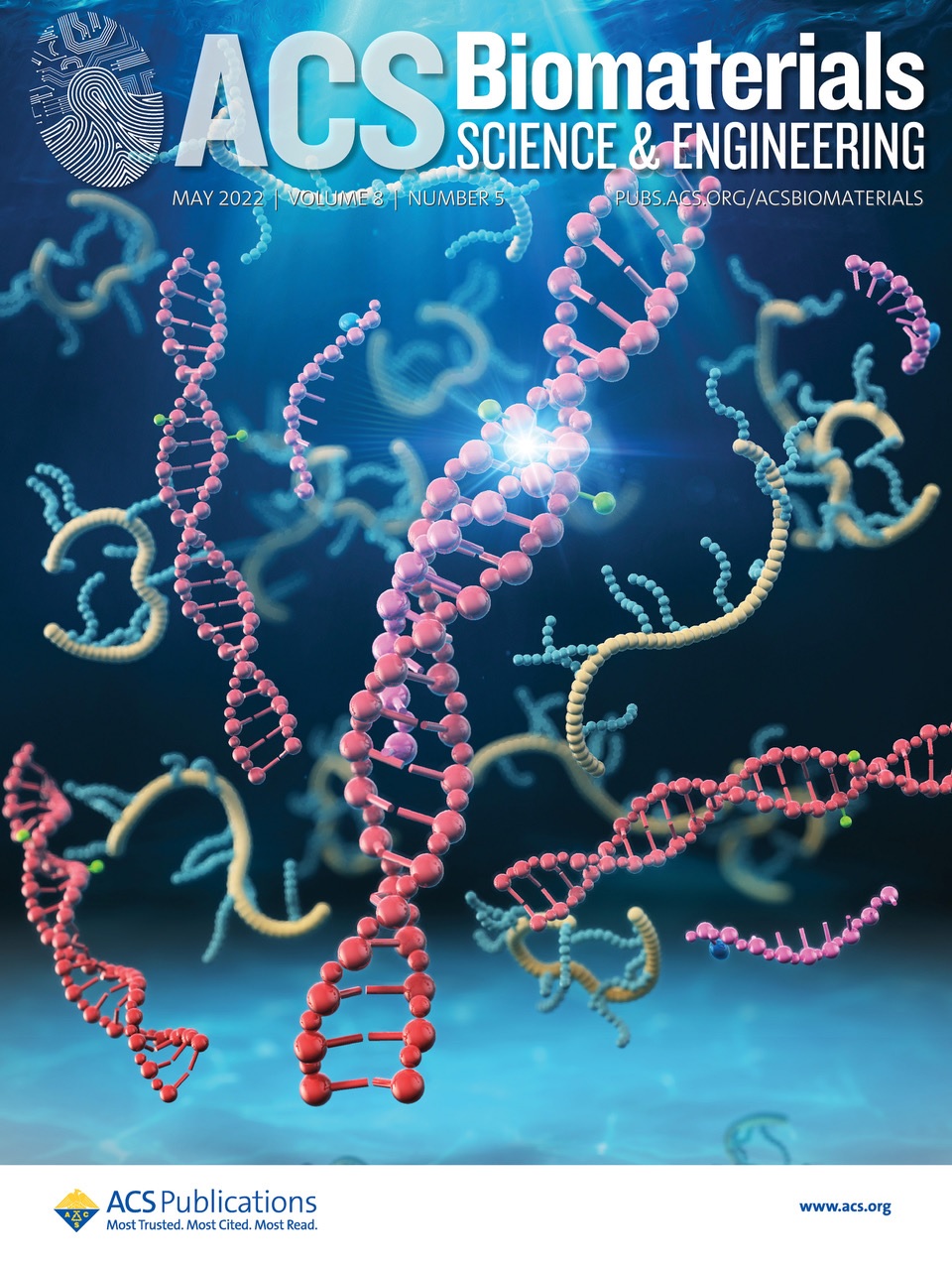
ACS Biomaterials Science & Engineering is the leading journal in the field of biomaterials, serving as an international forum for publishing cutting-edge research and innovative ideas on a broad range of topics:
Applications and Health – implantable tissues and devices, prosthesis, health risks, toxicology
Bio-interactions and Bio-compatibility – material-biology interactions, chemical/morphological/structural communication, mechanobiology, signaling and biological responses, immuno-engineering, calcification, coatings, corrosion and degradation of biomaterials and devices, biophysical regulation of cell functions
Characterization, Synthesis, and Modification – new biomaterials, bioinspired and biomimetic approaches to biomaterials, exploiting structural hierarchy and architectural control, combinatorial strategies for biomaterials discovery, genetic biomaterials design, synthetic biology, new composite systems, bionics, polymer synthesis
Controlled Release and Delivery Systems – biomaterial-based drug and gene delivery, bio-responsive delivery of regulatory molecules, pharmaceutical engineering
Healthcare Advances – clinical translation, regulatory issues, patient safety, emerging trends
Imaging and Diagnostics – imaging agents and probes, theranostics, biosensors, monitoring
Manufacturing and Technology – 3D printing, inks, organ-on-a-chip, bioreactor/perfusion systems, microdevices, BioMEMS, optics and electronics interfaces with biomaterials, systems integration
Modeling and Informatics Tools – scaling methods to guide biomaterial design, predictive algorithms for structure-function, biomechanics, integrating bioinformatics with biomaterials discovery, metabolomics in the context of biomaterials
Tissue Engineering and Regenerative Medicine – basic and applied studies, cell therapies, scaffolds, vascularization, bioartificial organs, transplantation and functionality, cellular agriculture




 京公网安备 11010802042870号
京ICP备2023020795号-1
京公网安备 11010802042870号
京ICP备2023020795号-1

 分享
分享
 求助内容:
求助内容: 应助结果提醒方式:
 扫码关注我们
