{"title":"Hematopoietic Clonal Evolution Goes Spatial.","authors":"Rebecca Austin, I. Aifantis","doi":"10.1158/2643-3230.BCD-24-0057","DOIUrl":null,"url":null,"abstract":"SUMMARY\nThe spatial distribution of cells carrying clonal hematopoiesis mutations in the bone marrow and the potential role of interactions with the microenvironment are largely unknown. This study takes clonal evolution to the spatial level by describing a novel technique examining the spatial location of mutated clones in the bone marrow and the first evidence that mutated hematopoietic clones are spatially constrained and have heterogenous locations within millimeters of distance. See related article by Young et al., p. 153 (10).","PeriodicalId":11,"journal":{"name":"ACS Chemical Biology","volume":"84 15","pages":"OF1-OF3"},"PeriodicalIF":3.8000,"publicationDate":"2024-04-22","publicationTypes":"Journal Article","fieldsOfStudy":null,"isOpenAccess":false,"openAccessPdf":"","citationCount":"0","resultStr":null,"platform":"Semanticscholar","paperid":null,"PeriodicalName":"ACS Chemical Biology","FirstCategoryId":"1085","ListUrlMain":"https://doi.org/10.1158/2643-3230.BCD-24-0057","RegionNum":2,"RegionCategory":"生物学","ArticlePicture":[],"TitleCN":null,"AbstractTextCN":null,"PMCID":null,"EPubDate":"","PubModel":"","JCR":"Q2","JCRName":"BIOCHEMISTRY & MOLECULAR BIOLOGY","Score":null,"Total":0}
引用次数: 0
Abstract
SUMMARY
The spatial distribution of cells carrying clonal hematopoiesis mutations in the bone marrow and the potential role of interactions with the microenvironment are largely unknown. This study takes clonal evolution to the spatial level by describing a novel technique examining the spatial location of mutated clones in the bone marrow and the first evidence that mutated hematopoietic clones are spatially constrained and have heterogenous locations within millimeters of distance. See related article by Young et al., p. 153 (10).
期刊介绍:
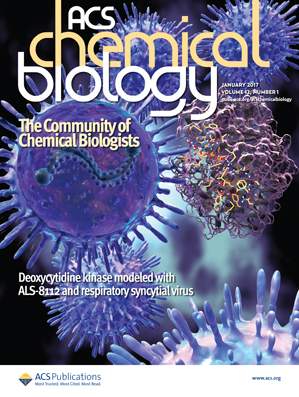
ACS Chemical Biology provides an international forum for the rapid communication of research that broadly embraces the interface between chemistry and biology.
The journal also serves as a forum to facilitate the communication between biologists and chemists that will translate into new research opportunities and discoveries. Results will be published in which molecular reasoning has been used to probe questions through in vitro investigations, cell biological methods, or organismic studies.
We welcome mechanistic studies on proteins, nucleic acids, sugars, lipids, and nonbiological polymers. The journal serves a large scientific community, exploring cellular function from both chemical and biological perspectives. It is understood that submitted work is based upon original results and has not been published previously.



 京公网安备 11010802042870号
京ICP备2023020795号-1
京公网安备 11010802042870号
京ICP备2023020795号-1

 分享
分享
 求助内容:
求助内容: 应助结果提醒方式:
 扫码关注我们
